One single vote in a half-empty committee room just reshaped Spain's rental market. Whether those protections survive past next week is anyone's guess.
On November 12, 2026, a 69-member caretaker panel of Spain's dissolved parliament ratified Royal Decree-Law 29/2026 by a razor-thin 35-to-34 margin. The vote happened less than 24 hours after millions of Spaniards walked off the job in the country's first general strike in 14 years. Prime Minister Pedro Sánchez finally pushed through rent caps, an eviction moratorium, and a crackdown on tourist flats.
Here's the catch. Spain goes to the polls on November 29 in a snap election triggered by this exact housing battle. And the opposition leader favored to win has already promised to tear the new decree up.
If you're renting an apartment in Madrid, investing in coastal property, or simply trying to understand why one of Europe's fastest-growing economies is tearing itself apart over housing, you can't afford to take these new rules at face value. Most headlines treat the November 12 vote as a finished victory for tenants. It isn't. It's a temporary truce sitting on a political landmine.
How an 87-Year-Old's Eviction Broke Spain's Political Deadlock
To understand why Spain's housing measures look the way they do right now, you have to look back two months.
In September 2026, bailiffs forcibly evicted 87-year-old María del Carmen Abascal—known across Spain simply as "Maricarmen"—from the Madrid apartment she had called home for seven decades. She used a wheelchair. She had always paid her rent on time. Her eviction only resumed because conservative and Catalan separatist lawmakers had struck down a pandemic-era eviction freeze back in February, leaving her defenseless when her rent more than tripled.
Days after losing her home, Abascal died.
Public outrage didn't just simmer. It exploded. Tent encampments took over Madrid's Puerta del Sol square, and tenant unions mobilized hundreds of thousands—organizers claimed up to three million—into the streets. Sánchez's minority Socialist government scrambled to respond with two emergency housing decrees, only for the conservative People's Party (PP), far-right Vox, and Catalan party Junts to vote them down in Congress on October 2.
Three days later, Sánchez pulled the nuclear trigger. He dissolved parliament and called a snap general election for November 29, 2026, gambling his political survival on housing.
Before dissolving the legislature, his cabinet split the rejected legislation into two slightly revised decrees and put them into immediate provisional effect on October 8. Under Spanish constitutional rules, emergency decrees automatically expire after roughly a month unless ratified. With the full 350-seat Congress disbanded for the campaign, ratification fell to the Permanent Deputation, a 69-lawmaker standing committee.
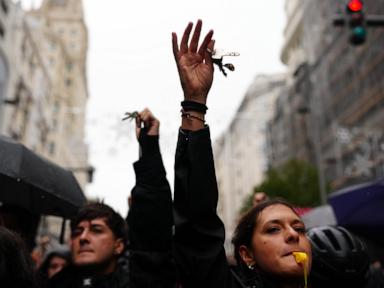
Then came November 11. Backed by major labor unions and tenant groups like the Sindicato de Inquilinas, workers shut down highways in Barcelona, halted wholesale markets in Madrid, and staged over 90 marches nationwide. Even with severe storms battering Andalusia and forcing cancellations in Seville and Cádiz, the 24-hour general strike sent an unmistakable message to the 69 deputies voting the next morning.
What Spain's New Housing Measures Actually Change
Splitting the legislation turned out to be a calculated, realistic move by Sánchez's team. Instead of risking another total wipeout, the government separated its broadest market controls from its most controversial tenant demand.
Only one half survived. Here's what is actually law in Spain right now under Royal Decree-Law 29/2026, and what died on the committee floor.
The Protections That Passed 35 to 34
- Hard caps on rent hikes through 2027. If an apartment's rent already sits above the government's official reference index ceiling, landlords can't raise it at all. For units below that threshold, increases are capped at whatever both parties agree to—or a strict 2% maximum if they don't agree—running until December 31, 2027.
- An extended eviction ban until 2030. Vulnerable households facing eviction get a four-year shield, suspending forced removals through December 31, 2030.
- A 10% VAT hit on short-term tourist rentals. Starting December 1, 2026, furnished apartments rented out for 30 nights or fewer lose their longstanding tax exemption and face a 10% value-added tax—the same rate applied to hotels. On top of that, local governments can hike municipal property taxes (IBI) on tourist lets.
- Strict rules closing the seasonal lease loophole. For years, Spanish landlords dodged long-term tenant protections by offering 11-month "seasonal" contracts. Under the new decree, any temporary lease over 31 days must state a real, provable reason—like a temporary job transfer or university term—and the landlord carries the legal burden of proving it. Fail to document it, or string together three consecutive short contracts on the same flat, and the lease legally converts into a standard five-year residential contract (or seven years if the landlord is a company).
- Restrictions on corporate landlords and "vulture funds." Large property holders—defined as owners with more than ten residential properties, or five in officially stressed housing zones—face bans on snapping up discounted properties or non-performing loan portfolios below 70% of appraised market value until 2030. Spain's listed real estate investment trusts, known as Socimis, also get hit with a 25% special tax levy on undistributed profits from residential rentals.
- Carrots alongside the sticks. To soften the blow on supply, the decree introduces income tax breaks for landlords who lower rents, cuts VAT to 4% for certain residential construction, and expands state-backed loan guarantees to help first-time buyers cover down payments.
The Automatic Lease Renewal Decree That Failed
What didn't survive is just as important.
The government's second decree—Royal Decree-Law 28/2026—would have forced automatic lease renewals. Specifically, once a standard five- or seven-year rental contract expired, it would have rolled over automatically for another five or seven years, obligating landlords to pay tenants at least 12 months' rent in compensation if they terminated the lease without just cause.
That proposal failed by a single vote, 34 to 35.
The decisive swing came from the Basque Nationalist Party (PNV), a center-right regional group that backed the main housing decree but broke ranks on automatic renewals. Their reasoning was straightforward: locking small private landlords into decade-long indefinite contracts wouldn't lower rents. It would scare ordinary owners into yanking their apartments off the rental market altogether.
The Spanish Paradox Why a Booming Economy Cannot House Its Workers
If you only read macroeconomic reports from Brussels or Frankfurt, Spain looks like Europe's star pupil. Growth has outpaced the Eurozone average. Unemployment has fallen dramatically since the dark austerity years following the 2008 real estate crash. Sánchez has spent months boasting that Spain is one of the most prosperous economies in the West.
Step onto a street in Valencia, Málaga, or Barcelona, though, and that prosperity feels like a cruel joke.
Over the past decade, Spanish rents have surged by roughly 80%, while home purchase prices climbed 63%. Wages haven't come close to keeping pace. According to research from Fedea, a respected Madrid-based economic think tank, nearly two million additional Spanish households drop below the poverty line once they pay their monthly rent.
I've watched European housing markets tighten for years, and Spain's bottleneck comes down to three colliding forces that macro GDP numbers completely hide:
- Tourism swallowed urban housing stock. Short-term platforms turned residential apartment blocks in city centers into de facto hotels, stripping tens of thousands of long-term leases out of neighborhoods where service workers actually live.
- Post-2008 construction never recovered. After Spain's property bubble burst in 2008 and triggered bank bailouts, residential construction collapsed. Social housing barely exists—making up less than 3% of Spain's housing stock compared to double digits in countries like Austria or the Netherlands.
- Room rentals became the new normal. In cities like Madrid and Barcelona, full-time professionals in their thirties and forties—engineers, teachers, IT specialists—increasingly rent single bedrooms in shared flats because an entire one-bedroom apartment eats 60% or more of a median salary.
When a country's growth relies heavily on tourism and foreign capital inflows, headline GDP rises while locals get priced out of their own zip codes. That's the fuel behind the strikes.
Why Sunday's Election Could Wipe Out the New Rules
Winning a 35-to-34 committee vote gave Sánchez a headline right before campaign posters went up. Keeping those policies alive past November 29 is a much harder problem.
Conservative People's Party leader Alberto Núñez Feijóo has already stated plainly that if he becomes prime minister, he will repeal the housing decree. His party's diagnosis of the crisis is the exact opposite of Sánchez's.
The PP argues that rent caps, eviction bans, and corporate restrictions punish property owners, dry up investment, and shrink the pool of available apartments. Instead of price controls, Feijóo has pledged to slash taxes, cut urban planning red tape, and oversee the construction of one million new homes.
Meanwhile, far-right Vox—whose polling support has roughly doubled since the last election—isn't even waiting for ballot boxes to open. Vox has already announced a constitutional challenge arguing that the government abused the Permanent Deputation to ratify measures the full Congress had rejected just weeks earlier.
To be fair, economists themselves are sharply divided on who's right here.
Critics of Sánchez's decree point to Catalonia's earlier regional rent controls, noting that while capped rents stabilized on paper, the total number of available long-term listings dropped as landlords shifted to unregulated rooms or sold off units. Building one million homes, as the PP proposes, addresses the root supply shortage—except new housing takes years to permit, finance, and construct, offering zero relief to a pensioner or young family facing an eviction notice next month.
Polls heading into Sunday show Feijóo's People's Party leading, though Sánchez's Socialist Party has narrowed the gap slightly in the final stretch. Even if the PP wins a plurality, it will almost certainly need backing from Vox to govern—a coalition that would guarantee the swift dismantling of Royal Decree-Law 29/2026.
What Tenants, Landlords, and Property Buyers Should Do Right Now
Because Royal Decree-Law 29/2026 is currently active law—having taken effect on October 8 and survived ratification on November 12—its rules apply today, regardless of election uncertainty. If you have skin in the Spanish property market, don't sit around waiting for pundits to sort out the politics.
- If you're a residential tenant facing a renewal or rent hike: Check your current rent against Spain's official reference price index (Índice de Precios de Referencia) before signing anything. If your landlord demands an increase above 2% on an existing contract—or tries to push you onto an 11-month seasonal lease without a documented temporary reason—push back in writing citing Royal Decree-Law 29/2026.
- If you're renting a furnished flat for work or travel: Pay close attention to the 31-day boundary. Stays of 30 nights or fewer will carry a 10% VAT charge starting December 1, 2026. If your stay runs longer than a month, make sure your contract explicitly states the temporary reason—such as a work posting or academic program—so the agreement stays compliant.
- If you're a small landlord: Don't rely on old template contracts for temporary lets. Without documented proof of why a tenant is living away from their primary residence, a short-term contract can legally convert into a mandatory five-year lease. Look into the new income tax reductions if you decide to lower rent in a stressed zone.
- If you're watching the market as a buyer or investor: Hold off on major portfolio moves until the November 29 election results and coalition talks settle. A center-left minority survival keeps rent caps, corporate purchase limits, and the 25% Socimi levy locked in. A PP-led government will flip the tax and regulatory environment upside down within months.
Keep your paperwork airtight today, watch the parliamentary arithmetic on Sunday night, and prepare for Spain's housing rules to either harden for the next four years or vanish by spring.
Watch Housing crisis triggers Spain's first general strike in 14 years for on-the-ground footage of the nationwide demonstrations that forced Spanish lawmakers to act on these emergency measures.