Ice is a surface that demands a specific kind of honesty. It does not care about your pedigree, your sponsorship deals, or the records you shattered in a climate-controlled oval in Salt Lake City. When the blades bite into that frozen pane, there is only the rhythmic, metallic shick-shick of steel and the cold reality of displacement. Jordan Stolz knows this better than anyone alive. At nineteen, he became the first man to win three gold medals at a single World Championship. He is a generational anomaly, a freak of biomechanics who moves with a fluidity that makes seasoned veterans look like they are skating through molasses.
But there is a wall that even genius cannot skate through. It isn't a wall of wood or stone, but a wall of wind and human bodies.
In the individual events—the 500m, the 1000m—Stolz is a god of the time trial. He exists in a vacuum of his own making, racing against a clock that has no ego. In those distances, the math is simple: $Force = Mass \times Acceleration$. He generates more force than the ice seems capable of holding. However, the Olympics are not just a gallery for individual masterpieces. To truly conquer the medal count, a skater must eventually face the Mass Start and the Team Pursuit. This is where the physics of the sport shifts from the laboratory to the battlefield. This is where the "pack mentality" becomes a cage.
The Invisible Weight of the Air
To understand why a man who can skate faster than anyone else might struggle to win more medals, you have to understand the invisible fluid we live in. Air is heavy. At the speeds these athletes reach—up to 35 miles per hour—the atmosphere becomes a thick, resistive soup.
Imagine running through waist-deep water. Now imagine the person in front of you is carving a path through that water, leaving a pocket of calm in their wake. In speed skating, this is drafting. If you are the leader, you are doing 100% of the work. If you are tucked behind someone’s hips, your heart rate can drop by 10 or 15 beats per minute while maintaining the exact same velocity.
In the Mass Start, the race isn't about who is the fastest; it’s about who is the most efficient predator. It is a game of high-speed chess played on knives.
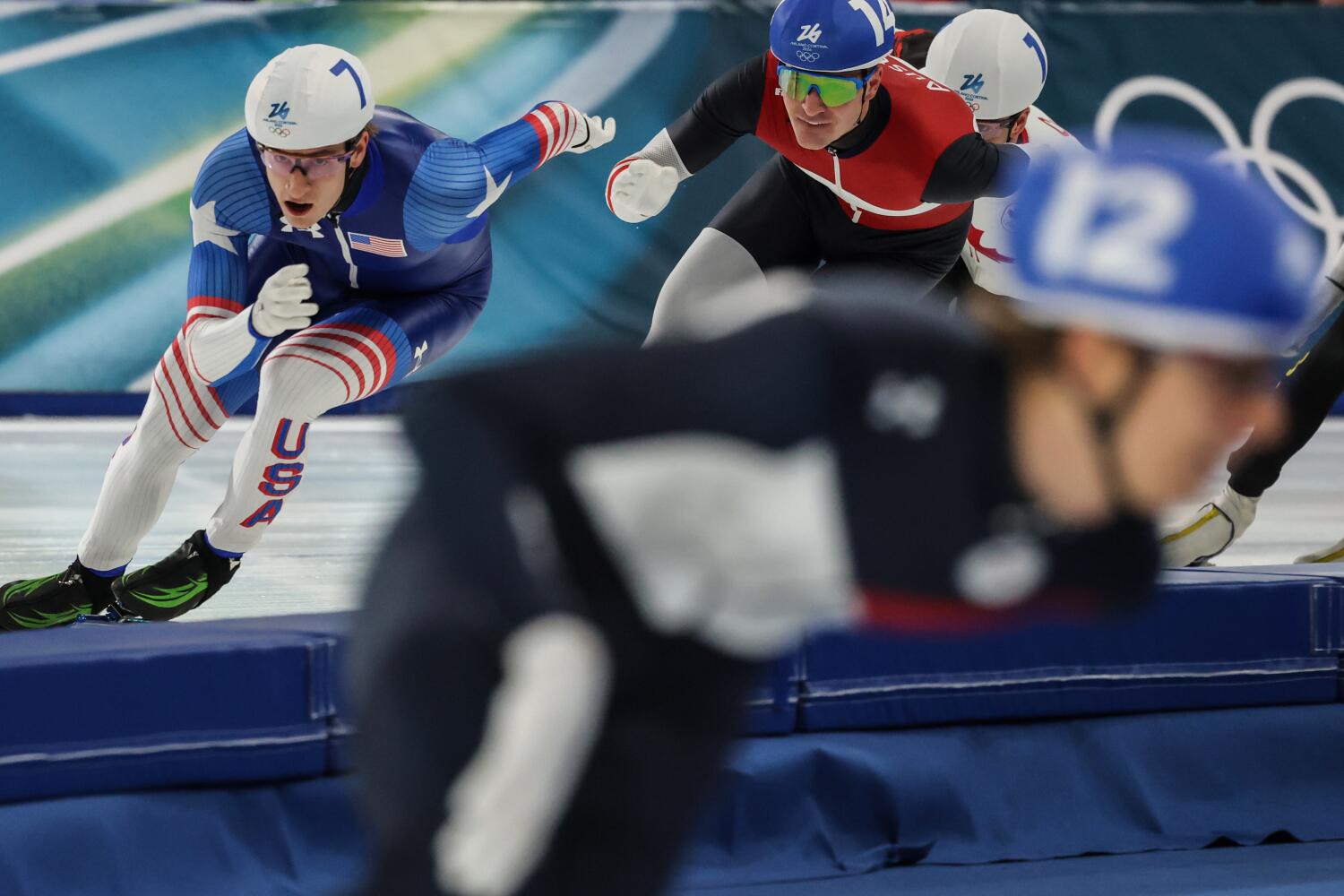
Stolz is built for the lead. His entire career has been a testament to the power of the individual. But in the pack, being the strongest athlete is often a liability. The rest of the field knows he is the danger. They watch his every twitch. If he tries to break away, the pack surges like a single, multi-headed organism to swallow him whole. They will let him "pull" the entire group, burning his legs into charred husks, only to slingshot past him in the final 200 meters.
The Team Pursuit and the Chain of Weakness
Then there is the Team Pursuit. This is perhaps the most heartbreaking discipline for a superstar. In this event, three skaters fly in a line, rotating the lead to manage the wind resistance. The catch? The clock doesn't stop when the first person crosses the line. It stops when the third person crosses.
A team is exactly as fast as its slowest member.
For the United States, this creates a profound tactical dilemma. You have Jordan Stolz, a Ferrari engine, paired with teammates who—while elite—might be closer to high-end Porsches. If Stolz skates at his maximum capacity, he will simply drop his teammates. He will look back and find himself alone, the gap between him and his partners growing until the aerodynamic benefit of the line vanishes.
To win, Stolz has to skate slower.
He has to modulate his power, holding back the very thing that makes him special to ensure the collective unit survives. It is a psychological torture for a natural-born racer. It requires a suppression of the ego that is almost antithetical to the mindset required to be the best in the world. You are asking a shark to swim at the speed of a pilot fish.
The Geography of the Oval
Consider the physical layout of the race. In a standard 400-meter oval, the corners are where the greatest stress occurs. The centrifugal force tries to throw the skater outward, toward the padded walls.
$$F_c = \frac{mv^2}{r}$$
The faster you go ($v$), the more force ($F_c$) pushes you away from the center. Stolz navigates these turns with a lean so aggressive it defies gravity. But in a pack, you don't always get to choose your line. You are boxed in. You are bumped. Someone’s blade nicking yours at 30 miles per hour isn't just a nuisance; it’s a potential catastrophe.
The "pack" is a nervous system. If the leader flinches, the tail end of the line whips. For a skater like Stolz, who relies on the purity of his technique and the uninterrupted flow of his power, the chaos of the pack is a contaminant. He is a precision instrument being used in a demolition derby.
The Strategy of the Sacrifice
The Dutch and the Norwegians have mastered the dark arts of the pack. They train together year-round, developing a telepathic sense of each other's breathing and stride. They understand the "sacrifice." In a Mass Start, a team might send a secondary skater on a "suicide breakaway" simply to force the other favorites to chase and exhaust themselves.
The U.S. program, historically, has been a collection of brilliant individuals rather than a cohesive tactical machine. Stolz is the pinnacle of that individualist tradition. But the Olympic medal table rewards the machine.
When we watch the next Winter Games, we will see the highlights of Stolz in the 500m. We will see the explosive start, the blur of the suit, the clock turning red to green. It will look like destiny. But when the lights stay on for the Mass Start, pay attention to his eyes behind the visor.
He won't be looking at the finish line. He will be looking at the hips of the man in front of him, waiting for a gap that may never come. He will be feeling the weight of the air, the drag of the pack, and the frustrating reality that sometimes, being the fastest man on earth isn't enough to beat three men working in silence.
The ice is honest, but the pack is cruel. It takes the brilliance of the individual and grinds it down into the average of the group. For Jordan Stolz, the quest for a historic medal haul isn't just a test of how fast he can go, but of how well he can survive the gravity of other people.
He is a man who was born to fly, currently learning how to huddle.
The story of the coming Olympics won't just be about his speed. It will be about his patience. It will be about whether a king can learn to be a solider, and whether the fastest legs in history can find a way to outrun the collective shadow of the field.
The wind is waiting. The pack is closing in. The ice remains silent.
Would you like me to analyze the specific lap times and aerodynamic drag coefficients that differentiate Stolz's individual performance from his team pursuit contributions?