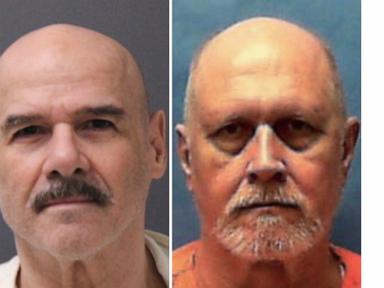
Capital punishment in the United States operates less as a uniform judicial standard and more as a localized administrative pipeline governed by state-level executive discretion, statutory appeal ceilings, and pharmaceutical supply chains. When Florida schedules a record-breaking twentieth execution on the same calendar day Texas conducts a lethal injection, the convergence reflects the operational mechanics of two distinct state apparatuses reaching peak throughput simultaneously. Understanding this phenomenon requires stripping away surface-level sensationalism to examine the institutional architecture, legal bottlenecks, and resource constraints that dictate how states move capital cases from post-conviction litigation to final execution.
The Structural Divergence of Capital Pipelines
Most public reporting treats simultaneous executions as mere calendar coincidences. In reality, the rate at which a state carries out death sentences is determined by its institutional design—specifically, how power is distributed between the executive branch, the state judiciary, and the department of corrections. Florida and Texas represent the two dominant operational models in modern American capital punishment, yet they arrive at high execution volume through fundamentally different mechanisms.
The Florida Executive-Driven Model
In Florida, the pace of executions is tightly coupled to gubernatorial authority. Under Florida statutes, the Governor holds sole discretion to sign death warrants once an inmate’s direct appeals and initial post-conviction proceedings are exhausted. Unlike jurisdictions where judicial scheduling dictates the calendar, Florida’s executive branch controls the throttle.
When Florida approaches a modern single-year record—such as a twentieth execution following the reinstatement of the death penalty in 1976—it signals a deliberate administrative decision to clear a backlog of warrant-ready inmates. This throughput relies on three structural factors:
- Statutory Appeal Compression: Florida’s Timely Justice Act and subsequent legislative reforms shortened the windows for filing post-conviction motions, reducing the latency period between final state supreme court affirmation and warrant eligibility.
- Non-Unanimous Jury Thresholds: Legislative adjustments lowering the jury recommendation threshold for a death sentence from unanimity to an 8–4 supermajority expanded the upstream pool of capital convictions, preventing retrials from stalling the broader docket.
- Centralized Execution Infrastructure: Florida conducts all executions at Florida State Prison in Raiford using a standardized three-drug lethal injection protocol, eliminating county-level logistical variance.
The Texas Judicial-Driven Model
Texas operates through a decentralized, court-driven scheduling mechanism. Rather than relying on the Governor to initiate the final countdown, trial court judges in the county of original conviction set execution dates upon motion from the local district attorney. The Texas Governor possesses limited clemency power—restricted to a single 30-day reprieve without a recommendation from the Texas Board of Pardons and Paroles.
Because scheduling authority is distributed across dozens of county prosecutors and district judges, Texas maintains a steady, baseline volume of executions rather than episodic executive surges. When a Texas execution date aligns with a milestone date in Florida, it is the product of independent county-level docket management intersecting with Tallahassee’s centralized warrant issuance.
The Four Bottlenecks Governing Execution Capacity
Even when executive will or prosecutorial demand is high, state departments of corrections face strict operational constraints. A state cannot execute inmates faster than its legal, medical, and physical infrastructure permits. Four primary bottlenecks govern maximum throughput.
1. The Post-Conviction Litigation Funnel
Every capital case must pass through a multi-tiered review process before a warrant can be executed without an immediate judicial stay:
- Direct Appeal: Mandatory review by the state’s highest criminal court (the Florida Supreme Court or the Texas Court of Criminal Appeals).
- State Post-Conviction Review: Collateral attacks addressing claims such as ineffective assistance of counsel or suppressed exculpatory evidence.
- Federal Habeas Corpus: Review by U.S. District Courts, the relevant U.S. Circuit Court of Appeals (the 11th Circuit for Florida; the 5th Circuit for Texas), and the U.S. Supreme Court under the strictures of the Antiterrorism and Effective Death Penalty Act (AEDPA).
A state can only sustain high execution numbers when a large cohort of inmates exits this funnel simultaneously. Records occur not because trials happened faster in the current year, but because cases adjudicated fifteen to twenty-five years prior reach the end of federal habeas review at the same time.
2. Pharmaceutical Supply and Protocol Stability
Lethal injection remains the primary execution method in both states, creating an acute dependency on chemical procurement. Major pharmaceutical manufacturers maintain distribution controls prohibiting the sale of drugs for capital punishment, forcing state corrections departments to rely on compounding pharmacies and statutory secrecy laws that shield supplier identities.
Texas relies on a single-drug protocol using compounded pentobarbital. This simplifies administration and reduces the risk of multi-drug interaction complications, though maintaining potency and sterility within short shelf-life windows requires continuous procurement cycles. Florida utilizes a three-drug sequence—typically an anesthetic (such as etomidate), a paralytic (rocuronium bromide), and potassium chloride. While multi-drug protocols invite more frequent Eighth Amendment challenges regarding the efficacy of the initial sedative, Florida’s reliance on commercially available clinical drugs reduces its vulnerability to compounding shortages.
3. Facility and Personnel Bandwidth
Executing an inmate requires dedicated physical space, specialized medical technicians, security perimeter lockdowns, and administrative oversight for witness protocols. Corrections agencies operate under strict internal timelines—often referred to as "death watch" protocols—that begin weeks before the scheduled date.
In both Raiford, Florida, and Huntsville, Texas (the location of the Walls Unit execution chamber), staff must manage heightened security, media staging, and continuous inmate monitoring. Scheduling multiple executions within compressed timeframes strains institutional staffing. Consequently, even aggressive jurisdictions rarely schedule executions closer than two to three weeks apart within the same facility, establishing a hard physical ceiling on annual state output.
4. Federal Appellate Docketing
The final gatekeeper on any execution day is the United States Supreme Court. Inmates routinely file eleventh-hour applications for stays of execution alleging novel constitutional violations, newly discovered evidence, or method-of-execution defects.
When two states schedule executions on the exact same day, the Supreme Court’s emergency docket—commonly termed the shadow docket—must process parallel streams of last-minute filings simultaneously. Clerks and Justices review merits briefs, lower court dissents, and state responses under severe time compression, typically resolving stays within hours of the scheduled execution windows (often 6:00 PM Eastern Time in Florida and 6:00 PM Central Time in Texas).
Causal Dynamics of Multi-State Convergence
The occurrence of a record-setting execution in Florida alongside a routine lethal injection in Texas illustrates how macro-level legal shifts produce synchronized downstream outcomes. Three causal drivers explain why these timelines converge.
Appellate Circuit Alignment
Both the 11th Circuit (covering Florida) and the 5th Circuit (covering Texas) consistently apply strict interpretations of AEDPA deference, declining to grant federal habeas relief unless state court rulings violate clearly established federal law. Because neither circuit frequently intervenes to halt scheduled executions on procedural grounds, warrants signed in Florida and dates set in Texas carry a high probability of proceeding as scheduled. In contrast, states within circuits that routinely issue stays experience high attrition rates between scheduled dates and completed executions.
Deterrence of Dilatory Litigation
State attorneys general in both jurisdictions have systematically dismantled last-minute litigation strategies. By standardizing execution protocols and litigating facial constitutional challenges years in advance, state legal teams prevent defense counsel from using eleventh-hour civil rights lawsuits (filed under 42 U.S.C. § 1983) to secure automatic stays. When procedural friction is removed at the state level, calendar dates hold firm, increasing the statistical likelihood that two active jurisdictions will overlap on the same day.
Political Insulation of Executive Actors
Capital punishment policy responds directly to state-level electoral incentives. In jurisdictions where voters and legislatures overwhelmingly support the death penalty, governors and district attorneys face zero political penalty for maximizing execution throughput. Instead, clearing long-standing capital dockets demonstrates administrative efficiency and fidelity to victim advocacy mandates. When political incentives align across multiple populous states, concurrent executions become an expected byproduct of normal operations rather than an anomaly.
Limits of Throughput-Based Capital Administration
While high execution numbers demonstrate administrative capacity, optimizing a capital punishment system for maximum throughput introduces severe operational and legal vulnerabilities. Practitioners and legal analysts recognize several structural limitations inherent to accelerated execution schedules:
- Error Compression Risk: Compressing post-conviction review timelines reduces the window available to uncover forensic misconduct, eyewitness recantations, or undisclosed Brady material. High-volume pipelines prioritize finality over exhaustive error correction, increasing the institutional risk of executing an inmate with an unresolved factual claim.
- Litigation Fatigue and Resource Drain: Sustaining a record pace requires massive allocations of state attorney general staff time, corrections overtime, and judicial bandwidth. During peak warrant periods, state legal offices must divert appellate litigators from non-capital criminal and civil matters to defend continuous emergency filings.
- Supply Chain Fragility: A single botched intravenous line placement or a compromised batch of compounded drugs can trigger an immediate judicial moratorium, halting the entire pipeline for months or years while protocols are rewritten and re-litigated. Throughput efficiency is entirely dependent on zero-defect execution mechanics.
- Federal Precedent Shifts: Relying on permissive circuit court rulings leaves state pipelines vulnerable to sudden doctrinal shifts at the Supreme Court level. A single ruling altering standards for intellectual disability, juror bias, or method-of-execution review can instantaneously invalidate dozens of pending warrants.
Strategic Framework for Monitoring Capital Case Trajectories
For legal analysts, policy researchers, and institutional observers tracking capital punishment trends, relying on raw annual execution counts provides an incomplete picture of state activity. Execution numbers are lagging indicators reflecting legal and political decisions made decades earlier.
To accurately forecast execution volume and identify systemic bottlenecks across jurisdictions, apply a four-metric diagnostic model rather than tracking isolated calendar dates:
- Monitor Warrant-Eligible Cohort Size: Track the number of inmates who have exhausted initial federal habeas review in the 5th and 11th Circuits. This metric defines the true ceiling of potential executions over a 12-to-24-month horizon.
- Audit Protocol Litigation Velocity: Evaluate the average time required for state attorneys general to defeat § 1983 method-of-execution challenges. Rising litigation durations indicate emerging vulnerabilities in drug sourcing or administration procedures.
- Track Warrant-to-Execution Conversion Rates: Measure the percentage of signed death warrants or scheduled dates that result in completed executions versus judicial stays. A conversion rate exceeding 80 percent signals complete alignment between state executives, corrections officials, and federal appellate courts.
- Analyze Upstream Death Sentencing Rates: Compare current execution volume against new death sentences imposed annually. Because new capital sentences have declined nationwide over the past two decades, record-setting execution years represent the depletion of legacy backlogs rather than a permanent expansion of the capital punishment system. As legacy cohorts from the 1990s and early 2000s are exhausted, annual execution throughput in both Florida and Texas will inevitably contract regardless of executive intent.