The plastic of a secure telephone handset feels exactly like any other plastic. It gets warm when you hold it too long. It slips slightly if your palm sweats.
When the phone rang in Jerusalem, the air was already heavy with the scent of Mediterranean salt and exhaust. On the other end of the line, thousands of miles away in Washington, the morning was just beginning to stir. Two men, each carrying the weight of an entire nation’s survival and ambition, connected through a web of encrypted satellite beams.
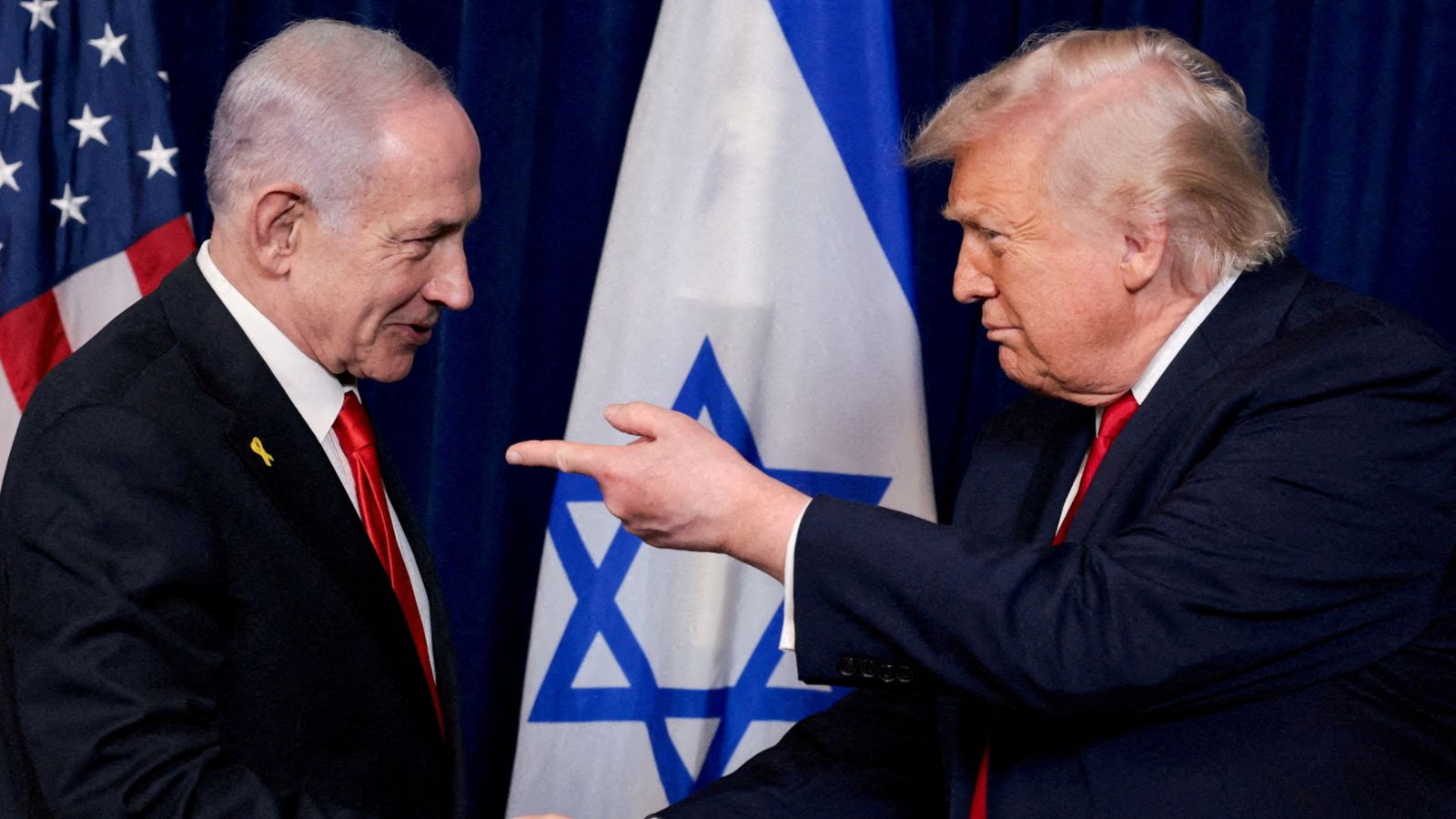
Donald Trump and Benjamin Netanyahu do not speak in the abstract language of diplomatic communiqués. They speak in the grammar of leverage, theater, and raw survival.
The official press releases from that Thursday call offered the usual skeleton: a discussion on Turkish aggression, American naval maneuvers in the Persian Gulf, and the fraying edges of a regional ceasefire. But skeletons do not tell you how the wind feels when it shifts. To understand what actually happened on that call, you have to look at the water. You have to look at the narrow, crowded choke points of global commerce where a single spark can turn a billion dollars of crude oil into an inferno.
The Mirage of the Quiet Sea
For a few fragile months, the world breathed a collective sigh of relief. A uneasy truce had settled over the Persian Gulf. Shipping lanes that had been plagued by drone strikes and naval standoffs suddenly went quiet. On paper, the strategy had worked.
Then, the illusion shattered.
Imagine standing on the deck of a commercial tanker moving through the Strait of Hormuz. The water is a deep, deceptive blue. Underneath that surface lies a modern chessboard. When Iranian forces targeted commercial vessels, they were not just striking steel; they were testing the perimeter of American patience. The response was swift. American airstrikes hit back, illuminating the desert night.
Trump’s message to Netanyahu was stripped of any bureaucratic polite phrasing. The ceasefire, he told the Israeli Prime Minister, is over. The American position had shifted from containment to a starker, far more unpredictable mandate: finish the job.
But what does finishing the job actually mean when the battlefield has no clear borders?
Consider the immediate fallout. Hours after the American strikes, retaliation rippled outward. Rockets and drones did not just head toward empty military outposts. They targeted US-allied positions in Kuwait and Qatar. In Tehran, the rhetoric reached a fever pitch, with officials accusing Washington of conducting military strikes perilously close to Iran’s only civilian nuclear power plant.
This is the terrifying geometry of modern escalation. A decision made in an oval office ripples out to a radar room in Kuwait, which then triggers an alert in an air defense battery near a nuclear reactor. The margins for error have shrunk to zero.
The Turkish Complication and the Phantom Jets
While the skies over the Gulf were burning, Netanyahu’s immediate anxiety was focused on a different horizon. The conversation quickly shifted from the waters of the south to the political theater of Ankara.
Turkish President Recep Tayyip Erdoğan had been escalating his verbal assaults on Israel, using language that signaled a deep, ideological hostility. For Netanyahu, this was not mere political posturing. It was a structural threat to Israel’s northern flank and its diplomatic standing in the region.
Then came the complication that made the phone call necessary.
Washington had dropped a hint that it might approve the sale of advanced F-35 fighter jets to Ankara. To the casual observer, arms sales are just business. To Israel, they are an existential calculus. The entire security doctrine of the Jewish state relies on maintaining a qualitative military edge over every potential adversary in the region.
Imagine the tension on that secure line. Netanyahu, facing domestic pressure and a multi-front security crisis, arguing that putting the world’s most advanced stealth fighters into Turkish hands would fundamentally alter the balance of power. Trump, viewing the world through the lens of transaction and strategic alignment, balancing the need to keep Turkey within the Western orbit while assuring his closest Middle Eastern ally that their safety would not be bartered away.
The American President updated Netanyahu on the massive deployments moving into the Gulf. Warships, carrier strike groups, and logistics vessels were slicing through the water, a visible wall of steel meant to deter Tehran. Yet, the paradox remained. Trump continued to insist that these massive movements did not mean a return to full-scale war.
It is a high-stakes game of chicken played with aircraft carriers. You move the pieces as close to the edge as possible, hoping the other side blinks first, while praying your own steering does not lock up.
The Whispers in Rome and the Silent Diplomat
While the two leaders debated the grand strategy, the real, grimy work of diplomacy was happening in windowless rooms elsewhere.
A world away from the secure phone lines, a US official quietly confirmed that the framework deal between Israel and Lebanon was moving to technical talks in Rome. The central roadblock remained unchanged, a stubborn rock in the middle of a rushing river: the disarmament of Hezbollah.
To understand the difficulty of this task, you have to look at how power operates in Lebanon. Hezbollah is not just a militia; it is a state within a state, a heavily armed proxy that answers ultimately to Tehran. Asking them to lay down their weapons is like asking a sovereign military to disband itself voluntarily. It has never happened in modern history without a total, catastrophic defeat on the battlefield.
Meanwhile, Iran’s foreign minister, Abbas Araghchi, was working his own phone lines. He was not calling Western capitals. He was dialing Riyadh, Ankara, Muscat, and Islamabad. His message was simple, intended to sow doubt among America's regional partners: Washington broke the truce first.
Tehran’s diplomatic strategy is to portray the United States as an erratic, unreliable actor that brings chaos wherever its shadow falls. By reaching out to Saudi Arabia and Pakistan’s military leadership, Iran is trying to build a diplomatic buffer zone, ensuring that if a full-scale war does break out, their neighbors will at least remain neutral.
The Weight of Unknowing
The true cost of this geopolitical chess match is not measured in the price of a barrel of oil or the cost of an F-35 wing. It is measured in the profound uncertainty that settles over the ordinary people living in the shadow of these decisions.
Think of the merchant mariners navigating the Strait of Hormuz, knowing that their ship could become the next headline. Think of the families in Kuwait and Qatar, watching the night sky for the telltale flash of an interception. The grand strategies discussed by presidents and prime ministers are executed by young men and women who look at radar screens and hope the blip they see is a flock of birds and not a cruise missile.
The phone call ended. The encryption keys cycled back to their default states. The plastic grew cold.
In Washington, the President moved on to the next briefing, the next transactional challenge of a complex world. In Jerusalem, the Prime Minister returned to a war cabinet room filled with maps, targets, and the unending pressure of defense. The ships are still moving in the Gulf. The jets are still on the tarmacs. The world waits to see if the job being finished is the preservation of peace, or the beginning of something far darker.