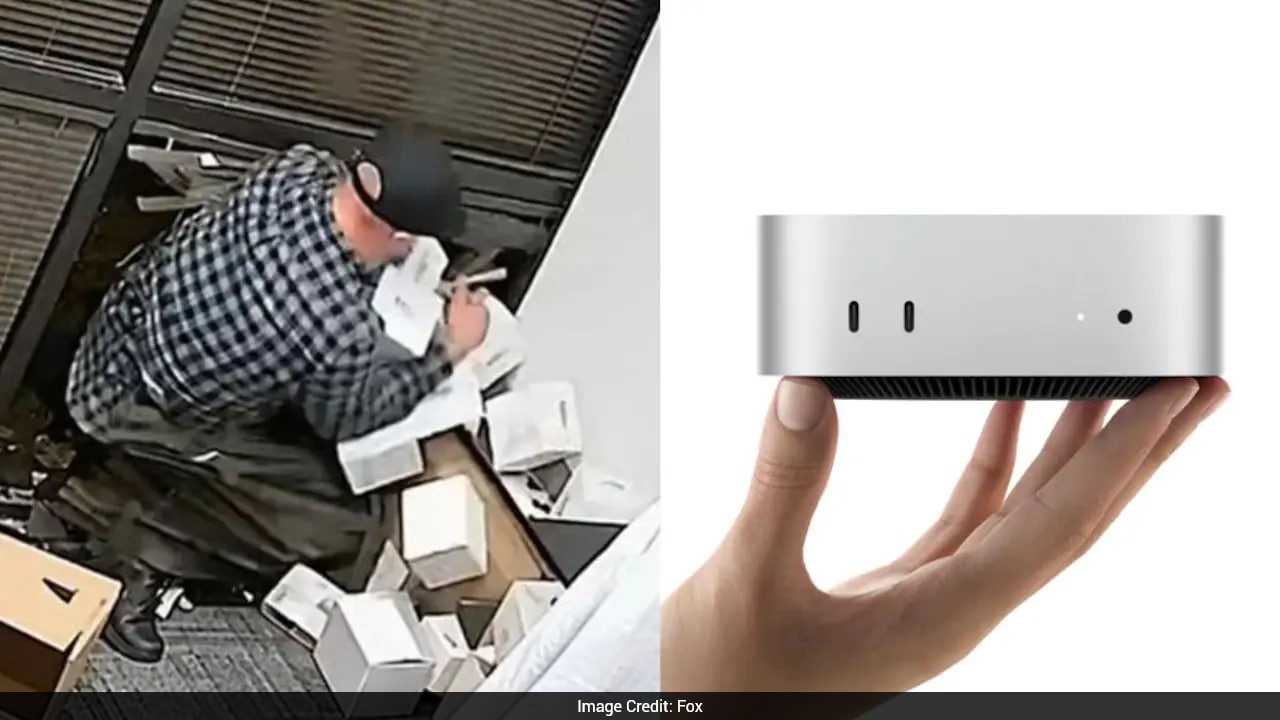
A burglar who breaks through glass at 2 a.m. to haul away dozens of empty Apple Mac mini boxes while leaving actual computers untouched does not suffer from a generic low IQ. The intruder falls victim to signaling arbitrage, a failure of rapid asset verification under high time pressure and zero-information conditions.
Standard local news coverage treats a theft like the October 4, 2026 break-in at a technology firm in Tempe, Arizona, as a punchline. A suspect shattered a window near University Drive and State Route 143, pushed dozens of Mac mini boxes out of the opening, left the working hardware behind, and triggered a $1,500 reward offer from the business owner alongside a Tempe Police investigation. Laughing at the mistake is easy. Understanding the economic mechanics that make empty packaging look like high-margin inventory is far more useful for anyone managing physical assets, retail displays, or commercial offices.
Deconstructing the Competitor's Narrative
Shallow crime reporting relies on a simple character diagnosis: a dumb criminal grabbed worthless cardboard instead of expensive electronics. That framing stops at ridicule and misses three structural drivers behind the incident.
First, standard coverage treats packaging as a zero-value byproduct rather than a high-precision market signal. Apple designs compact, uniform, recognizable boxes for desktop hardware like the Mac mini. To an outsider peering into a dimly lit office or acting on a smash-and-grab impulse, a stack of uniform boxes reads as unopened stock waiting to be liquidated.
Second, punchline headlines flatten asymmetric risk and cost into a single joke. Even when a thief walks away with zero hardware value, the victim company absorbs physical damage costs, potential security upgrades, operational disruption, and reward outlays. Meanwhile, the intruder still faces criminal exposure for breaking and entering and criminal damage regardless of whether the boxes hold silicon or air.
Third, surface-level reporting ignores decision latency in illicit environments. Real burglaries happen under adrenaline, noise anxiety, and fear of alarm dispatch or passing patrols. When an actor has seconds to grab portable items and exit through broken glass, multi-step verification—lifting flaps, checking seal integrity, testing weight distribution—collapses.
The Cost Function of a Botched Break-In
Analyzing an empty-box burglary requires separating the offender's expected payoff from the victim's realized loss. Those two ledger columns rarely match, and the gap widens when the stolen goods have near-zero resale value.
Offender Side: Expected Value Versus Execution Friction
From a rational-choice perspective modeled in classic criminology (such as Gary Becker's economic framework of crime), an offender weighs expected gain against probability of apprehension and severity of punishment. An empty Mac mini box breaks that math on the gain side while leaving the risk side intact.
- Gross resale value: Empty retail or hardware boxes carry negligible street liquidity compared with working computers, and even legitimate secondary-market buyers who purchase empty boxes generally look for specific model serials or authentic packaging rather than unverified late-night haul items.
- Handling and transport friction: Bulky boxes take up physical volume relative to actual value density, slowing movement through a broken window or across a parking lot.
- Legal exposure floor: Under Arizona statutes such as A.R.S. § 13-1602 cited in coverage of the Tempe incident, smashing glass can support criminal damage charges tied to repair costs—potentially reaching felony thresholds above $2,000 in damage—independent of the low dollar value of empty cardboard.
Victim Side: Property Damage and Operational Drag
A common misconception after a failed theft is that "no stolen computers means no real loss." That assumption confuses merchandise shrinkage with total incident cost.
- Hard remediation outlays: Replacing shattered commercial glazing, clearing glass debris, and funding a $1,500 reward create immediate cash outflows even when hardware stays on site.
- Soft productivity drag: Staff deal with after-hours disruption, police coordination, and heightened anxiety about facility vulnerability.
- False sense of security: Escaping hardware loss by luck can tempt operators to delay basic physical hardening, leaving the underlying entry point unchanged.
Why Empty Boxes Fool Opportunistic Intruders
Why do offenders repeatedly grab empty boxes in smash-and-grab incidents across retail stores, offices, and porch deliveries? Three operational mechanisms explain the error without needing to invent psychological profiles.
1. Visual Anchoring and Brand Salience
Human visual attention locks onto high-contrast brand cues and familiar silhouettes. Compact computer packaging signals high unit value per cubic foot. Once a thief spots recognizable branding, confirmation bias fills in the missing details: boxes equal inventory. Checking whether a box has been opened, flattened, or emptied requires deliberate pause—the exact behavior suppressed during a hurried break-in.
2. Weight Ambiguity in Rapid Handling
Compact electronics boxes are small enough to carry by the stack. A person grabbing a dozen boxes at once feels collective bulk rather than calibrating the exact mass of each unit against a factory-sealed computer, especially when moving fast near a broken window.
3. Sightline and Layout Blind Spots
In commercial spaces, empty boxes often sit on shelves, storage racks, or worktables after deployments or upgrades, while active workstations or locked hardware sit in different zones or angles relative to the point of entry. A thief entering through a single breached window operates with a narrow field of view and takes whatever matches the mental target first.
Separating Verified Facts From Educated Hypotheses
Rigorous analysis keeps confirmed reporting distinct from analytical inference. In the Tempe incident, public reporting establishes a clear baseline: a man broke a window at a Tempe tech company early on a Sunday morning (October 4, 2026), security video captured him taking dozens of empty Mac mini boxes while leaving computers behind, no one was reported physically harmed, the company filed a report with Tempe Police and offered a $1,500 reward, and the suspect had not been publicly identified in those reports.
Everything beyond those observable facts is a hypothesis, not proven intent. We do not know from public reports whether the suspect assumed the boxes contained new Mac minis, whether he acted impulsively after shattering the glass, or whether he had any specific secondary plan for the packaging. Treating an educated hypothesis as settled fact weakens any security or operational conclusion built on top of it.
Tactical Controls for Offices and Hardware Operators
Operators cannot eliminate opportunistic crime with a single fix, and every physical control carries trade-offs in cost, convenience, or aesthetics. Still, businesses storing high-signal packaging or hardware can tighten their defenses through a clear sequence.
- Audit exterior sightlines from street and window level. Walk the perimeter at night and view the interior through ground-floor glass. Remove or relocate recognizable hardware boxes, shipping labels, and high-value silhouettes away from windows and doors.
- Crush or recycle empty boxes immediately after unboxing. Leaving intact boxes stacked in visible areas creates a false inventory signal. Breaking down cardboard removes both the visual cue and the illusion of sealed stock.
- Separate high-value hardware from staging areas. Keep active computers, spare units, and deployment stock out of immediate reach of ground-floor glass openings, and secure high-value assets in interior rooms or lockable enclosures after hours.
- Upgrade glass and entry detection selectively. Standard plate glass invites smash-and-grab entry. Security window film, laminated glazing, glass-break sensors, and motion-triggered cameras with clear facial and vehicle angles raise entry effort and evidentiary value.
- Define a pre-incident response playbook. Pre-assign responsibilities for preserving surveillance footage, documenting glass and interior damage for insurance and law enforcement, and deciding when a cash reward makes sense versus relying solely on police channels.
Real Trade-Offs and Limits of Physical Hardening
No security measure is a silver bullet. Heavy security film or laminated glass costs significantly more upfront than standard panes and can complicate emergency egress rules if improperly specified. High-sensitivity glass-break and motion sensors can generate false alarms from severe weather, delivery activity, or cleaning crews, eroding response urgency if poorly tuned. Publicly offering a reward can draw useful leads, yet it can also attract low-signal tips that consume investigative time.
The Strategic Play for Asset Protection
Treat packaging hygiene as a core layer of physical security rather than an afterthought. A business that eliminates visible empty-box signals near ground-floor glass, pairs entry detection with clear exterior lighting and camera angles, and pre-stages its incident-response checklist shrinks both the odds of an opportunistic smash-and-grab and the full cost when one occurs.