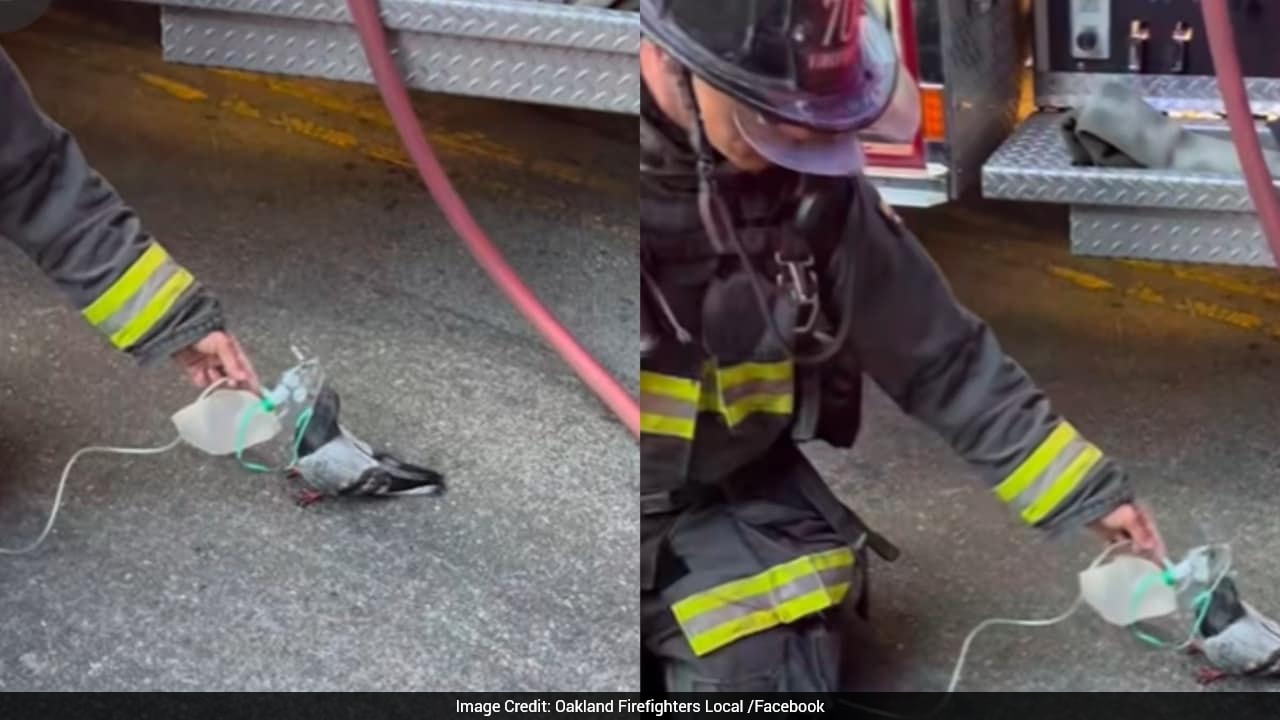
A car bursts into flames on an American street. The fire is suppressed. The smoke clears. But instead of wrapping up the scene and clearing the block for the next call, first responders assemble around a curb. A camera rolls. A firefighter places a pediatric oxygen mask over the beak of a soot-covered feral pigeon.
The internet goes wild. Commenters weep. Local news anchors deliver two minutes of syrupy commentary on human kindness.
It is complete nonsense.
What you just watched was not a triumph of medical compassion. It was a staged photo opportunity that exposed a profound misunderstanding of biological science, a waste of municipal resources, and a masterclass in public relations deflection.
The media loves these stories because they cost nothing to produce and generate cheap clicks. But if you look past the warm feelings and evaluate the situation through the lens of actual emergency operations, the whole scene falls apart.
The Avian Anatomy Lie
Let us start with basic biology. Slapping a standard oxygen mask over a bird's beak does almost nothing to treat severe smoke inhalation.
Mammals rely on a bidirectional respiratory system. We pull air into alveolar sacs, exchange gas, and push it back out the same way it came. A tight-fitting mask works on a human or a dog because the enclosed volume creates a positive concentration gradient, forcing oxygen into a trapped lung volume.
Birds do not work that way.
An avian respiratory system is unidirectional. It consists of small, rigid lungs paired with a complex network of non-vascular air sacs that extend throughout the body cavity and into hollow bones. Air flows through a bird's lungs during both inhalation and exhalation, driven by precise abdominal muscle movements.
When a bird suffers acute smoke inhalation, toxic particulates and hot gas damage the delicate parabronchi and cause rapid fluid accumulation in the abdominal air sacs.
To actually stabilize an asphyxiated bird, you need:
- Direct endotracheal intubation with a micro-uncuffed tube.
- A controlled, humified oxygen chamber.
- Nebulized bronchodilators to clear soot from air sac walls.
Holding a plastic cone over a thrashing, wild, stressed-out pigeon does not deliver clinical oxygen. It suffocates the animal further with stress-induced hyperventilation while leaking gas into the surrounding air.
It is medical theater. It looks gentle on camera, but biologically, it is useless.
The Mechanics of Fire Department Propaganda
Why do fire departments perform these rituals? Because bad news is expensive, and good PR is free.
I have sat in municipal budget hearings where fire chiefs were grilled over climbing response times, aging apparatus fleets, and overtime budget overruns. Do you know what defuses a hostile city council faster than a quarterly audit report? A viral video of Engine 4 saving a pigeon.
Municipal public information officers know exactly what they are doing. Modern fire departments operate under intense public scrutiny. When an engine company takes 12 minutes to get to a structure fire because the nearest station was brownout-closed, the public gets furious. But when that same company posts a 15-second clip of a crew member cradling a bird, the public forgives the operational gaps.
It creates a halo effect. It tricks the taxpayer into evaluating an agency based on its emotional theater rather than its operational efficiency.
Imagine a scenario where a private ambulance company charged $3,000 for a transport, delayed your arrival to the trauma center by five minutes, but gave your kid a free stuffed bear on the way. You would see right through it. Yet when a municipal service exchanges operational focus for a viral social media post, millions of people cheer.
Biosafety Malpractice in Broad Daylight
Beyond the wasted time and fake science, there is an issue nobody in the comment section wants to talk about: infection control.
Feral pigeons (Columba livia) are not urban pets. They are wild vectors for zoonotic pathogens. They carry and shed:
- Chlamydia psittaci (the bacterium responsible for psittacosis, a severe human atypical pneumonia).
- Cryptococcus neoformans (a dangerous fungal pathogen found in dried avian droppings).
- Salmonella enterica.
- Avian influenza strains that threaten domestic agriculture.
When first responders take specialized pediatric or small-animal oxygen masks—equipment bought with public funds or specialized community donations—and press them against the face of a wild, disease-carrying bird, they compromise their equipment.
Even if they sanitize that mask afterward, field decontamination in the back of an engine bay is not a sterile autoclave process. The risk of cross-contaminating equipment meant for a human infant or a certified search-and-rescue canine with wild avian pathogens is non-zero.
No certified veterinary clinician would use a non-disposable clinical mask on a wild, unscreened urban bird and then return it to service for domestic patients. Doing it on the side of a highway for a photo op is negligence disguised as mercy.
The Cold Math of Emergency Triage
Emergency medical services operate under strict, cold protocols for a reason. Triage exists because resources are finite. Time is finite. Personnel are finite.
The core rule of field triage is simple: dedicate available resources where they yield the highest probability of saving human life and preserving critical infrastructure.
When a unit finishes extinguishing a vehicle fire, the job is not done. The crew needs to:
- Decontaminate their turnout gear to mitigate carcinogen exposure.
- Repack attack lines and bleed air from pump manifolds.
- Inventory self-contained breathing apparatus (SCBA) cylinders.
- Log scene details into the national fire incident reporting system.
- Signal to dispatch that the unit is back in service and ready for the next call.
Every minute spent crouched over a feral bird is a minute that unit is delayed in returning to full operational readiness. If an engine company is out of service playing street vet when a cardiac arrest call drops two blocks away, another station has to cover it. That means extra driving time. That means minutes lost where human brain cells are dying.
Triage does not care about your feelings. It cares about system capacity. Extending scene time for performative animal care violates every principle of incident command.
Real Compassion Demands Tactical Discipline
If public safety agencies actually cared about animal welfare, they would stop running social media campaigns around wild pests and start funding real solutions.
If a department wants to handle animal rescues properly, here is what actionable, professional execution looks like:
- Establish hard operational boundaries: First responders handle human life, structural protection, and hazardous mitigation. Period.
- Partner directly with licensed wildlife rehabilitators: If a wild animal is injured at a scene, secure it safely in a ventilated carrier and hand it over to trained specialists who possess actual avian ICU equipment.
- Require strict protocol adherence: Forbid the deployment of medical oxygen gear on non-certified working animals unless explicit authorization is granted by an on-duty medical director.
We need to stop demanding that our first responders act as Disney characters. Firefighters are highly trained tactical technicians whose job is to extinguish high-energy thermal events and extract human beings from lethal environments.
The next time a video pops up in your feed showing first responders putting a mask on a feral bird, do not hit the heart button. Ask why your tax dollars are paying for staged veterinary theater while the engine company sits out of service.
Demand tactical discipline over viral publicity.