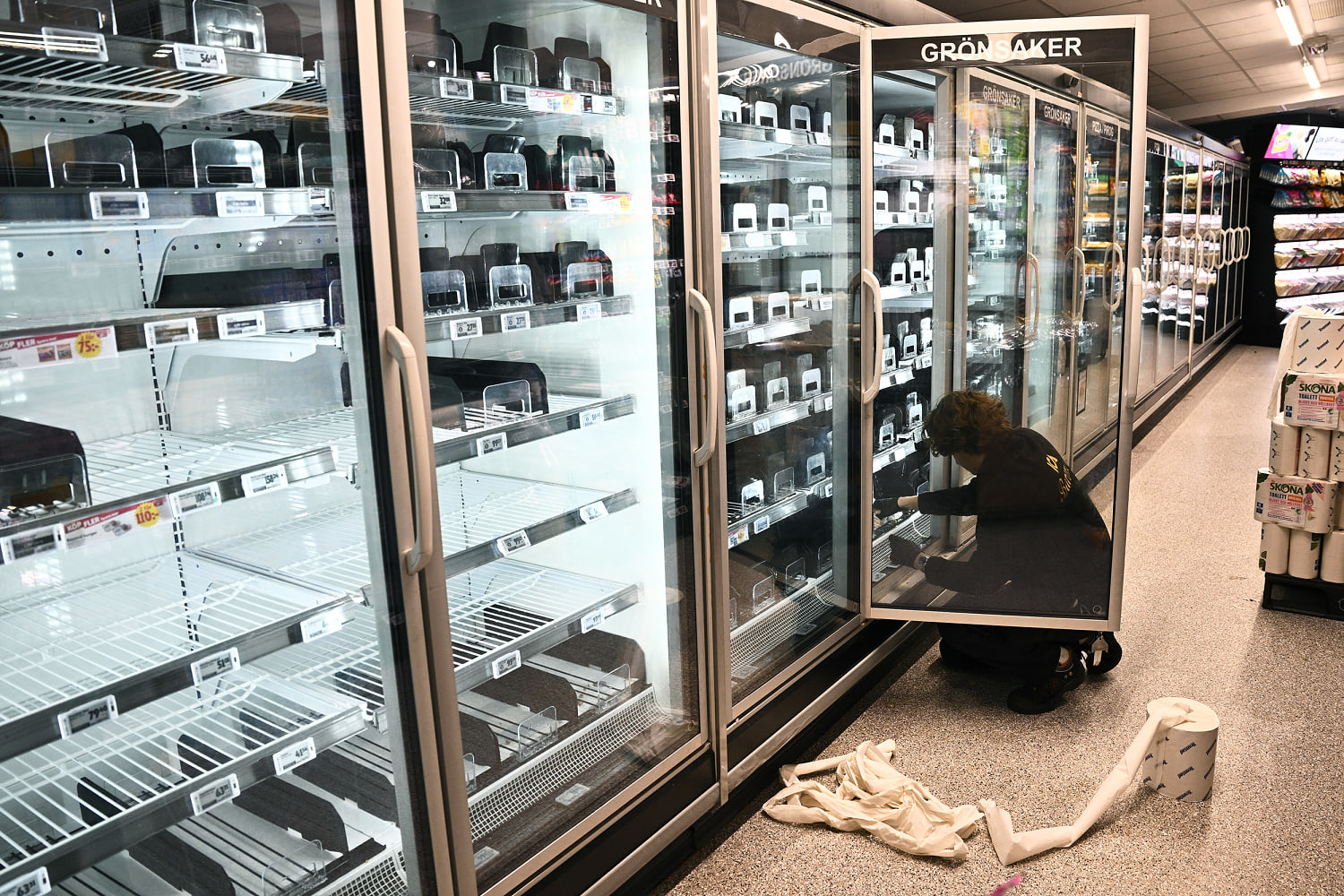
Every few months, a headline ripples through the retail press claiming rogue hackers are hijacking European supermarket freezers. The mainstream narrative is predictable. Cybercriminals scan the internet, find an exposed Building Management System (BMS), crank up the thermostat, and spoil millions of euros worth of dairy and meat.
It makes for great clickbait. It also completely misses the real story. You might also find this similar article useful: General Motors Paying 220 Million Dollars Is a Victory Lap for Surveillance Capitalism.
Having spent the last decade auditing Operational Technology (OT) networks for major European logistics and grocery chains, I can tell you the uncomfortable truth. While external threat actors certainly poke at exposed internet-facing ports, the vast majority of these so-called "fridge cyberattacks" are not the work of shadowy syndicates. They are the predictable result of reckless corporate cost-cutting, flat network architectures, and third-party vendor negligence.
Blaming "sophisticated hackers" for a spoiled freezer aisle is like leaving your front door wide open in a snowstorm and blaming the wind for ruining your hardwood floors. As discussed in recent coverage by Gizmodo, the implications are worth noting.
The Lazy Consensus Around Retail IoT
Standard cybersecurity coverage treats supermarket refrigeration as a passive victim of advanced digital warfare. Analysts point to the rise of the Internet of Things (IoT) and claim that connecting commercial chillers to the cloud inherently invites disaster.
This is a fundamentally flawed premise. Connecting industrial refrigeration to a network is not the problem. Modern grocery margins are razor-thin, often hovering between one and three percent. Automated temperature monitoring, predictive compressor maintenance, and dynamic energy load balancing are financial necessities. Without them, many regional grocers would collapse under electricity costs and food waste.
The problem is how these systems are deployed.
When a supermarket chain rolls out smart refrigeration across four hundred locations, they rarely hire dedicated OT security architects. Instead, they outsource the installation to regional HVAC contractors. Those contractors are paid to get the compressors running and the telemetry reporting back to a central dashboard as fast as possible. Security is not on their invoice.
To make their own remote maintenance easier, contractors routinely configure cellular modems or local gateways with default administrative credentials. Worse, they bridge the Operational Technology network directly to the store's corporate Information Technology (IT) network. Suddenly, the exact same flat subnet handling point-of-sale terminals, guest Wi-Fi, and back-office payroll is talking directly to the programmable logic controllers (PLCs) regulating the frozen food section.
How a Freezer Actually Gets Compromised
To understand why the "evil hacker targeting milk" narrative falls apart, you have to look at the mechanics of a retail breach.
Criminal ransomware groups do not wake up in the morning intending to spoil yogurt. They run automated vulnerability scanners across massive blocks of IP addresses looking for low-hanging fruit—specifically, exposed Remote Desktop Protocol (RDP) ports, unpatched VPN appliances, and default-password web interfaces.
Imagine a scenario where a mid-sized grocery chain deploys a new cloud-connected refrigeration controller across fifty stores. To allow the third-party maintenance vendor to check compressor pressures from off-site, the installer opens port 80 or port 502 (standard Modbus TCP) directly to the public internet without a VPN or IP allow-listing.
Within hours, automated bots indexed by search engines like Shodan flag that open port. An opportunistic script kiddie—not a nation-state actor—logs in using admin and 1234, flips a relay switch, and watches the temperature climb. Or, more commonly, a ransomware gang breaches the corporate IT network via a mundane phishing email, moves laterally across the unsegmented network, and encrypts the central BMS server. The chillers lose their control signals, fail-safe into a defrost cycle, and the inventory rots.
In both cases, the refrigerator wasn't the target. The refrigerator was just collateral damage in an architectural dumpster fire.
Why Compliance Checklists Are Making Stores Less Safe
If you ask a retail Chief Information Security Officer (CISO) how they protect their cold chain, they will likely point to compliance frameworks. They will talk about ISO 27001 certifications, PCI-DSS audits for their payment terminals, and the European Union's NIS2 Directive.
Compliance is a trap. I have seen retail conglomerates burn millions of euros on compliance theater while leaving their physical infrastructure completely exposed.
Here is why: compliance audits measure documentation, not resilience. A supermarket chain can pass a rigorous PCI-DSS audit by isolating its credit card readers on a dedicated VLAN, yet leave its entire fleet of CO2 transcritical refrigeration racks sitting on an unmonitored, unencrypted flat network. Auditors rarely walk into the mechanical room behind the loading dock to inspect the physical wiring of a Danfoss or Carel controller.
Furthermore, the push to comply with environmental regulations—specifically the EU F-Gas Regulation forcing supermarkets to transition away from hydrofluorocarbons (HFCs) toward natural refrigerants like carbon dioxide—has accelerated hardware replacements. Retailers are rushing to install complex, software-heavy CO2 booster systems to hit sustainability targets. In their haste to meet green mandates, they bypass basic network engineering. They are trading ecological compliance for operational fragility.
The Vendor Liability Blind Spot
The mainstream tech press loves to scrutinize the supermarkets, yet they almost entirely ignore the original equipment manufacturers (OEMs) and maintenance subcontractors. This is a massive oversight.
Industrial control systems in retail suffer from a decades-long legacy of "security by obscurity." Many protocols used in commercial refrigeration—such as Modbus, BACnet, and LonWorks—were designed in an era when air-gapped networks were the norm. They lack native authentication and encryption. When a controller receives a command to shut down a compressor, it does not ask who sent the command. It simply obeys.
OEMs have bolted internet connectivity onto these legacy protocols without re-engineering the underlying trust model. When a vulnerability is discovered in a widely deployed BMS gateway, patching it is a logistical nightmare. Unlike a Windows laptop that updates overnight, updating the firmware on a refrigeration controller requires taking the cooling loop offline. If the update fails, the store loses its entire perishable inventory before a technician can drive out with a serial cable.
Because the operational risk of patching is so high, retailers simply don't do it. Outdated firmware becomes permanent infrastructure.
Dismantling the Common Myths Around Cold Chain Security
When these incidents hit the news, the same flawed questions dominate the industry conversation. Let's look at what people actually ask—and why those questions are completely wrong.
Are hackers specifically targeting European food supply chains?
No. Aside from rare geopolitical sabotage campaigns, financially motivated cybercriminals care about liquidity, not lettuce. Ransomware operators target retail because downtime equals immediate, visible financial loss, which increases the likelihood of a quick ransom payout. A spoiled freezer aisle is simply a high-visibility pressure tactic, not a specialized attack vector.
Should supermarkets disconnect their fridges from the internet?
Air-gapping modern retail refrigeration is a fantasy. If a store disconnects its telemetry, it loses real-time leak detection, energy optimization, and predictive failure alerts. A silent compressor failure on a Saturday night without remote alerting will spoil just as much food as a cyberattack—and it happens ten times more frequently. The answer isn't disconnection; it's proper network segmentation and unidirectional data flows.
Will AI threat detection stop these attacks?
Buying an expensive machine-learning anomaly detection appliance and plugging it into a broken network is like putting a luxury alarm system on a house made of cardboard. If your maintenance contractors are still sharing static passwords over unencrypted text messages and connecting via open ports, an algorithm won't save you. You don't have an intelligence problem; you have a basic hygiene problem.
How to Actually Secure a Commercial Cold Chain
Fixing this does not require revolutionary technology. It requires discipline, clear contractual boundaries, and a willingness to push back against operational convenience.
If you manage retail infrastructure or advise those who do, stop buying enterprise software dashboards and execute these four foundational changes instead:
- Enforce Strict IT/OT Segmentation: The network controlling your HVAC, lighting, and refrigeration must be physically or cryptographically isolated from corporate IT. Traffic between the two should only pass through a tightly controlled demilitarized zone (DMZ) using jump hosts with multi-factor authentication (MFA). If an accountant clicks a malicious link, the malware should have zero technical pathway to reach the meat department.
- Eliminate Direct Vendor Access: Terminate all persistent, vendor-managed cellular modems attached to store controllers. Third-party HVAC technicians should never have unfettered, 24/7 access to your internal systems. Implement Privileged Access Management (PAM) workflows where vendors must request time-bound, audited sessions that automatically terminate once maintenance is complete.
- Mandate Hardware Fail-Safes: Never rely purely on software to protect physical inventory. Every commercial refrigeration rack should have hardwired, mechanical high-temperature alarms and physical override switches that operate independently of the networked PLC. If the digital controller is compromised or bricked by ransomware, the mechanical thermostat must take over and hold a baseline safe temperature.
- Rewrite Procurement Contracts: Stop treating cybersecurity as an afterthought in vendor agreements. Insert strict Service Level Agreements (SLAs) that hold OEMs and installation contractors financially liable if they deploy hardware with default credentials, unpatched known vulnerabilities, or unauthorized remote backdoors. Hit them in their margins, and their installation practices will change overnight.
The Uncomfortable Trade-Off
There is a catch to doing this right, and anyone who tells you otherwise is selling something.
Locking down retail OT networks introduces friction. When you strip away default credentials, kill persistent vendor VPNs, and enforce strict jump-host authentication, maintenance takes longer. A contractor who used to fix a compressor fault in five minutes from their phone while sitting at home will now spend twenty minutes authenticating through security gateways, or they will have to physically drive to the store.
Retail executives hate this friction because it increases short-term maintenance costs and slows down response times during routine equipment glitches. They routinely overrule their own security teams to keep the third-party contractors happy.
That is the real reason European supermarket fridges keep failing during cyber incidents. It isn't because the attackers are unstoppable geniuses. It is because retail leadership consistently chooses short-term operational convenience over basic architectural resilience—and then acts shocked when the bill comes due.