Brussels pundits love a dramatic headline. Calling Donald Tusk’s border fortification along Russia’s Kaliningrad exclave a "gamble" sounds punchy on a slow news Tuesday. It is also completely backwards.
A gamble implies rolling the dice on an uncertain outcome without knowing the odds. When a poker player pushes all-in on a pair of twos, that is a gamble. When a homeowner installs steel deadbolts and shatterproof glass after watching the neighbor’s house burn down, nobody calls it a gamble. They call it basic survival.
The lazy consensus among Western armchair analysts goes like this: Poland is spending billions on the East Shield project, digging anti-tank ditches, laying minefields, and building fortifications right up against the Kaliningrad border, and this somehow "escalates tensions" with Moscow. They wring their hands. They worry about provoking the Kremlin. They frame Warsaw’s defense policy as a reckless political stunt designed to score domestic points before elections.
This reading of Central European security is not just wrong. It is dangerously naive.
The Myth of "Escalation" on the Baltic Coast
If you want to understand why the "gamble" narrative falls apart, look at a map of the Suwalki Gap. That narrow 65-kilometer strip of land between Poland and Lithuania is the only land bridge connecting the Baltic states to the rest of NATO. To the northwest sits Kaliningrad, Russia’s heavily militarized Baltic exclave. To the southeast sits Belarus, effectively a Russian military district in everything but name.
For decades, Western defense planners treated this geography like a math problem they hoped they would never have to solve. The dominant doctrine was "deterrence by punishment." In plain English, that meant admitting NATO couldn't actually stop a Russian mechanized thrust from sealing off the Baltics in 48 hours. Instead, the alliance promised to muster a massive counter-offensive months later to liberate the territory.
Ask anyone in Warsaw, Vilnius, or Tallinn what "liberation" looks like after months of Russian occupation. Bucha and Mariupol answered that question permanently.
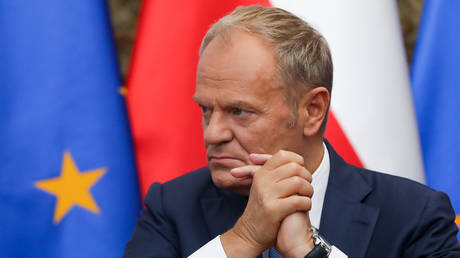
Donald Tusk, despite his years as President of the European Council and his reputation as a consensus-building Eurocrat, understood immediately upon returning to the Polish premiership that "deterrence by punishment" is dead. Poland cannot afford to be liberated. It has to practice "deterrence by denial."
Deterrence by denial means making the physical cost of crossing the border so obscenely high, slow, and bloody on day one that the attacker never gives the order. Concrete dragon's teeth, flooded wetlands, reinforced bunkers, and satellite surveillance networks do not provoke an invasion. They remove the temptation.
I have sat in enough defense procurement briefings in Warsaw over the last ten years to know how Polish military planners think. They do not care about theoretical de-escalation papers written in think tanks 1,500 kilometers away. They care about engineering physics. How many hours does a layered minefield plus a four-meter anti-tank trench delay an armored brigade? How many artillery shells can a concrete bunker absorb before its sensors go dark? Those are the only metrics that matter when your border touches an active belligerent.
Why Critics Are Asking the Wrong Question
Whenever Polish defense spending makes international headlines, the same tired questions pop up in search bars and panel discussions. Journalists ask: Will Poland’s border wall provoke a Russian response? Or: Can Poland actually afford the East Shield?
Both questions miss the point entirely.
First, Russia has already responded—not to Poland’s fences, but to perceived Western weakness. Moscow has spent years weaponizing migration across the Belarusian border, jamming GPS signals across the entire Baltic region from transmitters inside Kaliningrad, and running hybrid sabotage operations against European infrastructure. Pretending that polite restraint from Warsaw will somehow calm the Kremlin is like believing a mugger will leave you alone if you take off your running shoes.
Second, asking whether Poland can afford to spend over 4 percent of its GDP on defense and roughly 2.5 billion dollars on the East Shield ignores the alternative. What is the economic cost of a single Russian missile hitting a logistics hub in Rzeszow? What happens to foreign direct investment in Central Europe if global markets believe NATO’s eastern flank is porous?
In business, we call this an asymmetric downside. When the downside is existential ruin, spending a fraction of your national output on insurance is the most conservative financial move on the board. Tusk isn't gambling with Poland’s budget. He is hedging against catastrophic failure.
Defining the Terms Nobody Explains Properly
To cut through the noise, we need to be precise about what is actually happening along that 200-kilometer border with Kaliningrad. Media coverage routinely conflates three completely different military concepts, muddying the waters for everyone.
- Border Control Infrastructure: Fences, thermal cameras, and motion sensors. Poland already built much of this to stop irregular migration orchestrated by Minsk and Moscow. It stops people on foot. It does nothing against main battle tanks.
- Fortified Defense Lines (The East Shield): Deep, multi-layered engineering obstacles. This includes anti-tank ditches, concrete hedgehogs, minefield preparation zones, hardened ammunition depots, and underground command posts. This is designed to channel enemy armor into pre-sighted artillery kill zones.
- Forward Presence: The actual troops, Patriot batteries, HIMARS launchers, and K2 Black Panther tanks stationed behind those lines. Fortifications without firepower are just expensive speed bumps.
When pundits mock Tusk’s plan by claiming "walls don't work in modern warfare," they are exposing their own ignorance. Nobody in the Polish General Staff thinks a concrete pyramid stops a modern army by itself. Look at the Surovikin Line in southern Ukraine. Russian minefields, trenches, and pre-registered artillery stalled a Western-equipped Ukrainian counter-offensive for months in 2023. Static defenses work brilliantly when paired with drones, real-time intelligence, and long-range fires. Poland took notes from Ukraine’s bloodiest battles and applied them before a single shot was fired on Polish soil.
The Domestic Politics Trap
Critics love to point out that Tusk’s hardline border stance is a sharp pivot from his Civic Platform party’s rhetoric a few years ago. Back when the rival Law and Justice (PiS) party was in power and building the initial border fence with Belarus, Tusk’s allies criticized the humanitarian fallout and questioned the execution. Now, Tusk is expanding the concept into a massive military fortress and demanding European Union funding to pay for it.
Political commentators see hypocrisy. They call it an opportunistic ploy to steal conservative voters ahead of presidential elections.
Let’s be brutally honest: of course there is domestic politics involved. Every prime minister on earth calculates how security policy plays at the ballot box. If Tusk leaves his right flank open on national security, PiS will eat him alive.
Reducing the East Shield to a campaign stunt, however, confuses a side effect with the primary cause. Tusk shifted his position because the reality on the ground shifted. Between 2021 and 2024, Russia launched a full-scale European land war, moved tactical nuclear weapons into Belarus, and turned Kaliningrad into a continuous source of electronic warfare disruption. A leader who refuses to update their strategy when the threat environment transforms isn't principled. They are incompetent.
What the Strategy Actually Gets Wrong
If you want a real critique of Tusk’s Kaliningrad strategy, stop worrying about Moscow’s feelings and start looking at logistics, labor, and European bureaucracy. Those are the real vulnerabilities.
First, concrete and steel do not lay themselves. Poland is simultaneously building massive transport hubs, upgrading rail lines, expanding its armed forces to 300,000 personnel, and constructing fortifications along 700 kilometers of border with Russia and Belarus. The domestic construction sector faces severe labor shortages and raw material bottlenecks. I have watched major European infrastructure projects stall for years over environmental permits and supply chain delays. If the East Shield gets bogged down in Polish procurement courts or concrete shortages, the deterrence value evaporates.
Second, Tusk’s push to get Brussels to co-finance the East Shield as a "European defense project" faces stiff resistance from Southern and Western EU members. Countries like Spain and Italy have very different threat perceptions. Getting them to pay for bunkers on the Kaliningrad border requires burning massive amounts of diplomatic capital in Brussels. If the EU drags its feet on funding, Warsaw will have to foot the entire bill alone while already running an excessive deficit procedure with the European Commission.
Third, heavy reliance on static border defenses risks creating a dangerous psychological trap—the classic Maginot Line mentality. Fortifications are static; modern warfare is fluid. If Polish commanders fall in love with their concrete lines and underinvest in mobile air defense, electronic warfare countermeasures, and decentralized drone swarms, an adversary will simply fly over the ditches or strike critical infrastructure deep in the rear.
How Real Deterrence Works in Practice
Smart defense policy isn't about dramatic speeches in Brussels or flashy photo ops in camouflage jackets. It comes down to boring, relentless execution across four specific areas:
- Pre-delegated rules of engagement. Fortifications fail if local commanders have to wait four hours for political clearance from Warsaw before firing on an incursion. Authority must sit at the brigade level.
- Dual-use infrastructure. Every new highway, bridge, and railway built in northeastern Poland must be engineered to carry 70-ton tanks and include pre-built demolition chambers in case they need to be dropped in a hurry.
- Supply chain redundancy. Ammunition factories and drone assembly lines cannot sit within easy range of Iskander missiles launched from Kaliningrad. Production has to be dispersed and hardened underground.
- Total civil defense integration. Finland has spent decades building bomb shelters for its entire population and training civilians for crisis resilience. Poland is only just waking up to the fact that an army cannot fight if millions of panicked civilians are clogging the evacuation routes.
General Wieslaw Kukula, Chief of the General Staff of the Polish Armed Forces, stated plainly that Poland must prepare its forces for full-scale conflict, not asymmetric skirmishes. That is the doctrinal shift driving Warsaw right now.
Stop Mistaking Resolve for Recklessness
The comfortable era of the post-Cold War peace dividend is over. For thirty years, European leaders treated defense ministries like ATMs they could raid to fund social programs, outsourcing their hard security to the Pentagon while lecturing the world on soft power.
Now the bill has come due.
When commentators label Tusk’s Kaliningrad fortifications a "gamble," they are clinging to a dead worldview where diplomacy works without leverage and borders remain secure because international law says they should. Russia does not respect parchment. It respects mass, firepower, and concrete.
Poland isn't rolling the dice on its eastern border. Warsaw is finally taking the chips off the table and locking the vault.