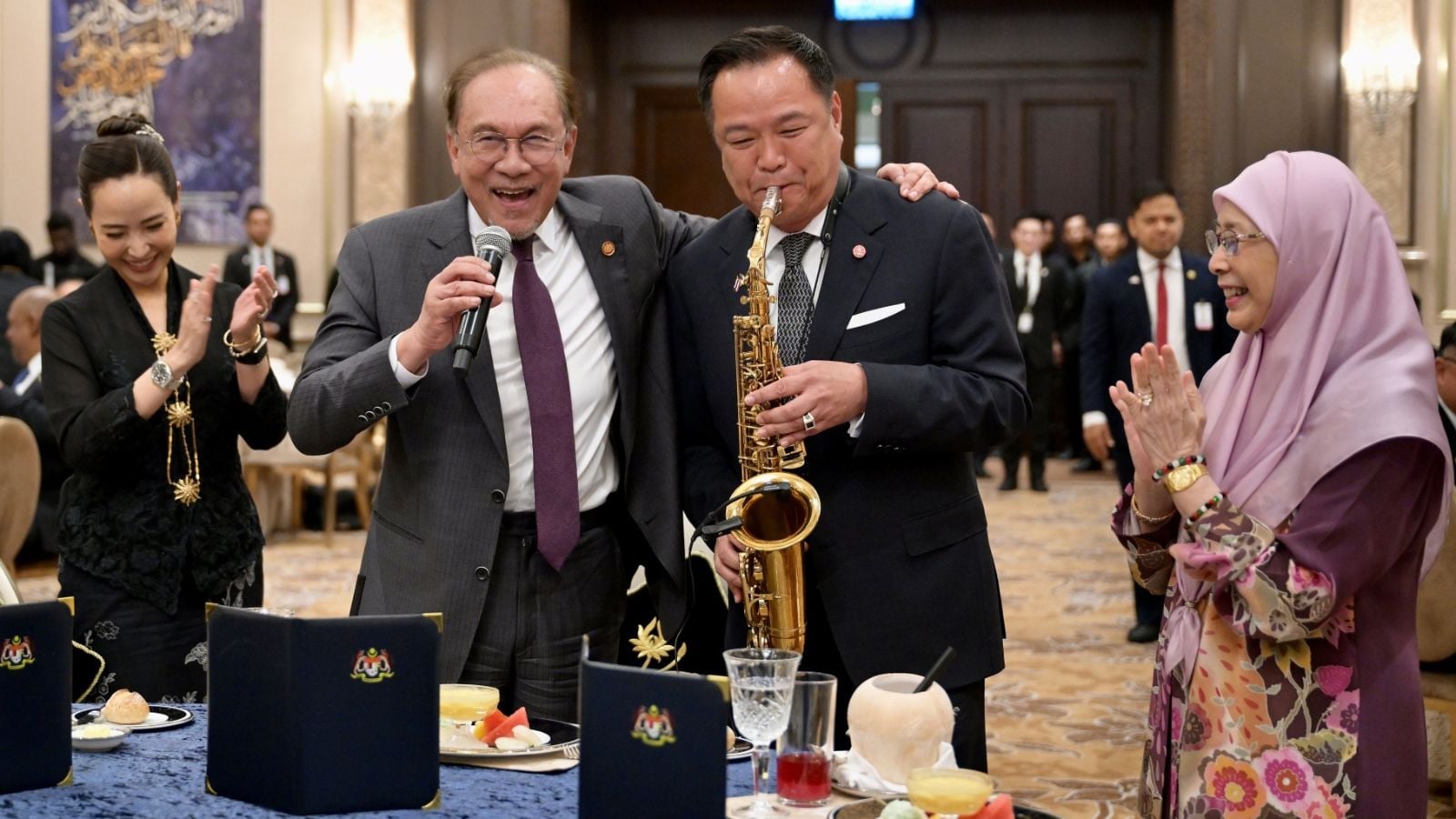
The internet is swooning over a viral video of Thai Prime Minister Paetongtarn Shinawatra playing the saxophone while Malaysian Prime Minister Anwar Ibrahim belts out Frank Sinatra's "My Way." The media is eating it up. Headlines call it a triumph of "soft power," a heartwarming display of ASEAN solidarity, and a refreshing break from stuffy statecraft.
They are dead wrong.
What the public saw as a charming musical duet was actually a masterclass in performative governance. While the internet applauds two leaders reading sheet music, the critical economic and security realities of Southeast Asia are being swept under a glossy, algorithmic rug. This isn't soft power. It's a distraction technique disguised as authenticity.
The Myth of the Relatable Dictator-Adjacent Leader
For decades, political strategists have relied on the "beer test"—the idea that voters want a leader they can grab a drink with. In the digital age, that has mutated into the "TikTok test." Can your leader sing? Can they dance? Can they trend?
I have spent fifteen years analyzing regional trade policies and state-level communications in Southeast Asia. I have watched governments waste millions of dollars on public relations campaigns designed to manufacture "humanizing" moments for politicians.
Here is the truth: when a leader steps up to a microphone or picks up an instrument in public, it is rarely a spontaneous burst of joy. It is a calculated pivot.
- The Distraction Dynamic: Performance art replaces policy discussion.
- The Authenticity Illusion: Relatability is weaponized to bypass critical press scrutiny.
- The Accountability Vacuum: You cannot easily question a leader’s stance on cross-border haze or human trafficking when the nightly news is focused on their musical timing.
The "My Way" duet is a perfect example of this illusion. It frames deep, historical, and structural tensions between two neighboring nations as something that can be ironed out over a classic karaoke track. It cheapens diplomacy into content creation.
The Brutal Reality Behind the Harmony
Let’s strip away the saxophone solo and look at the actual ledger between Thailand and Malaysia.
The Southern Thailand insurgency has claimed thousands of lives over the last two decades. Malaysia has historically acted as a facilitator for peace talks between the Thai government and separatist groups like the Barisan Revolusi Nasional (BRN). These talks are incredibly tense, fraught with mistrust, and currently stalling over issues of regional autonomy and military presence.
Furthermore, the economic border zones between the two nations are plagued by smuggling, human trafficking, and complex migrant labor disputes.
+---------------------------+-----------------------------------+-----------------------------------+
| Issue                     | The Viral Illusion                | The Ground Reality                |
+---------------------------+-----------------------------------+-----------------------------------+
| Southern Thai Border      | Seamless harmony and cooperation  | Stalled peace talks, BRN mistrust |
| Cross-Border Trade        | Open-border economic synergy      | Smuggling, tariff disputes        |
| Regional Security         | Unified ASEAN front               | Deep disagreements on Myanmar     |
+---------------------------+-----------------------------------+-----------------------------------+
To suggest that a shared love for Frank Sinatra moves the needle on these deeply entrenched geopolitical friction points is absurd. It is worse than absurd; it is dangerous. It signals to the public that international relations are driven by vibes rather than rigorous, often grueling, bilateral negotiations.
The Problem with ASEAN's Obsession with Face
The Association of Southeast Asian Nations (ASEAN) has long been criticized for its "ASEAN Way"—a diplomatic approach rooted in non-interference, consensus, and, above all, saving face.
This musical display is the ultimate manifestation of that doctrine. It prioritizes the appearance of harmony over the resolution of conflict. While Myanmar burns and the South China Sea inches closer to a flashpoint, ASEAN leaders are increasingly turning to cultural spectacles to project a false sense of regional stability.
"When the diplomacy of a region becomes indistinguishable from a talent show, the underlying institutions are failing."
Joseph Nye, who pioneered the concept of soft power, argued that it arises from a country's culture, political values, and foreign policies. It does not arise from a politician covering western pop songs. True soft power is the strength of your legal frameworks, the freedom of your press, and the stability of your markets.
When you use performance to mask structural weakness, you aren't building soft power. You are burning credibility.
The Risk of the Playful Politician
There is a distinct downside to this approach that spin doctors consistently ignore.
When leaders rely on entertainment value to maintain popularity, they become hostages to the algorithm. They must constantly escalate the spectacle to remain relevant. This hollows out the policy-making apparatus. Talented bureaucrats are sidelined in favor of social media managers who know how to optimize a video for maximum engagement.
I have advised corporate executives who tried to mimic this political strategy. They wanted to appear "disruptive" and "approachable" on LinkedIn rather than fixing their supply chain bottlenecks or addressing employee turnover. It backfired every single time. Consumers and citizens eventually look past the performance and ask a simple question: What are you actually delivering?
Demolishing the "People Also Ask" Premise
If you look at what people ask online about these events, the flaws in the collective mindset become obvious.
Does informal diplomacy lead to better trade agreements?
The data says no. Trade agreements are the result of thousands of hours of grinding work by career diplomats, economists, and legal experts. They are based on tariff structures, intellectual property protections, and dispute resolution mechanisms. A good relationship between heads of state can prevent a sudden diplomatic freeze, but it does not rewrite economic realities.
Is soft power more effective than traditional diplomacy?
This is a false dichotomy. Soft power is a complement to hard economic and military power, not a replacement for it. Singing a duet does not give a nation leverage in a maritime border dispute. It does not lower inflation. It does not protect supply chains from geopolitical shocks.
Demanding Substance Over Spectacle
Stop falling for the viral trap.
The next time you see a video of a world leader showing off a hobby, cooking a traditional dish, or singing a duet, do not share it. Do not comment on how "human" they seem.
Instead, look at what happened on the floor of the parliament that same day. Look at the trade deficit. Look at the human rights record.
We face massive macroeconomic headwinds, escalating regional conflicts, and complex technological disruptions. We do not need entertainers in the palaces of power. We need executives.
Turn off the karaoke machine and get back to work.