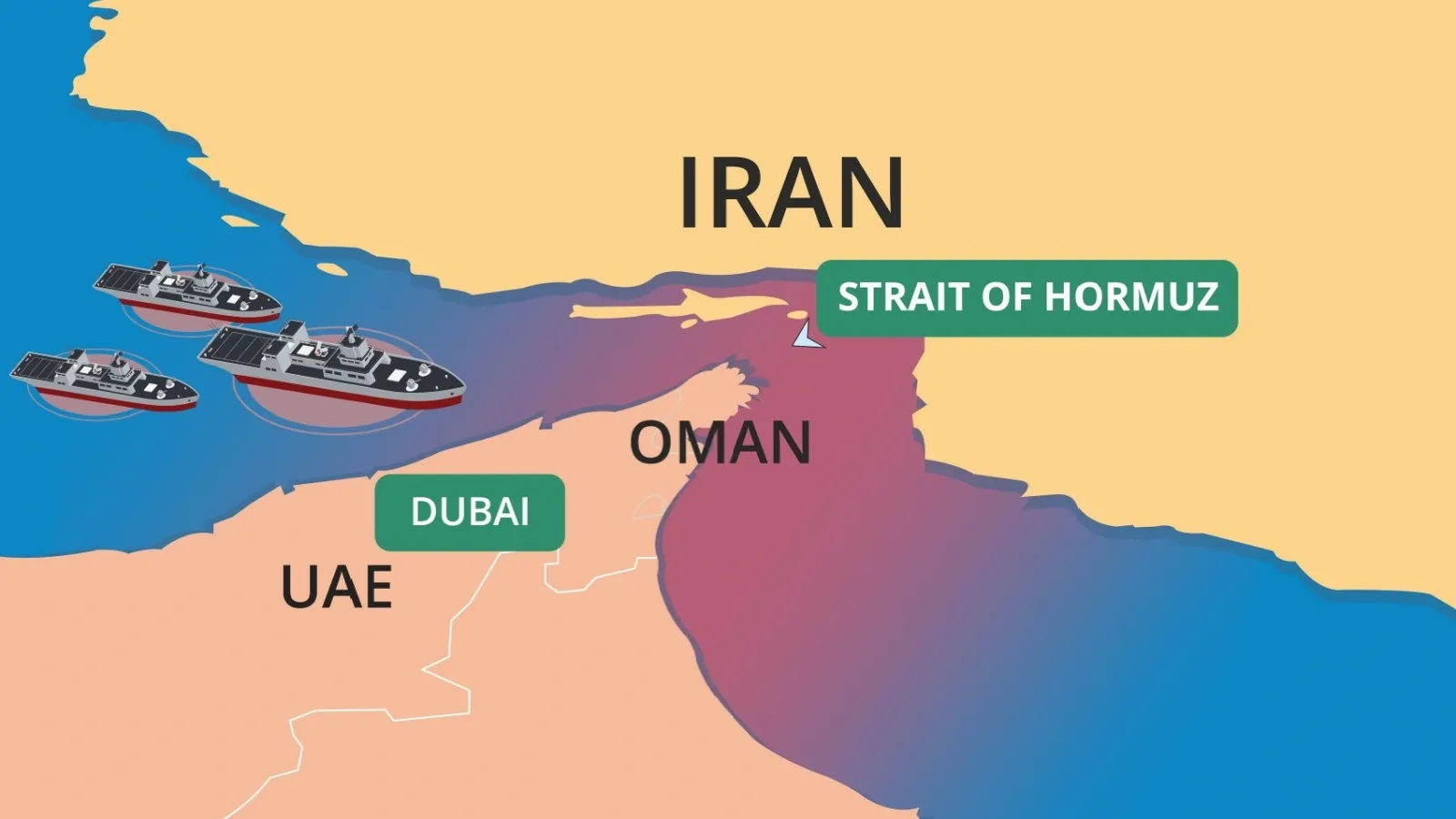
Every single defense analyst, cable news pundit, and maritime executive is currently reading from the exact same tired script. They look at the disruptions in the Bab el-Mandeb Strait and cry out for a heavier fist. The United States and its coalition partners, they argue, are being forced into deeper intervention, larger airstrikes, and permanent naval escorts to restore order to global trade.
They are completely wrong.
More military intervention is not the solution to the Red Sea crisis. It is the trap.
For months, the consensus narrative has treated the Houthi campaign against commercial shipping as a tactical nuisance that can be bombed away if only Washington demonstrates enough political will. This view ignores basic economics, military math, and the structural realities of twenty-first-century trade. When a militant group can disrupt global logistics using repurposed scrap metal and commercial drones costing a fraction of a single interceptor missile, you do not have a security problem. You have an economic asymmetry problem.
Throwing more hardware at a math problem is the definition of insanity. Yet, the military-industrial complex and legacy shipping giants continue to push for an escalated footprint, hoping to resurrect a nineteenth-century model of gunboat diplomacy that died decades ago.
Let us dismantle the illusions driving this panic.
The Economics of Asymmetric Attrition
To understand why traditional military intervention fails in the Red Sea, you have to look past the dramatic footage of aircraft carrier launches and examine the ledger.
A Standard Missile 2 or a similar interceptor launched from a guided-missile destroyer costs upwards of two million dollars. Many of the aerial threats heading toward container ships cost less than a used car. This is not a fair fight. It is a financial bleeding operation disguised as a defensive posture. Every time a coalition warship swats down a drone, the adversary wins a micro-victory on the balance sheet.
When pundits demand that the US military "restore freedom of navigation" through sheer kinetic dominance, they assume that military force can permanently suppress an asymmetric actor embedded deeply within a hostile civilian population and rugged terrain. History suggests otherwise. Aerial bombardments can degrade stockpiles temporarily, but they cannot eradicate the capability to launch low-cost projectiles at slow-moving cargo vessels.
The lazy consensus assumes that if the coalition just hits them hard enough, the threat will vanish. This ignores the adversary's strategic calculus. For groups like the Houthis, drawing the United States into an open-ended, expensive maritime conflict is a massive strategic win. It drains allied stockpiles, ties down naval assets that might be needed elsewhere in the global theater, and generates endless domestic political friction.
By demanding more intervention, the commentators are walking straight into the adversary's design.
Who Actually Profits from the Panic?
Follow the money. Whenever a supply chain crisis hits the headlines, freight rates skyrocket.
When carriers are forced to reroute vessels around the Cape of Good Hope, adding thousands of miles and weeks of transit time to voyages between Asia and Europe, capacity tightens instantly. Spot rates for container shipping jump. For major shipping lines, a crisis in the Red Sea is a gift wrapped in geopolitical chaos. It justifies inflated shipping costs, protects profit margins, and provides a convenient scapegoat for inflation that consumers feel at the checkout counter.
The shipping conglomerates are not screaming for peace; they are calculating their quarterly profits. They want naval escorts because they want the illusion of security without having to fundamentally redesign their bloated, centralized supply chains.
For years, globalized trade operated on a razor-thin, just-in-time model. Companies eliminated inventory buffers to squeeze out every drop of efficiency, relying on cheap, predictable ocean transit. When a single geographic chokepoint like the Suez Canal experiences friction, the entire brittle system shatters.
Instead of admitting that this hyper-efficient, centralized model was a structural disaster waiting to happen, executives point the finger entirely at geopolitics. They want taxpayers to fund a permanent naval police force so they can keep running their fragile supply chains exactly as they did before.
That is not risk management. That is corporate welfare funded by military might.
The Myth of the Open Water Monopoly
There is a deeper historical misconception at play here. We treat secure maritime lanes as a natural law of physics rather than a temporary historical anomaly maintained by decades of uncontested American hegemony.
For a brief window following the Cold War, the United States Navy acted as the undisputed toll-booth operator and protector of the global commons. Every nation could send container ships across every ocean, confident that American power would keep the pirates and regional powers at bay.
That era is over. Multipolarity has arrived, and with it comes the democratization of long-range precision strike capabilities.
Cheap drones, anti-ship missiles, and satellite tracking are no longer the exclusive domain of superpowers. Regional actors can now project power across critical straits with minimal infrastructure. Waiting for a magical military intervention to restore the unipolar status quo is a fool's errand. The world is not going back to 1995.
If a maritime chokepoint can be easily and cheaply closed by a determined regional actor, then relying on that chokepoint is a catastrophic strategic failure. Yet, the knee-jerk response from Washington and Brussels remains anchored in the past. They believe that if they just bomb the coastlines enough times, the geography of the Red Sea will change, or the actors living along its shores will simply surrender their geographic leverage.
Geography is stubborn. Technology is evolving. Military doctrine, however, remains frozen in amber.
What Real Resilience Looks Like
If the conventional prescription is wrong, what is the alternative? It starts with abandoning the obsession with reopening the Red Sea at all costs and focusing instead on structural adaptability.
First, businesses must accept that maritime choke points are permanent security risks. Supply chains need to be modular and diversified. Over-reliance on the Suez Canal route was always a single point of failure waiting to be exploited. Shifting toward multi-modal transport networks, near-shoring critical manufacturing, and maintaining strategic inventory reserves within regional markets costs more upfront, but it provides true immunity to localized conflicts.
Second, the defense establishment needs to pivot from exquisite, multi-billion-dollar platforms to high-volume, low-cost counter-drone architectures. If the Navy is going to operate in contested narrow seas, it cannot do so with systems that cost a thousand times more than the incoming threat. The fact that the Pentagon is running out of standard interceptors to shoot down cheap munitions should have triggered an immediate industrial mobilization toward directed-energy weapons, electronic warfare suites, and swarm defense.
Instead, the response has been to double down on the same expensive playbook while hoping the problem goes away on its own.
Third, diplomatic and economic pressures must be decoupled from the illusion of total military victory. Security in volatile regions is maintained through messy regional diplomacy, backchannel negotiations, and economic trade-offs, not through carrier strike groups lobbing cruise missiles into the desert to satisfy domestic political optics.
The Hard Truth About Global Trade
Nobody in the executive suites or the Pentagon wants to admit the core reality: the era of frictionless, frictionless global shipping is dead.
The global economy is fragmenting. Security costs are rising. The bill for decades of ignoring structural vulnerabilities in favor of low-cost optimization is finally coming due.
Pleading for the United States to "intervene" in the Red Sea is a confession of intellectual bankruptcy. It is an admission that our political and corporate leaders cannot imagine a future that isn't just a louder, more expensive version of the past. They want the warships to clear the path so they can pretend that the world hasn't fundamentally changed.
The Red Sea is not a broken machine waiting for a mechanic with a wrench. It is a symptom of a new global reality where power is decentralized and vulnerability is ubiquitous.
Stop asking how the military can reopen the canal. Start asking why your business model depended on a narrow strip of water in a volatile desert in the first place.