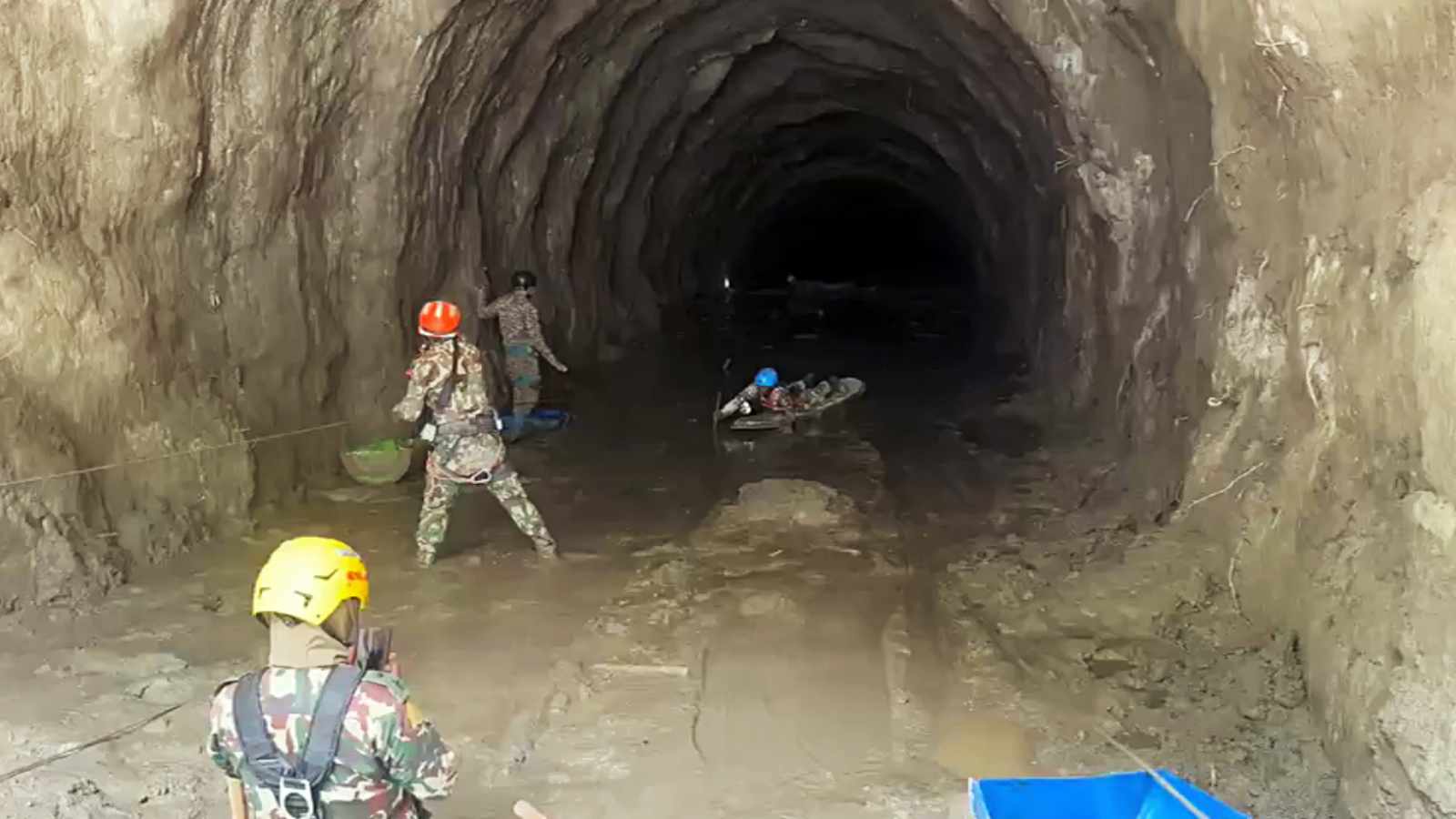
The media wants you to fixate on the heroics. Cameras zoom in on dusty soldiers clawing through mud, specialized foreign teams touching down with heavy gear, and breathless anchors reporting on every foot gained inside the blocked conduits of the Himalayas. We are fed a steady diet of human interest stories about workers trapped deep underground, waiting for a miracle.
It makes for compelling theater. It is also a massive deflection.
The lazy consensus dominating global headlines is that this catastrophe is purely a tragic act of nature, a freak meteorological assault where climate change and sudden glacial bursts conspired against innocent infrastructure. Governments point to the weather. Developers point to unprecedented rainfall. Everyone acts as though an avalanche of ice, rock, and mud targeting a dozen subterranean power stations simultaneously was an unforeseeable lightning strike from the heavens.
It was not. It was a predictable reckoning.
I have spent years analyzing high-altitude infrastructure development across fragile seismic zones. I have watched corporate conglomerates and state planners treat the Third Pole like an open-air extraction site, treating mountain hydrology as a math problem they could bully into submission with concrete and steel. When you punch dozens of massive subterranean drainage and conveyance tunnels into unstable, steep Himalayan terrain, you are not harnessing nature. You are picking a fight with a mountain range that is still actively growing.
Let us look at the structural reality that mainstream reports conveniently gloss over. Hydropower stations like Upper Trishuli and Rasuwagadi are marvels of engineering on paper, designed to feed energy demands downstream. But their architecture creates a fatal hydraulic trap when catastrophic flash floods hit. These massive underground chambers and diversion tunnels act as literal vacuum tubes and sediment catchers. When a glacial lake outburst or torrential monsoon surge unleashes millions of tons of debris, the intake portals do not just allow water to flow—they become choke points. They concentrate kinetic energy, slurry, and boulders into pressurized death traps.
The narrative that 900-plus workers are miraculously waiting to be pulled out alive from miles-long underground tunnels ignores basic physics and biology. After days of total submersion under millions of cubic meters of dense, toxic silt, mixed with rapidly depleting oxygen and zero structural integrity inside flooded conduits, the race against time is often a race against a foregone conclusion. We focus on the dramatic entry hole being drilled into the crown head of a tunnel because it offers emotional comfort. It lets us look away from the fundamental design flaws that put those workers in the line of fire in the first place.
Why were hundreds of laborers—many unrecorded, working on projects pushing aggressive timelines—housed or deployed in subterranean zones susceptible to instant inundation? Because safety margins in high-risk Himalayan energy projects are routinely treated as soft recommendations rather than hard engineering constraints. Environmental impact assessments are routinely rushed. Early warning systems tied to upstream glacial monitoring are notoriously patchy, leaving workers with minutes—sometimes seconds—to react when a natural dam bursts miles above them.
When the dust settles and the current rescue operations mercifully conclude, the corporate and political establishment will pivot to rebuilding the exact same assets in the exact same spots. They will talk about making structures "resilient" while ignoring the geographical impossibility of making a subterranean concrete pipe safe from a mountain tearing itself apart.
Stop treating these disasters as unpredictable acts of God that demand nothing more than thoughts, prayers, and extra excavation machinery. The real crisis is not just inside the tunnel. It is the institutional arrogance that built the tunnel there in the first place.