Every fall, local sports desks fall over themselves to anoint the next fourteen-year-old savior of Southern California high school football.
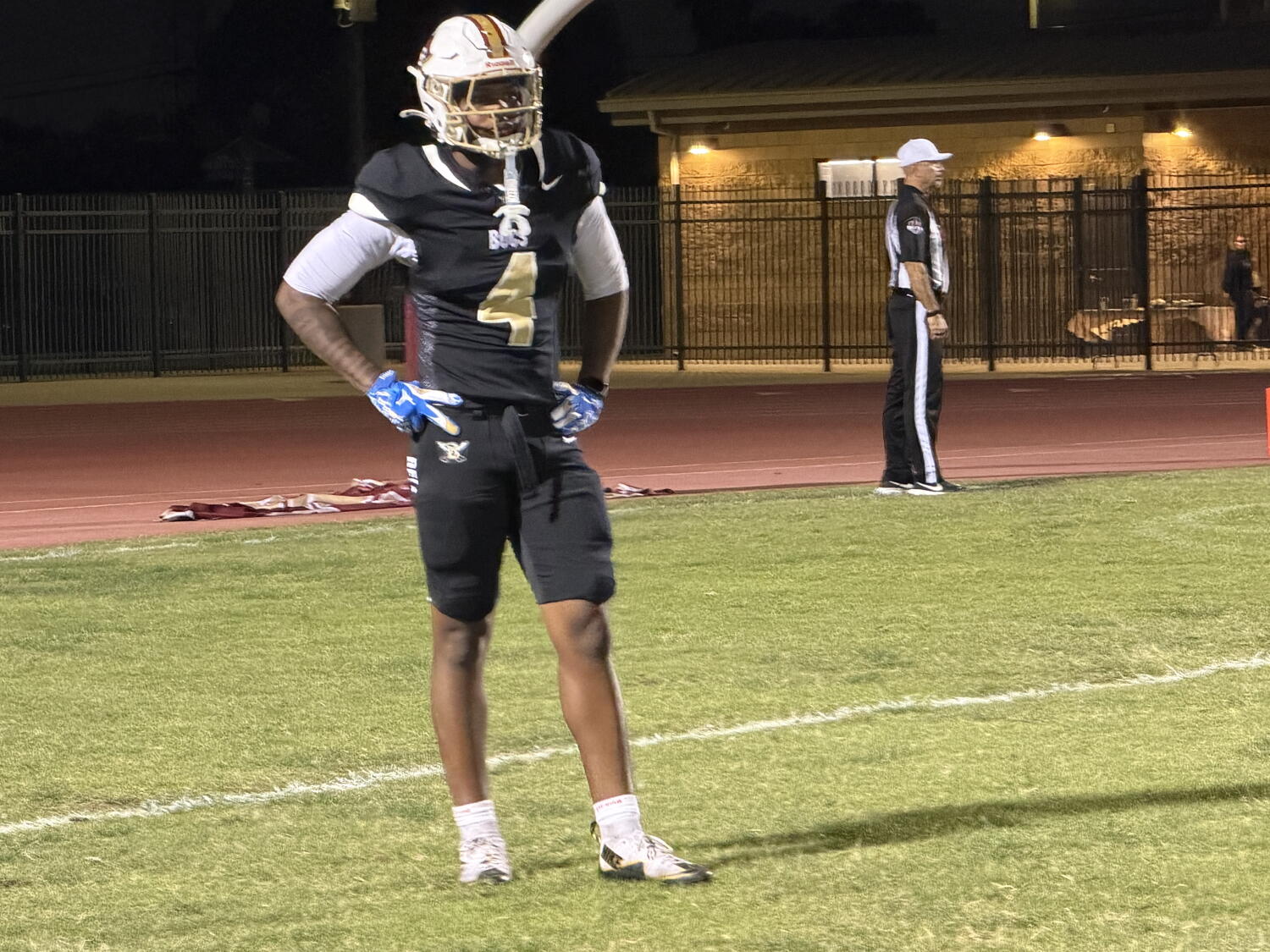
The script never changes. A freshman gets varsity snaps at a program like Bellflower, puts up respectable numbers against uneven competition, and suddenly the local press is printing velvet-rope hype pieces. You saw it with the recent "Prep talk" coverage praising Bellflower freshman Keon'Dre Smith for putting together a "terrific season."
It is lazy journalism. Worse, it is toxic for player development.
When beat writers treat a ninth-grader's early varsity production as a guaranteed ticket to Saturday stardom, they completely ignore the brutal physiological, tactical, and psychological realities of CIF Southern Section football. Nobody is denying that Keon'Dre Smith flashed real talent this year. Stepping onto a Friday night field at fourteen or fifteen years old and holding your own takes guts and raw athletic ability.
The problem isn't the kid. The problem is the coverage.
By celebrating early varsity volume without context, local media creates a distorted prism that blinds fans, parents, and sometimes even the athletes themselves to what actually separates a promising ninth-grader from an elite college prospect.
The Illusion of Early Varsity Production
Let's dismantle the core premise of the standard freshman hype article. The unspoken assumption is linear progression. If a kid produces X as a freshman, he will produce 2X as a sophomore, 3X as a junior, and sign a Power Four letter of intent as a senior.
That is not how human biology or high school athletics work.
In youth and early high school sports, early success is overwhelmingly dictated by relative biological age and early physical maturation, not long-term athletic ceiling. Researchers in sports science, including Dr. Ross Tucker and David Epstein in The Sports Gene, have documented this phenomenon exhaustively. A fourteen-year-old who hit his growth spurt at twelve looks like a generational phenomenon playing against peers who haven't finished growing.
Then sophomore and junior year arrive. Everyone else catches up.
I have sat in recruiting rooms and watched film sessions with college personnel directors who actively discount freshman varsity stats. Why? Because raw box-score numbers at fourteen tell you almost nothing about how a player handles grown-man physicality when every defensive back on the field has spent three years in a serious strength and conditioning program.
When a local column gushes over a freshman's "terrific season" without breaking down how those yards or tackles happened, it sells a mirage. Did he beat press-man coverage against a future Division I cornerback, or did he outrun a converted junior varsity linebacker in a blowout? Was he reading complex post-snap rotations, or was he running a simplified, one-read screen package designed to get the ball out of his hands before he got hurt?
Context matters. Box scores lie.
The Bellflower Reality Check
To understand why premature coronation is so dangerous, look at the specific ecosystem of Southern California high school football.
Bellflower High School competes in a region where the talent gap between lower-tier leagues and the Trinity League or Moore League powerhouses is practically a different sport. Putting up big numbers in certain stretches of a schedule is impressive for a ninth-grader, sure. It proves he belongs on the field.
It does not prove he is ready for the meat grinder that awaits him over the next thirty-six months.
In the CIF Southern Section, the jump from playing as a freshman to being the marked man on every opponent's scouting report as a sophomore is violent. As a freshman, you are an afterthought. Defensive coordinators spend all week scheming to stop the senior running back or the junior edge rusher. The freshman gets soft coverage, favorable matchups, and the benefit of surprise.
Once your name hits the local paper in a glowing "Prep talk" feature, the surprise is dead.
Every opposing defensive coordinator in the league circles your jersey number in red ink. Suddenly, you aren't getting free releases off the line of scrimmage. You are getting jammed into the sideline by a 185-pound senior who has been lifting weights since you were in sixth grade. You are taking blindside hits from safeties whose sole assignment is to make you hear footsteps.
Most freshman phenoms hit a brick wall in year two. Not because they got worse, but because the game suddenly stopped being polite.
Why Media Hype Wrecks Development
You might think a positive newspaper clipping is harmless. Who cares if a local writer gives a kid some shine?
Ask any veteran high school coach who has had to peel a talented sophomore off the ceiling after one good write-up.
- The Transfer Portal Disease Starts at Fifteen: California high school football has become an unregulated free-agent market. The moment a freshman gets press coverage, the vultures circle. Unofficial "handlers," 7-on-7 coaches, and rival boosters start whispering in the family's ear that he is "too big" for his current school. Instead of staying put, learning a system, and developing loyalty and grit, the kid bounces to three different high schools in four years, never mastering a playbook and ending up on a college scout's red-flag list.
- Skill Neglect: Early bloomers rely on whatever physical gift got them on the field early—usually raw speed or size. When the media validates that shortcut with praise, young athletes stop obsessing over the boring, unglamorous mechanics of their position. Wide receivers stop refining their stem work and hip sink. Defensive backs stop studying film and rely on recovery speed. By junior year, when everyone is fast, their technical foundation is nonexistent.
- The Entitlement Trap: Football is a brutal, unforgiving meritocracy. When a fifteen-year-old starts believing his own press clippings, his coachability plummets. Every correction in practice feels like disrespect. Every snap he shares with an upperclassman feels like politics.
I have seen dozens of "can't-miss" Southern California freshmen flame out before their senior year—not from catastrophic knee injuries, but from a terminal case of believing the hype written about them when they couldn't even legally drive a car.
What Scouts Actually Look For in a Freshman
If we are going to talk about a freshman like Keon'Dre Smith, let's stop using fan-boy adjectives like "terrific" and start using the actual evaluation criteria that matter to people who get paid to project talent.
When college evaluators look at ninth-grade tape, they throw the stat sheet in the trash. Here is what they actually grade:
- Movement Efficiency and Deceleration: Anyone can run fast in a straight line on track day. Scouts watch how a fourteen-year-old drops his hips, absorbs force, and changes direction without losing speed. Does he look like a baby deer learning to use long legs, or does he already possess elite body control?
- Spatial Awareness Under Fire: When the pocket collapses or a defender closes space in half a second, does the freshman panic and drift backward, or does he show natural instincts to find leverage and space?
- Competitive Toughness After Contact: Watch what happens on the play after a freshman gets lit up by a senior linebacker. Does he jog back to the huddle with the same body language, or does he suddenly start alligator-arming balls over the middle?
- Frame Potential: Scouts look at wrists, ankles, shoulder width, and bone structure. A kid who is 5-foot-10 and fully muscled out at fourteen might already be at his physical ceiling. A lanky, awkward freshman with massive hands and narrow hips who barely weighs 155 pounds is a far more intriguing bet.
Notice that none of those traits show up in a Friday night box score. A freshman can go 2-for-12 for 18 yards and show future NFL traits on film, or he can rack up 150 yards on broken plays and never play a down of college football.
Dismantling the Common Myths Around Freshman Standouts
If you follow high school sports, you hear the same tired talking points every time a ninth-grader makes varsity. Let's put them under the microscope.
"If he's good enough, he's old enough."
This is the favorite cliché of coaches justifying playing fourteen-year-olds against eighteen-year-olds. Physically, it is nonsense. The difference in bone density, muscle mass, and neurological maturity between a freshman and a senior is massive. Throwing an underdeveloped freshman into full-time varsity combat isn't always a badge of honor; sometimes it is a symptom of a shallow roster with zero upperclassman depth. Putting a ninth-grader on the field because you have nobody else doesn't make him a prodigy—it makes him a survivor.
"Early varsity experience guarantees a head start on recruiting."
Recruiting doesn't work on seniority. College coaches do not hand out scholarships for what you did when you were fourteen. In fact, peak early exposure can backfire. If you are on a college staff's radar as a freshman, they watch you for four straight years. Every flaw, every bad habit, and every plateau gets documented. Meanwhile, the late-bloomer who spent his freshman year on the frosh-soph team learning footwork hits a growth spurt at sixteen, explodes onto the scene as a junior, and steals the scholarship offer because his trajectory is pointing straight up.
"Media attention helps kids get noticed by colleges."
Not anymore. Between Hudl, national camp circuits, and direct social media outreach, college recruiting departments don't need local newspaper blurbs to find players in Los Angeles County. A puff piece in a local paper does nothing for a player's recruiting stock. The only thing it accomplishes is inflating expectations in the stands and creating unnecessary pressure in the locker room.
The Contrarian Blueprint for Freshman Phenoms
To be clear: playing varsity as a freshman is not inherently bad. For rare, transcendent athletes, junior varsity football is a waste of time because nobody on that field can challenge them. If a kid like Keon'Dre Smith is genuinely too advanced for lower-level competition, keeping him on varsity is the right call.
The failure isn't playing him. The failure is how the adults around him—coaches, parents, and media—handle the aftermath.
If you want a freshman standout to actually fulfill his potential rather than become another cautionary tale of wasted early hype, you have to invert the standard playbook.
1. Ban the Press Clippings
Keep the kid away from interviews. Do not let him read the "Prep talk" columns. Keep him off the local recruiting rankings until he has survived an entire varsity offseason. Praise for past performance is poison to a developing athlete; the only feedback he needs comes from his position coach breaking down what he did wrong on Tuesday afternoon.
2. Prioritize the Weight Room Over 7-on-7 Circuits
The worst thing a varsity freshman can do in the spring is spend every weekend playing touch football in a compression shirt at 7-on-7 tournaments. It builds zero functional strength, teaches bad habits without pads, and feeds the ego. A freshman who played varsity needs six uninterrupted months of barbell training, mobility work, and calorie intake to armor his body for the physical toll of sophomore year.
3. Master One Technical Nuance Per Offseason
Instead of chasing highlight-reel plays, pick one glaring weakness from the freshman tape and fix it obsessively. If he struggled to beat press coverage, spend four months solely on hand fighting and release packages. If he lacked top-end acceleration, live on the track with a sprint coach.
4. Stay Put and Earn the Locker Room
Resist the urge to chase greener grass. Staying at a program like Bellflower, earning the respect of the upperclassmen through quiet work, and becoming the undisputed leader of the program by junior year builds the exact psychological resilience that college coaches verify during background checks.
The Brutal Truth About What Comes Next
I have to admit the obvious flaw in my own argument: fans love a prodigy story.
Sports media runs on narratives, and "freshman sensation takes varsity by storm" sells subscriptions and clicks far better than "fourteen-year-old athlete shows promising hip fluidity while needing to add twenty-five pounds of lean mass." Even I enjoy watching a young kid step onto a big stage and shock the older guys. It is pure, electric sports drama.
Enjoy the highlights. Appreciate the grit it takes for a ninth-grader to step onto a varsity field on a Friday night and refuse to back down.
Just stop confusing a promising beginning with a finished product.
Keon'Dre Smith survived his first taste of varsity football, and he earned every bit of respect he got from his teammates in that locker room. Now comes the hard part—the part where the hype stops helping, the novelty wears off, and every team on the schedule is waiting to hit him in the mouth.
Throw away the newspaper clippings, get in the weight room, and prove it when nobody is surprised anymore.