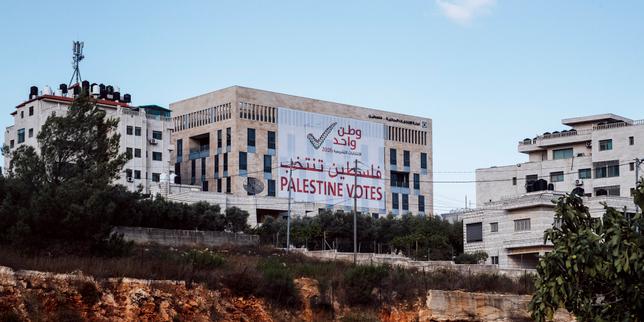
Western diplomats and international policy wonks love a good ballot box. To hear them tell it, the absence of voting in Palestinian territories for twenty years is the singular root of all dysfunction. Hold an election, the conventional wisdom goes, and legitimacy will magically restore itself. The international community trots out this trope whenever diplomatic momentum stalls, treating democracy like a software patch that can be downloaded over a broken network.
It is a lazy, dangerous delusion.
Democracy without a state, without a monopoly on violence, and without an institutional framework is not freedom. It is an auction house for warlords and factional strongmen. I have watched international observers pour millions into capacity-building workshops and voter registration drives while completely ignoring the structural decay beneath their feet. They treat elections as an end in themselves rather than the fragile outcome of a functioning polity.
Let us dismantle the sacred cow. The twenty-year electoral drought in the West Bank and Gaza is not an aberration to be fixed with a sudden rush to the polls. It is a symptom of a political economy that benefits everyone currently holding power, local and international alike.
The Myth of the Procedural Cure
The standard narrative around the 2006 legislative elections is deliberately misremembered. International monitors called them free and fair. They certified the mechanics, checked the boxes, and patted themselves on the back. Then Hamas won.
Instead of accepting the outcome of the procedural miracle they had just engineered, the architects of the peace process panicked. Western capitals cut funding, imposed blockades, and backed a factional showdown that tore the territory apart. The lesson Washington and Brussels took away was not that their framework was flawed, but that the Palestinian electorate had chosen incorrectly.
Ever since, the international community has engaged in a profound double standard. They demand democratic renewal while quietly relying on autocratic stability to keep security coordination running. Mahmoud Abbas presides over an authority whose mandate expired fifteen years ago, yet foreign ministries treat him as an indispensable interlocutor precisely because he avoids the inconvenience of popular mandates.
Meanwhile, inside the territories, political factions treat elections not as a contest of governance, but as a census of tribal loyalty and external patron funding. When you hold an election in a vacuum of sovereignty, you do not get a parliament of statesmen. You get a cartel of armed militias and patronage networks dividing the spoils of occupation.
The Economics of Permanent Stalemate
Follow the money. The Palestinian political class has built an entire industry around the perpetual transition state. Billions of dollars in foreign aid flow through NGOs, security apparatuses, and bloated ministries.
An election threatens this ecosystem. For Fatah, an election risks formalizing their irrelevance or triggering an internal civil war over succession. For Hamas, elections are useful only insofar as they provide international legitimacy when they win, or martyrdom rhetoric when they are blocked. For Israel, a fractured Palestinian leadership ensures that no unified partner exists to negotiate a permanent settlement, preserving the status quo of creeping annexation in the West Bank and containment in Gaza.
To pretend that sticking a ballot in front of a fractured population will bypass these structural incentives is political illiteracy. You cannot vote your way out of structural fragmentation. When the institutions meant to guarantee civil rights, judicial independence, and physical security do not exist, a vote is merely an endorsement of whichever armed faction holds the microphone.
What Real Political Renewal Looks Like
If the obsession with national elections is a dead end, what replaces it?
First, we must abandon the fiction of a unified national ballot under current conditions. You cannot run a credible election when opposition figures face arbitrary detention by local security forces, when digital dissent is criminalized, and when geographic division makes campaigning across administrative lines an act of logistical fantasy.
Second, accountability must be built from the bottom up, not the top down. Real political agency is forged in municipal councils, labor unions, student movements, and civic associations that actually deliver services and contest local power. These micro-institutions are where competence is tested and corruption is exposed. By bypassing them in favor of high-stakes national theater, the international community starves local civil society of oxygen.
Third, we need to stop treating legitimacy as something conferred by an OSCE election report stamped with Western approval. Legitimacy comes from delivery, resistance, and the hard work of building parallel institutions that outlast foreign aid cycles and military checkpoints.
The next time an ambassador lectures about the urgency of renewing the Palestinian democratic mandate, ask them what happens the day after the votes are counted. If their answer relies on wishful thinking and more donor cash, walk away. The problem is not that Palestinians haven't voted in two decades. The problem is that the entire framework of their political survival was designed to fail long before the ballot boxes were packed away.