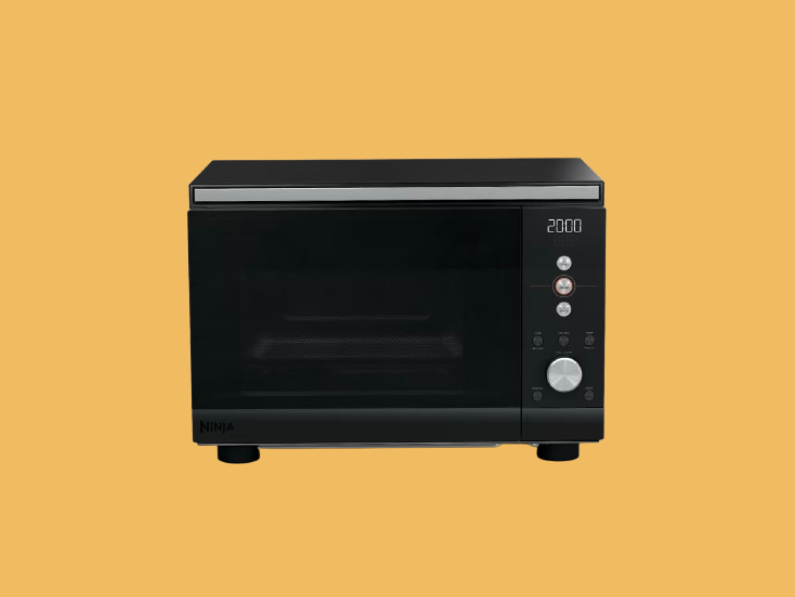
Every gadget reviewer on the internet wants you to believe a glass bowl with a heating pod on top just rendered your kitchen obsolete. They are wrong. Dead wrong.
Look at the headline circulating across shopping vertical sites right now: "I tried the Ninja Crispi microwave and air fryer—is it worth replacing two appliances?"
Let us stop right there. First, the Ninja Crispi is not even a microwave. Calling it a microwave replacement is like calling a hairdryer a clothes dryer because both blow hot air. Reviewers lump them together because both sit on your counter and reheat leftovers, creating a lazy false equivalence that tricks apartment dwellers into throwing away functional appliances.
I have spent fifteen years testing, tearing down, and reviewing consumer kitchen hardware. I have watched companies burn tens of millions of dollars chasing the mythical "all-in-one" countertop savior. From smart steam ovens that bricked themselves after a firmware update to combination toaster-griddles that did neither job well, the graveyard of kitchen consolidation is overflowing.
The Ninja Crispi is a clever piece of industrial design. It is portable. It uses borosilicate glass containers instead of PFAS-coated nonstick baskets. It snaps together neatly. None of that makes it a substitute for a microwave, and none of that solves the fundamental laws of thermodynamics governing your kitchen counter.
The Physics Problem Reviewers Ignore
To understand why replacing a microwave with a portable air fryer is a terrible trade, you have to look at how heat transfers into food. Most lifestyle writers skip the physics because watts and dielectric heating do not sound sexy in an affiliate roundup.
A microwave oven uses non-ionizing electromagnetic radiation—specifically at a frequency of 2.45 gigahertz—to agitate polar molecules inside your food. Water, fats, and sugars absorb this energy directly, generating heat from the inside out simultaneously. A standard 1,000-watt microwave brings a mug of cold coffee to a boil in ninety seconds because it bypasses the air around the mug entirely.
The Ninja Crispi is a miniature convection oven. It uses a 1,500-watt resistive heating coil and a high-velocity fan housed in a removable "PowerPod" that sits atop a glass vessel. It heats air, and that hot air transfers thermal energy to the exterior surface of your food via forced convection.
Notice the difference?
- Dielectric heating (Microwave): Volumetric, fast, retains moisture, zero browning.
- Forced convection (Air Fryer): Surface-level, slower for liquids, dehydrates exteriors, triggers the Maillard reaction.
When a reviewer asks if the Ninja Crispi can replace your microwave, they are asking if a blowtorch can replace a kettle. Sure, if you point a blowtorch at a bowl of cold soup long enough, the soup will get hot. You will also scorch the top layer, leave the bottom lukewarm, and waste twenty minutes of your life.
Where the Lazy Consensus Breaks Down
The standard review narrative goes like this: "It comes with a small container and a large container, it crisps up leftover pizza better than a microwave, and you can store it in a cabinet!"
Let us dismantle that one piece at a time.
The Reheating Fallacy
Yes, leftover pepperoni pizza tastes infinitely better out of an air fryer than a microwave. Everybody knows this. Microwaves excite water molecules inside the dough, turning gluten into rubber. Forced hot air evaporates surface moisture and re-renders fat, bringing back the crunch.
Now try reheating a bowl of beef stew. Or steamed white rice. Or leftover pasta in cream sauce.
In the Ninja Crispi, blasting leftover rice with 400-degree dry air turns the top layer into hard, inedible pellets while the center stays fridge-cold. Reheating pasta sauce without a lid splatters marinara directly onto the exposed heating element and fan blades inside the PowerPod. Good luck scrubbing baked-on tomato paste out of a recessed metal coil that cannot be submerged in water.
The Countertop Storage Myth
Reviewers love praising the Crispi for saving space because you can nest the glass bowls and tuck the pod into a cupboard.
Think about human behavior. Imagine a scenario where you come home from work at 7:30 PM, exhausted, holding a container of takeout. If your microwave sits on the counter, you open the door, press "1:30," and walk away. With a modular system stored in a cabinet, you have to pull out the glass container, transfer your food into it, fetch the adapter ring, pull out the PowerPod, assemble the stack on the counter, plug it in, cook the food, wait for the scorching-hot glass and heating element to cool down, wash the glass dish, wipe down the pod, and put it all back in the cabinet.
Nobody does that on a Tuesday night. Within three weeks, the Ninja Crispi ends up living permanently on your counter anyway—except now it takes up horizontal footprint while still forcing you to keep a microwave for liquids, frozen vegetables, and quick reheats. You did not consolidate anything. You just bought another gadget.
The Glass Container Trade-Off
Ninja deserves credit for ditching Teflon and aluminum baskets in favor of thermal-shock-resistant borosilicate glass. Consumer demand for PFAS-free cookware is real, and glass eliminates the flaking nonstick coating issue that plagues traditional basket air fryers after two years of heavy use.
However, glass has terrible thermal conductivity compared to perforated metal.
In a traditional basket air fryer like a Cosori or a standard Ninja Foodi, hot air circulates 360 degrees around the food because the food sits on a slotted metal crisper plate suspended above the bottom of the drawer. Air flows underneath, through, and over the food simultaneously.
In the Ninja Crispi, the food sits inside a solid-walled glass bowl on top of a small crisper tray. Airflow is restricted to a downward vortex that bounces off the bottom of the dish and vents out the top. Because glass acts as an insulator rather than a heat conductor, the bottom of your food never gets the direct conductive sear you get from a preheated dark-metal basket. You have to shake the bowl twice as often to avoid soggy undersides, and shaking a 4-pound scorching-hot glass bowl with tiny plastic side handles is a burn hazard waiting to happen.
Brutal Answers to the Questions Buyers Actually Ask
When shoppers search for this appliance, they run into the same recycled talking points. Here is the unfiltered truth behind the most common questions.
Can the Ninja Crispi boil water or warm up milk?
Technically, yes. Practically, no. Placing a ceramic mug inside the glass bowl and blasting it with hot air from above takes forever, heats the handle to blistering temperatures, and barely warms the liquid inside. If you drink tea, make oatmeal, or warm baby bottles, throwing away your microwave for this unit will make you miserable within 48 hours.
Is the PowerPod actually safe on kitchen countertops?
The pod gets extremely hot during operation, and the glass bowl reaches temperatures upwards of 400 degrees Fahrenheit. Ninja includes integrated heat-safe feet on the glass containers and the pod itself, which protects laminate and quartz counters during normal use. The real danger happens when you take the pod off the bowl to check or flip your food. You are holding a 1,500-watt active heating element in one hand while looking for a safe place to set it down on a cluttered counter. One distracted moment near a plastic bread bag or a dish towel becomes a fire hazard.
Does it cook faster than a full-size air fryer?
For small single-serving portions in the 6-cup container, preheating is virtually nonexistent because the air volume is tiny. It reaches cooking temperature in under sixty seconds. Once you switch to the 4-quart container for a full meal, that speed advantage vanishes. The single-speed fan and fixed-wattage element struggle to move enough air volume through a packed deep glass bowl compared to a wide, shallow basket fryer.
Why does it lack precise temperature controls?
Look closely at the control panel on the PowerPod. You do not get a degree-by-degree thermostat. You get preset modes: Max Crisp, Bake, Air Fry, and Recrisp. Ninja locked the temperature algorithms behind broad marketing labels to keep the electronics simple and cheap. If a recipe calls for 360 degrees for 12 minutes, you are guessing which mode approximates that thermal output. Serious home cooks hate losing manual temperature control.
What the Heavy Hitters in Culinary Science Say
You do not have to take my word on heat transfer mechanics. Look at the foundational testing done by J. Kenji López-Alt at Serious Eats and the equipment testing teams at America's Test Kitchen.
Years of rigorous kitchen lab testing have proven two undeniable rules about countertop appliances:
- Surface area dictates crispiness. America's Test Kitchen consistently ranks wide, flat basket air fryers above deep or cylindrical models because crowding food traps steam. Steam is the mortal enemy of browning. Deep glass bowls naturally encourage stacking food vertically, which turns air frying into steaming.
- Multitaskers compromise core geometry. As Harold McGee documents extensively in On Food and Cooking, moisture management requires deliberate engineering. A microwave cavity is designed to trap humidity so food does not dry out during rapid dielectric heating. A convection chamber is designed to exhaust humidity as fast as possible. Trying to force one compact vessel to handle both roles defies basic food science.
The Honest Downsides of Keeping Two Appliances
I promised candor, so let us acknowledge where the pro-Crispi crowd actually has a point.
If you live in a dorm room, a studio apartment with eighteen inches of total counter space, a camper van, or an office breakroom without a stove, the traditional two-appliance setup is physically impossible. In those hyper-constrained environments, owning a full-size microwave and a bulky 6-quart basket air fryer is out of the question.
Furthermore, traditional air fryers are ugly, bulky, and notorious for shedding synthetic nonstick coatings into your food once the basket gets scratched by metal tongs. If your primary goal is eliminating PTFE and PFOA coatings from your kitchen while having a compact way to roast vegetables or crisp up chicken thighs for one or two people, the Ninja Crispi is genuinely useful. Its portability—being able to prep lunch in the glass bowl, snap on the leakproof lid, take it to work, and air-fry it right at your desk—is a legitimate innovation for office workers tired of soggy breakroom microwave lunches.
How to Actually Optimize a Small Kitchen
Stop falling for the marketing trick that says one weird gadget will declutter your life. If you want maximum culinary capability without drowning your kitchen in plastic appliances, build a setup based on distinct thermal capabilities rather than overlapping gimmicks.
Step 1: Keep a Compact Inverter Microwave
Do not toss your microwave. If yours is a massive, outdated 1.6-cubic-foot beast from 2012, downgrade to a compact 0.7- or 0.9-cubic-foot unit with inverter technology (Panasonic makes the best ones on the market). Unlike cheap microwaves that pulse 100% power on and off—which causes explosive splatters and unevenly cooked edges—an inverter microwave delivers steady, continuous low-wattage power. It melts butter without exploding it, defrosts meat without cooking the edges, and reheats liquids in seconds.
Step 2: Choose Geometry Over Gimmicks for Convection
If you want real air-frying performance without the toxic nonstick coatings, skip deep glass bowls and look at stainless steel toaster-oven style air fryers (like the Breville Smart Oven Air Fryer) or stainless-steel interior basket models. Wide wire racks allow hot air to hit every square millimeter of your food simultaneously, producing actual restaurant-grade crispiness without needing to shake a heavy glass vessel every four minutes.
Step 3: Buy Borosilicate Storage Separately
You do not need to pay a premium for proprietary Ninja glass bowls with plastic adapter rings to store your food cleanly. Buy a standard set of rectangular borosilicate glass meal-prep containers with locking lids for thirty dollars. They stack tighter in your fridge, go straight into your microwave safely, and clean up in any dishwasher without specialized silicone gaskets trapping grease.
The Verdict on Appliance Consolidation
The kitchen gadget industry thrives on convincing you that your current setup is broken and that one clever hybrid device will restore order to your countertops. They did it with the Instant Pot when everyone claimed it would replace slow cookers, rice cookers, and pressure cookers—only for millions of people to realize it makes mediocre slow-cooked stew and mushy rice compared to dedicated machines.
They are doing it again with the Ninja Crispi.
Buy it if you want a portable, glass-based lunch warmer for your office desk or a compact dorm-room cooker for single servings. Leave it on the shelf if you think a hot air fan in a glass bowl is going to replace the speed, moisture retention, and sheer utility of a microwave. Physics does not care about clever industrial design, and neither will your dinner when it comes out dry on the outside and cold in the middle.