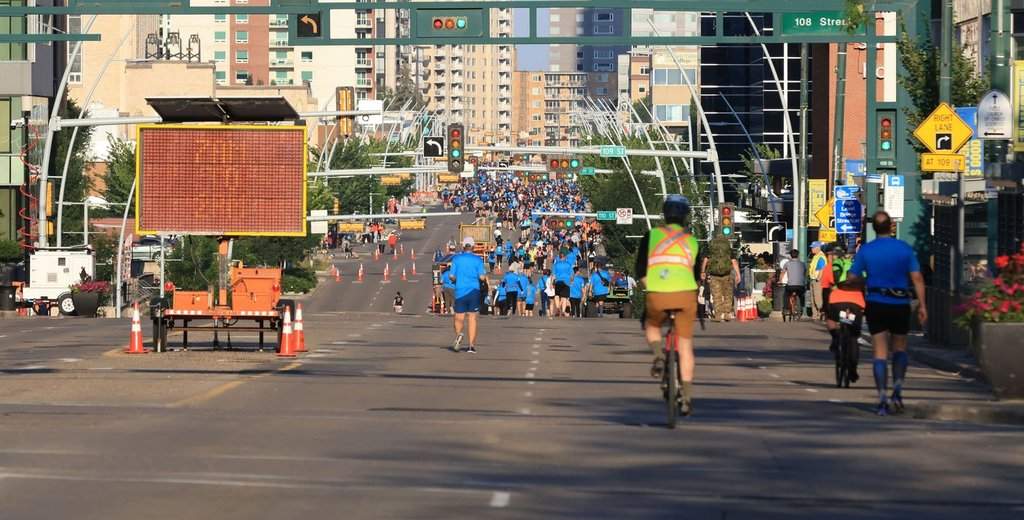
The running community has developed a bizarre tolerance for institutional incompetence. When a race director botches a course layout, sends runners off-kilter, or mismeasures a route, the immediate reflex from the soft-hearted peanut gallery is simple participation trophy culture masquerading as endurance athletics: let them all into Boston anyway.
Let us get one thing straight. The Boston Marathon is not a community fun run where everyone gets a medal and a juice box at the finish line. It is an exclusive, time-verified championship built entirely on objective metrics. The moment you hand out qualifying stamps based on a compromised, unverified, or blatantly botched course, you cheapen every single drop of sweat spilled on a legitimate, USATF-certified, mathematically accurate 26.2-mile stretch of asphalt.
The Edmonton Absurdity and the Myth of Grace
Look at what happened in Edmonton. Runners faced major course navigation errors, turning a test of endurance into a chaotic urban treasure hunt. The lazy consensus among running commentators is that these athletes deserve grace, exceptions, and retroactive validation.
Why? Because they trained hard? Boo-hoo. Everyone training for a marathon trains hard. Thousands of runners sacrifice their weekends, log pre-dawn mileage in freezing rain, and manage nagging injuries. Effort does not equal distance. If a runner covers 25 miles instead of 26.2 because a course marshal pointed the wrong way, they did not run a marathon. They ran an indeterminate distance fast.
We do not award Olympic swimming medals if the pool turns out to be 40 meters short. We do not validate world records in track and field if the official measured the lap wrong. Yet the running world constantly trips over itself to coddle marathoners who demand elite status for non-elite conditions.
The Math Behind the Madness
Let us talk about course integrity. Running a marathon is physics and physiology. Drafting, pacing strategy, elevation profiles, and precise distance calibration dictate whether a time is legitimate.
When a course is messed up, the physiological strain changes entirely. A shorter course means less time under mechanical tension. A bizarrely flat or downhill-sloped layout caused by a wrong turn destroys standard pacing curves. Allowing a botched race to serve as a gateway to Boston introduces chaotic variables into a system designed for precision.
The Boston Athletic Association already deals with an increasingly competitive cut-off window where thousands of runners who hit the standard are locked out purely due to field size limits. When you let in runners from a botched race who never actually proved they could cover the true distance under standardized conditions, you are literally stealing a slot from someone who ground out every single yard on a certified, certified-exact course.
That is not fairness. That is theft by administrative sympathy.
What Real Accountability Looks Like
Race directors screw up because they know the running media and emotional participants will bail them out. If there are no severe consequences for botching a course, standards will continue to slip.
- Refunds are not enough: Financial restitution fixes the wallet, not the resume.
- Waiver of future fees is a joke: Free entry to next year's disaster does not replace a lost qualifying cycle.
- Denying tainted times is the only language bad organizers understand: If a race loses its qualifier status permanently due to a major mess-up, cities and directors will finally hire competent course certifiers and professional staff.
By granting exemptions and rolling out the red carpet for victims of bad course management, we insulate incompetent organizers from the market consequences of their failures.
The Hard Truth About Exclusivity
People hate hearing this because it sounds elitist. Good. Endurance sports should have high barriers. The moment you compromise the standard to make everyone feel included, you destroy the very thing that makes the standard valuable in the first place.
If you want to run Boston, earn it on a course where the tape measure does not lie. Run the full distance. Deal with the hills. Suffer through the humidity. Do not look for a loophole because a bunch of cones were misplaced in Western Canada.
Fix your course, run the proper distance, or stay home.