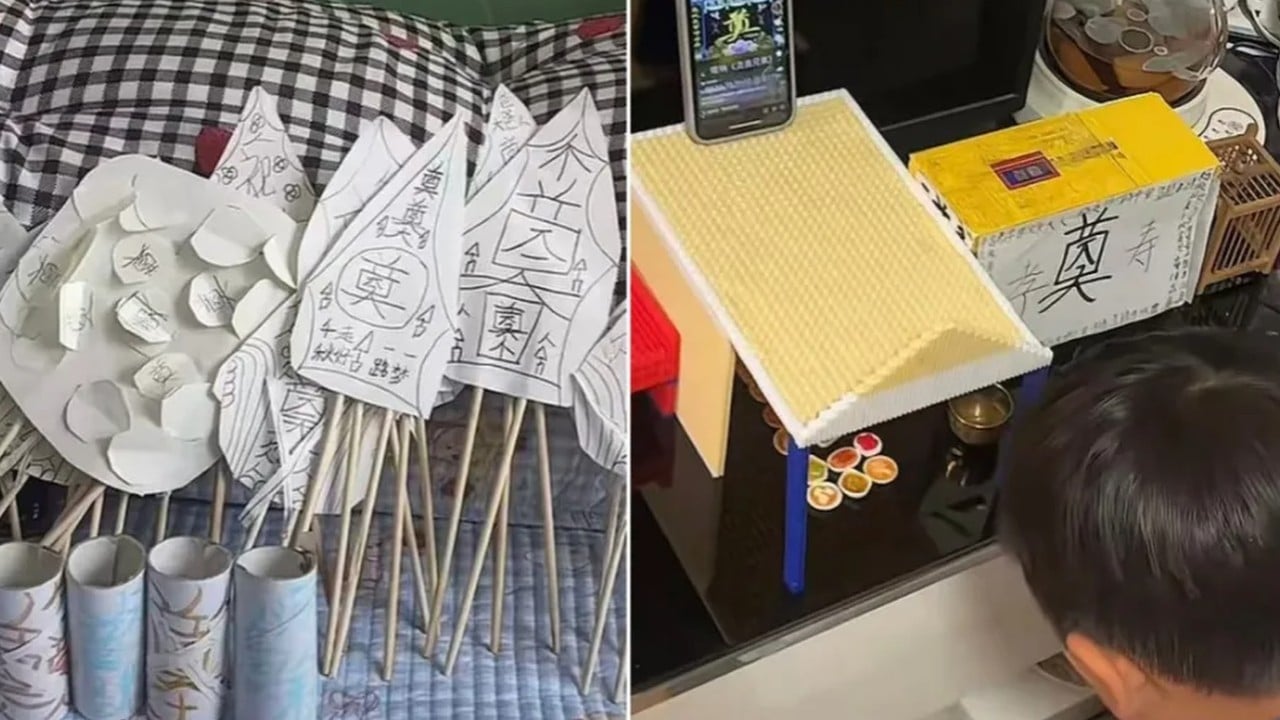
The internet saw a boy crafting miniature coffins out of cardboard, staging mock funerals for his father, and hit the share button for a quick laugh. Viral aggregators framed the whole thing as a quirky, slightly macabre comedy routine. "Look at this bizarre kid," the headlines implied. "Isn't the internet wild?"
That reaction is completely backwards.
You aren't watching a weird viral anomaly. You are watching one of the healthiest, most psychologically resilient behaviors a child can exhibit—and the fact that millions of adults find it bizarre exposes a massive blind spot in modern parenting. We have spent decades sanitizing childhood, scrubbing away any mention of mortality, grief, or endings, and then we act shocked when our teenagers crumble at the slightest brush with real-world loss.
This boy isn't morbid. He is practicing. And while the comment sections are busy projecting adult anxieties onto a kid with a cardboard box and some glue, developmental psychologists have known for nearly a century that this exact behavior is how human beings wire their brains to survive reality.
The Lazy Consensus of Modern Digital Voyeurism
When a video like this hits social media feeds, the coverage follows a predictable, shallow script. Content farms package the clip as "amusing" or "creepy-cute," relying on the shock value of seeing a child interact with funerary rituals. The underlying assumption is clear: death belongs behind closed doors, and a child engaging with it through play is an eccentricity worthy of gawking.
This perspective mistakes discomfort for abnormality.
In traditional Chinese culture—and indeed across most pre-industrial societies globally—death was never the sterile, outsourced event it has become in modern urban centers. Funerals were community-wide, multi-day affairs filled with specific rituals, paper offerings, music, and visible grief. Children weren't shuffled off to a babysitter while the adults handled the funeral home; they were right there, watching how a family processes an ending.
Even the object at the center of this viral clip—the coffin—carries a completely different symbolic weight in Chinese tradition than it does in the West. In Mandarin, the word for coffin (guāncai) is a homophone for "officialdom and wealth" (guān cái). Miniature coffins have historically been gifted or displayed as charms for prosperity and longevity. For a child growing up around these cultural touchstones, building a miniature casket isn't a dark fantasy about harming a parent. It is engaging with a familiar, deeply rooted cultural artifact.
By flattening this story into "weird kid amuses internet," modern media erases both the cultural literacy of the child and the psychological mechanics of what he is actually doing.
What Developmental Psychology Actually Says About Morbid Play
I have spent years analyzing how cultural taboos clash with human development, and if there is one recurring mistake adults make, it is assuming that a child's play reflects literal desires. It doesn't. Play is a simulator.
When a child stages a mock funeral for a parent, they are running a low-stakes simulation of their single greatest existential terror: abandonment and loss.
Jean Piaget, whose foundational work on cognitive development still underpins modern child psychology, demonstrated that children use symbolic play to assimilate experiences they cannot yet fully comprehend. Later researchers, including Erik Erikson and child grief specialists like Dr. William Worden, expanded on how children master anxiety through repetition and role-play.
Think about the mechanics of what happens when a child builds a coffin and directs a funeral service:
- Illusion of Control: Death is the ultimate loss of control. By acting as the craftsman and the director of the ceremony, the child flips the script. They dictate the terms, the pacing, and the outcome.
- Emotional Inoculation: Rehearsing a terrifying scenario in a safe environment—where Dad gets up at the end and goes back to making dinner—lowers the baseline panic associated with the concept of mortality.
- Cognitive Categorization: Young minds struggle with abstract concepts like "forever." Physical props like a handmade box give concrete shape to an abstract fear, allowing the brain to file it away instead of letting it fester as an unnamed dread.
Compare this to how most modern families handle the topic. We use euphemisms. Grandma "went to sleep." The dog "went to a farm." We shield kids from funerals until they are in their twenties, assuming we are protecting their innocence.
In reality, we are robbing them of the gradual exposure they need to build emotional calluses. When you ban a topic from the playroom, you don't eliminate the child's awareness of it; you just force them to process it alone, without tools, in the dark.
Why Adults Are Actually the Ones Panicking
If you look closely at the viral reaction to this story, the humor is a defense mechanism. Adults laugh at the boy because the alternative—acknowledging why he is doing it—is too uncomfortable.
Modern consumer culture is built on the denial of aging and death. We spend billions on anti-aging serums, biohacking protocols, and wellness trends designed to keep mortality out of sight and out of mind. Within that worldview, a child calmly crafting a coffin looks like a glitch in the matrix.
There is also a stark contrast between the father in this viral video and the typical hyper-anxious modern parent. Instead of scolding the boy, confiscating the cardboard, or rushing him to a therapist for "dark thoughts," the father played along. He participated. He allowed his son to explore a heavy theme with humor and creativity.
That father demonstrated a level of psychological security that most parenting influencers can only preach about. By refusing to react with horror, he signaled to his son that death is not a forbidden, shameful secret—it is just another part of life that the family can face together, even with a bit of dark humor.
The Questions Parents Are Afraid to Ask
Whenever stories like this trend, search engines light up with anxious queries from parents wondering where the line is between normal curiosity and a genuine red flag. Most parenting blogs give vague, liability-dodging answers. Here is the blunt truth.
Is it normal for a child to play funeral or act out death?
Yes. Across virtually every culture and historical era, children have played games centered around dying, funerals, wars, and illness. "Ring Around the Rosie," "Cowboys and Indians," and playing "dead" are universal staples of childhood. A child staging a funeral is no different from a child playing doctor after a scary trip to the emergency room. They are taking a passive fear and turning it into an active game.
When does morbid play actually become a clinical concern?
Context and affect are everything. Look at the emotional temperature of the play. In this viral video, the boy is engaged, creative, and interacting warmly with his father. The play has a clear beginning and end. Clinical red flags look completely different: persistent, joyless repetition that fails to relieve anxiety; withdrawal from friends and family; severe sleep disturbances; or play that involves actual self-harm or cruelty toward animals. A kid building a craft project with his dad is nowhere near that territory.
Does talking about death make kids depressed?
The exact opposite. Research consistently shows that open, matter-of-fact conversations about mortality reduce existential anxiety in children. When adults dodge the topic, children fill in the blanks with their own imaginations—and a child's imagination is almost always worse than reality. They often conclude that death is contagious, or that they somehow caused a loss through bad behavior. Clarity cures anxiety; secrecy fuels it.
How to Handle Heavy Themes Without Breaking Your Kid
You don't need to hand your toddler a glue gun and tell them to start building caskets to raise a resilient child. You just need to stop treating normal human realities like radioactive waste.
Here is what actually works when kids bring up mortality, grief, or dark themes:
- Match Their Tone, Not Your Panic: If a child brings up death casually or through a weird joke, respond at that exact same energy level. If you gasp, lower your voice to a somber whisper, or launch into a heavy lecture, you teach them that the topic is dangerous. Keep it light, direct, and matter-of-fact.
- Ditch the Euphemisms: Stop telling kids that people "went to sleep" or "passed away." Young children are literal thinkers. Telling a five-year-old that Grandpa went to sleep forever is a great way to trigger severe bedtime insomnia. Use clear, simple words: "His body stopped working, and he died."
- Let the Play Run Its Course: If your kid draws a picture of a graveyard or stages a dramatic death scene with their action figures, resist the urge to redirect them toward "happier" activities. Watch how they resolve the story. Often, you will see them invent a resurrection, a ceremony, or a caretaker role—that is their brain actively solving the emotional puzzle.
- Be Honest About the Downsides of Exposure: Admittedly, letting kids engage openly with heavy themes can create awkward moments in public. Your child might loudly ask a stranger at the grocery store when they are going to die, or build a miniature coffin that horrifies a visiting relative. You have to be willing to absorb a little social friction in exchange for raising a kid who isn't terrified of reality.
Stop Sanitizing Childhood
The internet treated a Chinese boy and his cardboard coffins like a circus sideshow because we have forgotten what healthy emotional processing looks like when it isn't wrapped in pastel colors and corporate therapy-speak.
That kid didn't need a viral moment, and he certainly didn't need the internet's amused pity. He had a dad who wasn't afraid to lie down in a cardboard box so his son could figure out how the world works. More parents should take notes.