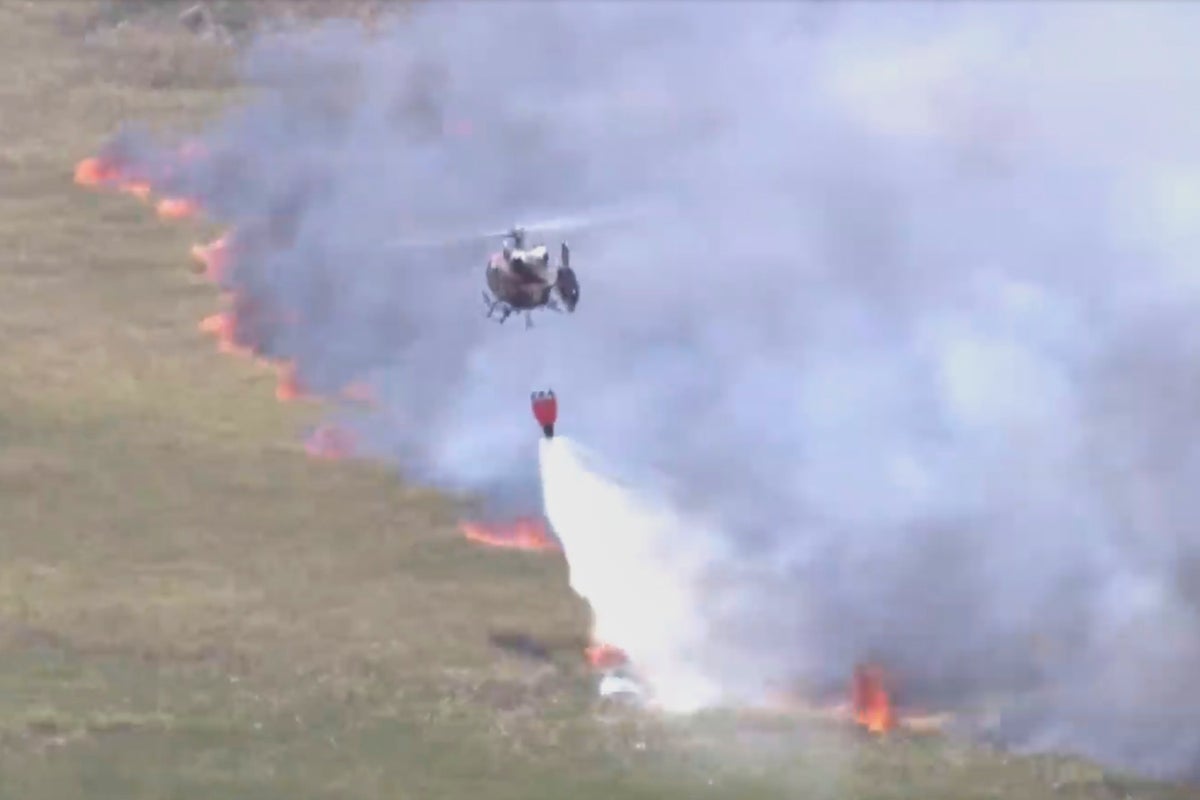
The headlines are predictable. They bleed with tales of fifty lost homes and the frantic rush of evacuations across the Georgia-Florida line. The media treats these events like unexpected lightning strikes—random, cruel, and unavoidable. They aren't. We are currently watching the inevitable physical manifestation of decades of administrative cowardice and the refusal to acknowledge that fire is a biological necessity, not a moral failing.
When a wildfire rips through a subdivision on the edge of a swamp, the "lazy consensus" blames "extreme weather" or "climate shifts." While those variables exist, they serve as convenient scapegoats for the real culprit: the dangerous accumulation of biomass. We have spent seventy years teaching the public that all fire is bad. By suppressing every spark, we have effectively loaded a giant shotgun and pointed it at our own living rooms.
The smoke rising from the Southeast isn't a tragedy of nature. It’s a failure of land management policy.
The Myth of Fire Suppression
For over half a century, the primary strategy has been total suppression. If it burns, put it out. This sounds logical to the average homeowner, but to anyone who actually understands forest ecology, it’s madness. Forests in Georgia and Florida are fire-dependent. Longleaf pine and scrub ecosystems evolved to burn frequently—roughly every two to five years.
When you stop these small, low-intensity burns, the "fuel load" builds up. Dead needles, fallen branches, and thick underbrush stack up like cordwood. By the time a spark finally hits during a dry spell, the fire isn't a ground-level cleaning service; it’s a crown-consuming monster.
We are trading 1,000 small, manageable fires for one catastrophic inferno that levels a neighborhood. I’ve watched agencies burn through their entire annual budgets in three weeks of "emergency response" because they were too afraid of the liability of a controlled burn six months earlier. It’s a classic case of short-term safety creating long-term catastrophe.
The Suburban Encroachment Trap
We need to stop pretending that every house built in a high-risk zone is a victim of circumstance. There is a massive "Wildland-Urban Interface" (WUI) problem that nobody wants to touch because it affects property taxes and real estate commissions.
People move to the edge of the woods because they want the "natural" aesthetic. Then, they demand that the state protect that aesthetic by preventing the very natural processes that keep the woods healthy. You cannot live in a powder keg and complain about the heat.
- The Insurance Delusion: Current models often fail to price in the true risk of building in these fire-prone corridors.
- The Aesthetic Fallacy: Homeowners fight against thinning projects because they don't want to see "stumps" or "blackened earth" behind their fences.
- The Evacuation Obsession: We focus on the logistics of running away rather than the architecture of staying put.
If we were serious about saving homes, we would mandate "defensible space" with the same fervor we use for building codes or fire hydrants. Instead, we allow developers to push deeper into the brush, building stick-frame houses with cedar siding and wooden decks that serve as perfect kindling.
The Brutal Physics of the Southeastern Fire
Southeastern fires are different from the timber-heavy blazes of the West. In Florida and Georgia, you’re dealing with high-oil vegetation like saw palmetto and gallberry. These plants don't just burn; they explode.
Imagine a scenario where a fire enters a stand of unmanaged palmetto that hasn't seen a flame in a decade. The energy release is so intense that it creates its own weather patterns. It’s not a slow crawl. It’s a thermal wave. No amount of water-dropping planes can stop that once it gains momentum. The only way to win is to make sure there is nothing for the fire to eat before it ever starts.
The Cost of Cowardice
Why don't we do more prescribed burns? Liability.
If a state agency conducts a controlled burn and the smoke drifts across a highway, causing a three-car pileup, the lawyers move in. If that same agency allows the forest to grow into a tinderbox that eventually burns down fifty homes, it’s labeled an "act of God."
We have incentivized negligence. We have made it legally safer to let a disaster happen than to take the calculated risk of preventing it. This is the definition of a broken system. We are spending billions on "recovery" and "emergency services" while penny-pinching on the actual science of fuel reduction.
Dismantling the "People Also Ask" Nonsense
"Is it safe to live in these areas?"
No. Not in the way you think. If your backyard is a wall of unmanaged scrub, you are living in a furnace. You are relying on luck and a fire department that is likely overstretched.
"Why can't we just put the fires out faster?"
Because physics doesn't care about your response time. Once a fire reaches a certain "Btu per foot" of fireline, it is physically impossible for human beings to stand in front of it. The "war on fire" is a war we lose every time the fuel load is too high.
"What should the government do?"
The government should stop subsidizing risk. Stop rebuilding in areas that have burned three times in thirty years. Shift the focus from "firefighting" (reactive) to "fire management" (proactive).
The Uncomfortable Truth About "Saving" Homes
We love the imagery of firefighters standing on roofs with hoses. It makes for great news segments. But the reality is that by the time the fire reaches the roof, the battle was lost years ago in a boardroom where someone decided a prescribed burn was "too risky" for the local air quality.
We are choosing the smoke of a thousand homes over the smoke of a thousand controlled acres.
If you live in these regions, stop looking at the fire as an intruder. It’s a resident. It has been there longer than your subdivision, and it has a job to do. You can either let it do its job on its own terms—which involve destroying your property—or you can let the professionals manage the flame on theirs.
The charred remains of those fifty homes aren't a tragedy of nature. They are a monument to our refusal to respect the biology of the land we occupy. We don't need more "thoughts and prayers" for evacuees. We need more chainsaws, more drip torches, and a lot less fear of a little smoke.
Stop fighting the fire. Start fighting the fuel.