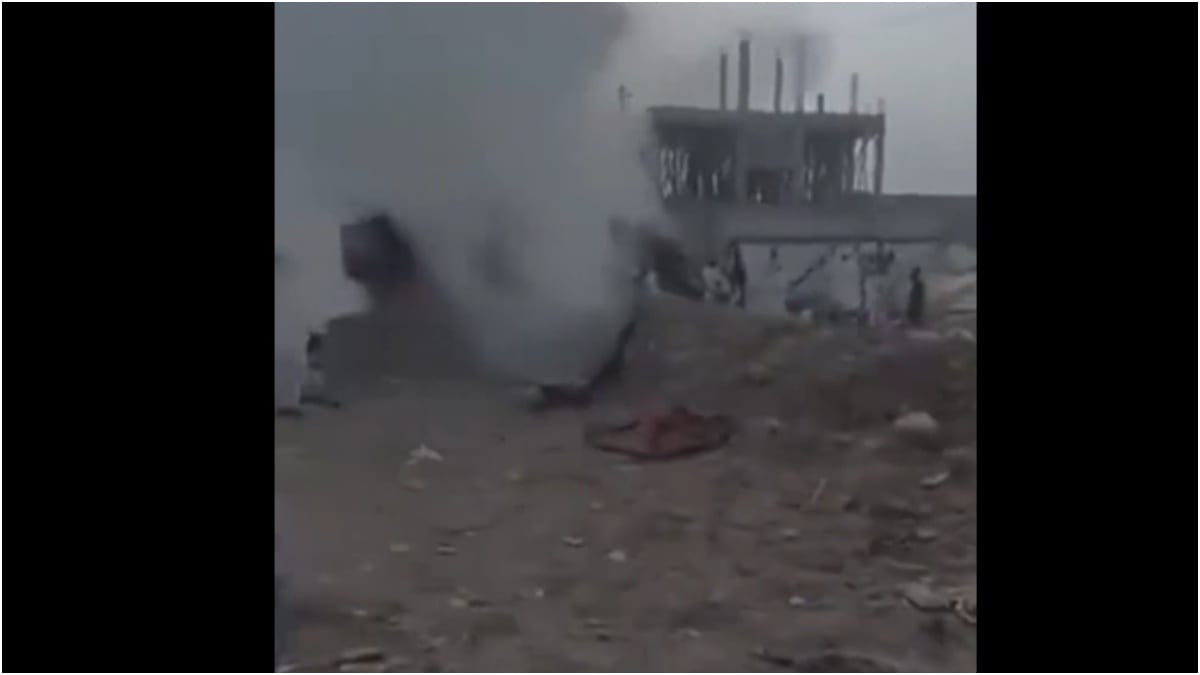
Every major newsroom spent weeks weeping over the same tragic figures: over 1,450 dead and nearly 5,300 missing following the catastrophic flash floods triggered by a glacial collapse on the Nepal-China border. The narrative followed a predictable script. Heartbroken families, abandoned rescue sites, helpless bureaucrats, and an impossible mountain of debris.
Except the entire premise of the debate is built on foundational statistical dishonesty.
When the National Disaster Risk Reduction and Management Authority (NDRRMA) publishes a missing persons list that swings by thousands of individuals within weeks, we are not looking at a precise human accounting. We are looking at a bureaucratic placeholder. In high-traffic transit hubs like Rasuwa and Nuwakot—zones choked with migrant laborers, cross-border cargo transporters heading to Kerung, unlisted seasonal workers, and foreign pilgrims—nobody actually knew who was in the valley when the mountain fell.
Stop treating a missing persons ledger as a verified census of the dead. It is an administrative cry for help disguised as concrete data, and the failure to understand this distinction distorts every single dollar of international aid that follows.
The Myth of the Baseline Population
To understand
Stop Blaming Nature for Nepal Death Tolls Because Urban Planning is the Real Killer
news, travel
Every time the monsoon hits South Asia, the headline machine runs on autopilot. A tragedy strikes, bodies are counted, climate change takes the blame, and the world moves on until the next flash flood. We get the standard mourning narrative, the victim counts, and the hand-wringing over unpredictable weather patterns. It is lazy, it is dangerous, and it completely misses why people are actually dying.
Nature does not commit mass manslaughter. Bad urban planning, systemic political apathy, and institutional corruption pull the trigger.
When the catastrophic floods and landslides tore through Nepal, claiming over a thousand lives with thousands more missing, the automatic reflex was to point upward at the sky and mutter about an angry climate. That explanation lets every municipal official, real estate speculator, and zoning board member off the hook. Rainfall intensity is a variable we measure; where we build and how we pave over natural drainage is a choice we make.
I have walked the river corridors of the Kathmandu Valley and stood in settlements choked by concrete where floodplains used to breathe. When you turn ancient wetlands and natural retention basins into high-density housing blocks without adequate stormwater infrastructure, you are not living with nature. You are building a trap.
The Climate Scapegoat
Let us clear up the terminology immediately. Weather events are natural. Disasters are entirely human-made.
When analysts throw around terms like unprecedented or freak storm, they are masking a profound failure of governance. Monsoon patterns in the Himalayas are not a surprise. They have arrived on a predictable schedule for millennia. What has changed is the load we placed on the landscape.
For decades, unchecked road expansion carved into fragile mountain slopes without proper slope stabilization or geotechnical surveys. In the valleys, illegal sand mining stripped riverbeds bare, deepening channels and undercutting bridge foundations while accelerating bank erosion. When the deluge arrived, it did not just rain water; it rained debris. Hillsides engineered with political bribes instead of safety margins simply liquefied.
If your response to a seasonal weather event is to call it an act of god, you are telling the public that nothing can be done. That is convenient if you are a politician who approved zoning permits in a flood zone. It is fatal if you live downstream.
The Urbanization Mirage
Nepal is experiencing a rapid, chaotic migration from rural hills to urban centers, primarily the Kathmandu Valley. People are searching for economic survival, crowding into whatever land is cheap. More often than not, cheap land means hazard land.
Municipal planners look at a low-lying wetland adjacent to a river and see a blank canvas for real estate. They grade it, they pave it, and they sell it. They ignore the basic hydrological reality that rivers need room to flood. When a river swells, it reclaims its ancient territory. It does not care about property deeds or municipal tax brackets.
When you pave over the sponge, water stops soaking into the earth and starts racing across concrete surfaces. Peak discharge times shrink from days to hours. A rainstorm that once caused a manageable rise in river levels now transforms into a lethal wall of water within minutes.
We are not facing a shortage of meteorological data. We have decades of flood mapping, topographical studies, and hazard assessments sitting in government filing cabinets gathering dust. The problem is not that we did not know where the risk was. The problem is that ignoring the risk was more profitable for the connected few.
The Cost of Reactionary Relief
Look at how disaster funding works. Billions flow into rescue operations, emergency food distribution, and temporary shelter camps after the bodies are counted. International aid agencies rush in with helicopters and tents, patting themselves on the back for swift humanitarian responses.
It is a multi-million-dollar theater of remediation. We spend fortunes fixing the symptoms while completely ignoring the pathogen.
If we redirected even twenty percent of post-disaster relief funds into strict preventative enforcement—relocating settlements from high-risk river corridors, retrofitting drainage networks, and jailing officials who sign off on illegal construction—the death toll would plummet. But prevention does not make good television. You cannot run a telethon for a building code that was successfully enforced or a housing development that was prohibited.
Real resilience requires structural confrontation. It means telling a developer they cannot build on a floodplain, even if they have powerful political patrons. It means tearing down illegal structures that block natural waterways, regardless of how much capital was sunk into them.
Rewriting the Recovery Playbook
If we want to stop writing obituaries for thousands of people every few years, we have to abandon the narrative of inevitability.
First, stop treating spatial planning as a bureaucratic suggestion. Every municipality in hazard-prone regions needs binding, legally enforceable zoning laws that prioritize geography over political donor interests. If a ridge is prone to landslides, it stays forested. If a basin is a flood route, no foundation goes into the ground. Period.
Second, overhaul infrastructure standards. Mountain roads require proper bio-engineering, retaining walls, and drainage culverts, not just a bulldozer scraping a temporary path through the dirt. Urban centers need mandatory permeable surfaces and restored retention ponds to absorb the shock of high-volume precipitation.
Third, dismantle the impunity of corrupt officials. When a bridge washes out because corners were cut on steel reinforcement, or a neighborhood drowns because a drainage canal was illegally filled for commercial real estate, it should be treated as criminal negligence, not bad luck.
The mountains are not out to get us. The monsoon is just doing what it has always done. The body count is our receipt for decades of arrogance, greed, and structural cowardice. Until we stop blaming the clouds and start auditing the politicians and planners who design our destruction, the next disaster is already locked into the calendar.