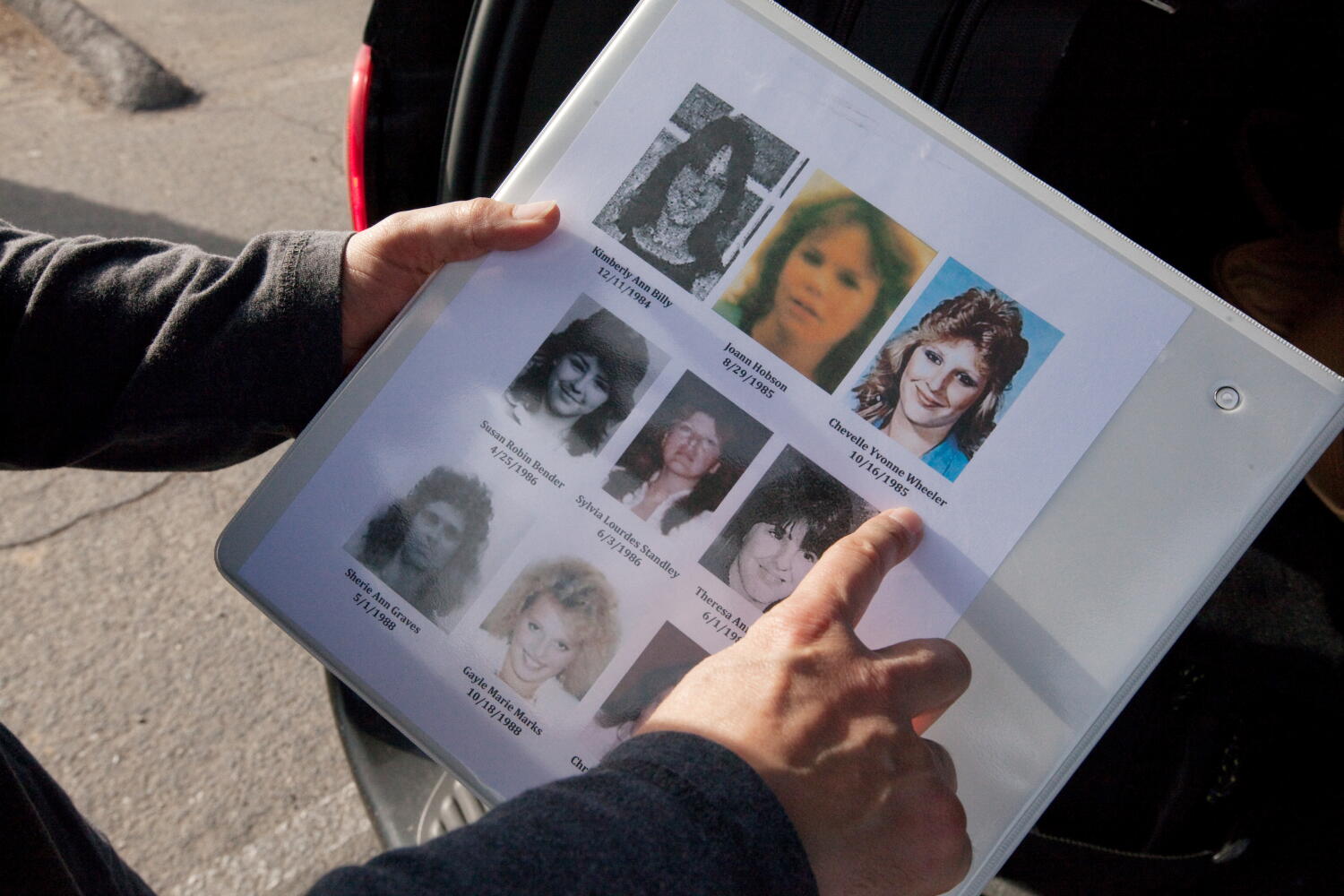
When Wesley Shermantine stopped breathing inside a prison medical facility, the media treated it as a punctuation mark on a horrific historical chapter. Obituaries rolled out with cinematic flair, rehashing the moniker bestowed upon him and his partner in terror, Loren Herzog: the Speed Freak Killers. For decades, the public consumed the gruesome details of their Northern California rampage through the lens of a true-crime thriller. We were fed the image of two methamphetamine-fueled masterminds evading the law through rural cunning and sheer depravity.
It is a comfortable narrative. It places the evil neatly inside two men, reducing a sprawling multi-decade tragedy into a closed-loop horror story where the bad guys are dead, justice is served, and society can sleep soundly.
It is also a dangerous lie.
Shermantine did not die because nature finally took its course. He died after spending decades gaming an institutional apparatus that valued procedural convenience over human life, while a sensationalist media complex turned his carnage into cheap entertainment. If you want to understand why women vanished from the Central Valley in the late 1980s and 1990s without triggering a massive state response, you have to look past the blood-soaked mythology of the killers and examine the profound rot of the machinery charged with stopping them.
The lazy consensus is that Shermantine and Herzog were criminal geniuses who slipped through the cracks because police technology was primitive. That excuse expired twenty years ago. They were not masterminds. They were clumsy, sloppy predators operating in a jurisdiction that simply did not care enough about their victims to look too closely.
The Myth of Closure and the True Crime Circus
Every time a notorious inmate expires behind bars, headlines trumpet the arrival of closure for the families. This is a PR phrase invented by prosecutors and newsrooms to sanitize an incomplete ledger.
Closure implies that the damage was contained, evaluated, and resolved. But how do you claim closure when the state actively botched the investigation while the murders were happening? How do you accept closure when the conviction of Loren Herzog was overturned on appeal due to prosecutorial coercion, resulting in a ridiculous twelve-year sentence that let a confessed participant walk free long before his debt was paid? Herzog walked out of prison in 2010, lived in a trailer park, and ultimately hanged himself in 2012 only after bounty hunters and private citizens forced the issue back into the light.
The media coverage of Shermantine’s death followed a familiar, toxic script. It fixated on the body count, the remote wells, the bone fragments, and the dramatic confessions. It treated Shermantine like a dark celebrity granting final interviews from behind glass.
This framing serves a specific purpose: it protects the institutions. By focusing entirely on the pathology of the killers, the press lets law enforcement agencies off the hook for ignoring missing persons reports filed by families who didn't fit the demographic profile of priority investigations. When young women from unstable backgrounds, runaways, and rural dropouts disappear, the institutional response is rarely urgent. Shermantine and Herzog did not hide in plain sight because they were invisible; they hid because the people they preyed upon were treated as disposable by the society sworn to protect them.
Margin Blindness and Institutional Complicity
Let us address the operational reality of the San Joaquin County and Calaveras County areas during the peak of these murders.
I have spent years analyzing how serial predators exploit geographic blind spots. The Central Valley is a vast chessboard of agricultural isolation, dusty crossroads, and transient labor loops. In that environment, law enforcement resources were stretched thin, but resource scarcity does not explain apathy. It explains prioritization.
When a transient or a teenager from a broken home goes missing, the default police response historically leans toward voluntary departure. Files gather dust. Tips go unverified. Detectives move on to cases with clearer evidentiary trails. Shermantine and Herzog exploited this institutional laziness with terrifying consistency. They operated out in the open, boasting to acquaintances about violence, driving vehicles known to locals, and yet the structural warning lights never flashed red.
The modern crime-reduction landscape likes to pretend that inter-agency communication was the sole bottleneck of the era. If only the sheriff's department in Stockton talked to the highway patrol in Lodi, the argument goes, everything would have been different. That is a sanitized fantasy. The breakdown was not merely technical; it was cultural.
When you treat marginalized communities as secondary, you create a hunting ground. Shermantine and Herzog did not have to be Hannibal Lecter. They just had to be slightly more aggressive than the state's baseline indifference.
The Map Trader Economy
Nothing exposes the bankruptcy of the correctional and investigative complex quite like the circus that followed Shermantine's death-row incarceration.
For years, Shermantine sat in San Quentin operating a perverse barter system. He understood that investigators, grieving families, and true-crime podcasters possessed an insatiable hunger for bones. So, he turned his victims' remains into currency. He drew crude maps on cafeteria napkins, traded coordinates for tobacco, candy, and special privileges, and led search parties on wild-goose chases across desolate ravines just to feel powerful one last time.
Think about the moral inversion of that dynamic. A convicted mass murderer dictates the terms of engagement from a state-funded cell, torturing families all over again by dangling the location of their daughter's remains in exchange for commissary items.
Investigators played along because they needed the PR win. Every time a skull was recovered based on a tip from Shermantine, the department held a press conference thanking themselves for their tenacity. Nobody wanted to admit the grim truth: the state was negotiating with a monster because the state had failed to find those bodies independently two decades prior.
This is the dirty secret of high-profile criminal investigations. When the initial response fails, the system becomes dependent on the goodwill of the perpetrator to clean up its own mess. Shermantine died knowing he held leverage over the cops who guarded him. That is not justice. That is hostage negotiation administered by taxpayers.
The Uncomfortable Solution
If we are going to learn anything from the demise of Wesley Shermantine, we have to strip away the cinematic veneer of the true-crime industrial complex and confront the mundane failures that allowed him to kill with impunity for years.
First, stop glorifying predators with sensational nicknames. Calling them the Speed Freak Killers gives them an undeserved brand of outlaw mystique. They were domestic terrorists of the worst kind, fueled by petty impulses and enabled by a community that looked the other way until the stench became too loud to ignore.
Second, overhaul how missing persons cases from vulnerable populations are prioritized from day one. The first forty-eight hours of an investigation dictate its entire trajectory. If an agency writes off a missing teenager as a runaway because of her zip code or her family's economic status, they are writing a blank check to every predator within a fifty-mile radius.
Third, ban the institutional practice of trading information for comfort with violent offenders. When a killer refuses to disclose the location of remains, the state should isolate them permanently, cut off all external communication, and rely on forensic science and investigative persistence rather than lowering themselves to a prisoner's bargaining table.
Shermantine’s death brings no closure because true closure requires accountability, and accountability demands that we admit how the system failed the people who needed it most. He died an old man in a state bed, having lived decades longer than any of his victims ever got to. The real scandal is not that he finally died. It is that society let him dictate the terms of his existence—and his exit—all the way to the end.