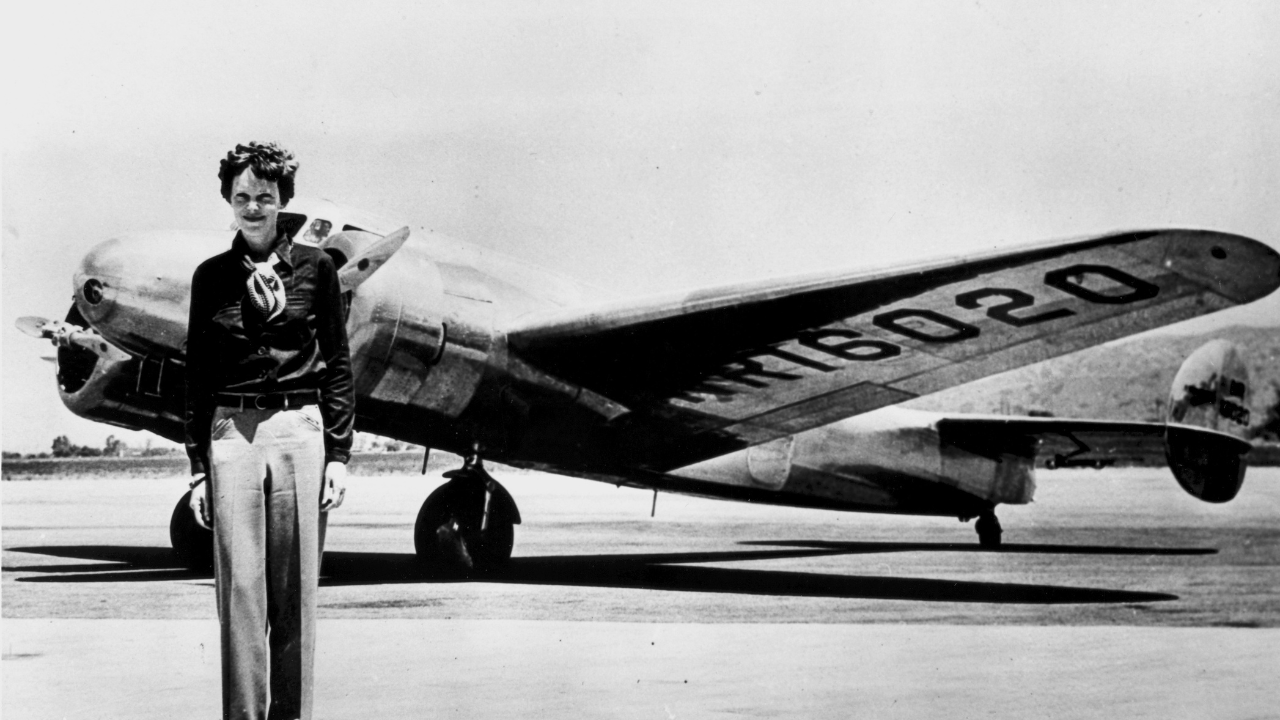
Coconut crabs did not eat Amelia Earhart. There. I said it.
Every time a slow news cycle hits, the same sensationalist recycling plant fires up. Out comes the Nikumaroro castaway story. Out come the terrifying photos of arthropods the size of dinner plates. Out comes the macabre image of a pioneering aviator slowly picked apart on a remote coral atoll while a radio call goes unanswered.
It makes great clickbait. It makes terrible investigation.
The lazy consensus around the coconut crab theory relies on a neat little chain of assumptions: Earhart missed Howland Island in July 1937, landed on nearby Nikumaroro (then Gardner Island), survived for days or weeks on rainwater and birds, died, and left behind bones that Birgus latro—the coconut crab—dragged into burrows or chewed up. Proponents point to historical artifacts found on the island, radio distress signals logged by amateur operators, and skeletal measurements from a set of bones discovered in 1940 that were later lost.
Here is the problem. Each link in that chain is weaker than the media coverage makes it look. And even if you grant the castaway premise for the sake of argument, turning a complex aviation and forensic mystery into "giant crabs ate her" is a cheap distraction from the real questions.
We are asking the wrong question when we ask whether crabs consumed Earhart's remains. The real question is why we keep letting theatrical, low-probability narratives crowd out hard physical evidence, navigation realities, and disciplined historical forensics.
The Lazy Consensus Around the Nikumaroro Crab Hypothesis
Let us break down what the competitor angle usually sells you. The narrative goes roughly like this: Earhart and navigator Fred Noonan ran low on fuel near Howland Island on July 2, 1937. Unable to find the tiny speck of land, they flew south to Nikumaroro, touched down on the reef flat at low tide, and lived out a Robinson Crusoe tragedy. After Earhart perished, coconut crabs scavenged her body, scattering and destroying the evidence before searchers could find it.
That story works because it combines two irresistible hooks: a famous disappearance and a monster.
Yet look closely at the mechanics of what has to go right for that theory to hold up. First, Nikumaroro is roughly 350 miles southeast of Howland Island. When an aircraft is already operating on fumes—and Earhart's Lockheed Model 10-E Electra had no reserve fuel margin to spare by the time she was calling Howland—making a blind, unguided 350-mile leg to a narrow, surf-pounded atoll without knowing where you are is a tall order. Second, landing a twin-engine metal transport on a coral reef without tearing the fuselage apart or immediately losing it to pounding swells and rising tides is no routine touchdown.
Third comes the forensic leap. In 1940, British colonial officer Gerald Gallagher found a partial skeleton on the southeast end of Nikumaroro, along with a sextant box and a bottle. Those bones were sent to Fiji, measured by Dr. D.W. Hoodless, and later lost. Decades later, forensic anthropologists Richard Jantz and Mary-Margaret Chang re-examined Hoodless's measurements and argued the bones were consistent with a tall female of European descent rather than the Pacific Islander male Hoodless initially suggested.
That reanalysis is where the crab theory gets oxygen. Because modern experiments and observations have shown that coconut crabs can haul away small bones, crack hard shells, and scavenge carrion, proponents argue that crab activity explains why only a partial skeleton was found and why so little remains today.
Scavenging is possible. Proof is not.
A scavenger being capable of moving bones does not prove it moved Earhart's bones. In forensic science, capability without attribution is just a hypothesis looking for a body.
Why Asking "Did Crabs Eat Her?" Misses the Real Investigation
People love typing "People Also Ask" style questions into search bars like Did coconut crabs eat Amelia Earhart's body? or Is there proof Amelia Earhart died on Nikumaroro? Those questions bake a false binary into the search. Either the crabs did it, or she vanished into the deep ocean.
Reality is messier than a binary.
In aviation accident investigation, you do not start with the most dramatic post-crash scenario and work backward. You start with fuel burn, dead reckoning, radio propagation, and wreckage physics. Earhart and Noonan were flying a complex, heavy aircraft with specialized long-range fuel tanks. Noonan was a top-tier navigator—despite myths painted later to excuse the missed target—working with celestial navigation under tough conditions, while Earhart struggled with radio procedures and frequency management on the approach to Howland.
If they ditched at sea after running dry, the Electra would have broken up or sunk relatively quickly in deep Pacific waters, leaving no castaway camp at all. In that scenario, crabs never enter the picture because the body never reaches a beach.
What if they did reach Nikumaroro? Even then, focusing obsessively on whether crabs chewed on remains misses the harder operational questions: How did they survive the landing? How did they get fresh water on a dry coral atoll? Why were no unmistakable, undisputed aircraft wreckage pieces definitively tied to the Electra recovered from the reef despite repeated expeditions?
Dismantling the Common Misconceptions
- "Coconut crabs prove she died on an island." False. Coconut crabs live on many Indo-Pacific islands. Their presence proves nothing about who died there in 1937.
- "The 1940 bones were definitely Earhart." Overstated. Even the anthropologists who argued the measurements fit a tall female noted that the original bones are gone, leaving researchers to analyze historical notes rather than physical DNA or direct osteological inspection.
- "Post-crash post-mortems are settled science." Wrong. Taphonomy—the study of how remains decay, scatter, and get modified after death—is notoriously tricky in tropical marine environments where waves, storms, hermit crabs, fish, and birds all leave fingerprints.
Battle Scars From Chasing Shiny Theories Instead of Hard Proof
I have spent years watching smart people—and well-funded teams—blow millions of dollars chasing sexy narratives instead of boring, high-probability fundamentals. In high-stakes investigations, whether you are hunting missing aircraft or diagnosing a failing enterprise, confirmation bias is the most expensive item on the invoice.
When a theory has a catchy hook, teams start filtering every observation through it. A piece of aluminum becomes "maybe a patch." A blurry sonar return becomes "the tail section." A stray historical note becomes "smoking gun confirmation."
I have seen expeditions pour resources into dramatic hypotheses while under-investing in systematic, grid-based search discipline or basic physical verification. When you fall in love with a story before you lock down the evidence, every ambiguity looks like a clue.
Let me be candid about the downside of my own contrarian pushback here. Skepticism can get lazy too. If you dismiss every unconventional lead out of hand, you risk missing genuine anomalies. History has plenty of moments where the established view missed something real because insiders were too comfortable with conventional wisdom.
That is why disciplined contrarianism has to cut both ways. Do not swallow the crab narrative whole just because it is colorful. Do not dismiss Nikumaroro out of spite just because sensationalists love it. Follow the physical standard of proof, wherever it leads.
What Heavy Hitters in Aviation and Forensics Actually Look For
Serious researchers—from deep-ocean search engineers to historians like Richard Gillespie and forensic specialists who debate the Nikumaroro osteology—know that credibility lives in falsifiability and chain of custody.
Imagine a scenario where a team finds a piece of metal on a Pacific reef and claims it came from Earhart's Electra. To clear a serious engineering bar, you cannot just say the alloy looks old or the rivet pattern seems plausible. You have to compare thickness, metallurgy, manufacturing standards, structural blueprints for Lockheed Model 10-E serial number 1055, and field modifications made before the July 1937 flight. Without that rigor, you have scrap metal and wishful thinking.
The same standard applies to human remains and animal scavenging. Forensic anthropologists look at gnaw marks, bone transport patterns, weathering rates, and environmental context. Even when scavenging is plausible in principle, missing physical specimens limit how far any conclusion can go.
How to Investigate Mysteries Without Getting Played
If you want to actually understand cold cases like Earhart's disappearance—or apply sharp analytical thinking to any high-stakes puzzle—stop chasing the most vivid headline and start running a tighter filter.
- Separate capability from proof. Ask whether an event could happen physically, and then ask what evidence proves it did happen in this specific case.
- Audit the chain of custody. Whenever a conclusion rests on lost bones, second-hand measurements, or ambiguous artifacts, discount certainty accordingly.
- Check the baseline math first. Before picturing castaways and crabs, check fuel range, weather, navigation error margins, and ocean depth.
- Demand a falsifiable test. Ask what evidence would prove the theory wrong. If a theory can explain away every missing piece of evidence, it is not strong—it is slippery.
Stop letting giant crabs distract you from the real work of separating myth from evidence.


