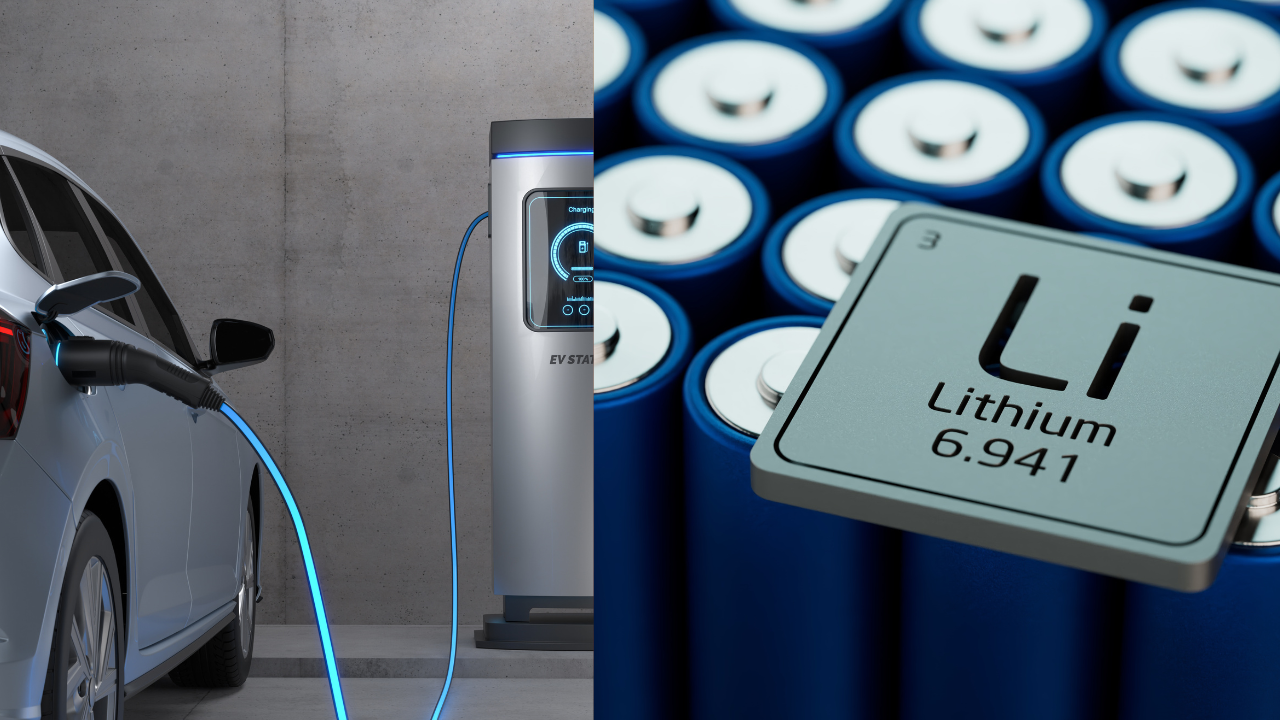
Every single week, another university press release promises a battery breakthrough that will make electric cars lighter, cheaper, and capable of driving a thousand miles on a single charge. And every single week, mainstream tech journalists copy-paste those press releases into breathless headlines, convincing millions of buyers to sit on their hands and wait for a miracle cell that is perpetually five years away.
They are lying to you. Not out of malice, but out of sheer ignorance of how industrial manufacturing actually works. In related updates, take a look at: The Economics of a 53 Percent Markdown on Bose QuietComfort Headphones.
The lazy consensus in automotive journalism is that electric vehicle adoption is a chemistry problem waiting for a white-coated savior in a lab coat. Build a denser cell, cram it into a chassis, and range anxiety evaporates overnight. It sounds clean. It makes for great clickbait. And it completely ignores the brutal reality of supply chains, thermal management, and unit economics that govern every vehicle rolling off an assembly line today.
I have sat in boardrooms where executives burned tens of millions of dollars chasing exotic anode chemistries that worked brilliantly in a coin cell under a microscope, only to watch those same cells swell, crack, and fail catastrophically the moment they were scaled up to automotive formats. When you move from a milligram-scale laboratory prototype to a gigafactory spitting out millions of kilowatt-hours per year, physics stops being polite. ZDNet has analyzed this fascinating issue in great detail.
The Coin Cell Mirage
Let us look at what actually happens when scientists announce a battery that is smaller, lighter, and longer-lasting. Almost universally, they are testing a coin cell—a tiny, button-sized battery roughly the size of a quarter—under pristine, temperature-controlled laboratory conditions.
In a coin cell, you do not have to worry about volumetric expansion, which is the tendency of high-capacity materials like silicon or pure lithium metal to swell up to 300 percent as they absorb ions during charging. Put that same chemistry into a large-format pouch or prismatic cell packed tightly inside an aluminum crash structure, and that swelling turns into mechanical stress. Over a few hundred cycles, the electrodes pulverize themselves. The solid electrolyte interphase cracks, consuming your liquid electrolyte until the cell dies a premature death.
Engineers call this the Valley of Death in battery commercialization. Between a published paper in Nature Energy and a certified, crash-tested battery pack sitting beneath the floorboards of a production SUV lies a gauntlet of brutal trade-offs:
- Energy Density vs. Cycle Life: Pushing specific energy past 350 watt-hours per kilogram almost always degrades longevity. Consumers expect an EV battery to last 15 years and 200,000 miles without losing more than 20 percent of its capacity. Most experimental "miracle" cells struggle to survive 500 full charge-discharge cycles before falling off a cliff.
- Fast Charging vs. Lithium Plating: Drivers demand 10-to-80 percent charge times under 15 minutes. Forcing ions into a dense, ultra-light electrode at high currents causes metallic lithium to plate onto the anode surface instead of intercalating smoothly. Those microscopic metal needles—known as dendrites—pierce the separator and cause internal short circuits.
- Raw Material Purity vs. Cost: Many next-generation solid-state and sulfur architectures require ultra-pure lithium metal foils or rare sulfides like germanium. Refining those materials at commercial scale costs orders of magnitude more than mining standard lithium carbonate or hydroxide.
When an article tells you scientists have solved weight, range, and lifespan all at once, ask yourself which metric they conveniently left out of the abstract. Usually, it is cost per kilowatt-hour, operating temperature window, or manufacturing yield.
Why Weight Is No Longer the Enemy You Think It Is
The premise behind obsessing over lighter batteries is rooted in an outdated understanding of vehicle dynamics. In an internal combustion engine car, shedding weight directly improves fuel economy because accelerating mass wastes kinetic energy as heat through friction brakes every time you slow down.
Electric vehicles rewrite that equation through regenerative braking. When a heavy electric vehicle decelerates, its traction motors reverse polarity and act as generators, capturing up to 70 percent of that kinetic energy and feeding it straight back into the battery pack. On highway drives, aerodynamic drag—not vehicle mass—dictates energy consumption once you reach cruising speed.
More importantly, the industry has already figured out how to slash battery pack weight without inventing a single new periodic table element. It is called cell-to-pack and cell-to-chassis structural integration.
Ten years ago, an EV battery pack was a Russian nesting doll of wasted metal. You put chemistry inside a cylindrical or prismatic cell, grouped cells into modules wrapped in aluminum housings with their own cooling plates and wiring harnesses, and bolted those modules into a massive steel tray. Nearly 40 percent of the pack's total weight and volume was dead structural hardware that stored zero energy.
Companies like BYD with its Blade Battery and CATL with its Qilin architecture threw the module concept in the trash. By bonding long, flat cells directly into the structural floor pan of the vehicle, engineers eliminated hundreds of pounds of redundant brackets, bolts, and casings. The battery itself now provides torsional rigidity to the car body. You get higher pack-level energy density, better crash safety, and lower manufacturing costs using lithium iron phosphate (LFP)—a chemistry that is actually heavier at the cell level than nickel-rich alternatives, yet cheaper, safer, and virtually indestructible over thousands of cycles.
The Charging Curve Beats Total Range Every Single Time
If you are still shopping for an electric vehicle by looking at the maximum EPA range sticker on the window, you are asking the wrong question.
Imagine a scenario where you are driving 600 miles down the interstate. Car A has a massive, experimental 500-mile battery that takes 45 minutes to recharge from 10 to 80 percent because its dense chemistry overheats under high current. Car B has a modest 300-mile battery built on an 800-volt architecture that can gulp down 350 kilowatts of power, adding 200 miles of range in 12 minutes flat.
Car B arrives at the destination first, costs $15,000 less to buy, and carries far less dead weight around town during the 95 percent of the year when you are just commuting to work and picking up groceries.
The real bottleneck in long-distance electric travel has never been the energy density of the cells. It is thermal dissipation and charging infrastructure reliability. When a battery charges rapidly, internal electrical resistance generates immense heat. If the cooling system cannot pull heat away from the core of every cell uniformly, the battery management system throttles charging speed to prevent thermal runaway.
This is why Porsche, Hyundai, and Kia invested heavily in 800-volt electrical systems and bottom-or-dual-side liquid cooling plates rather than waiting for exotic chemistries. By doubling the voltage, you halve the current required to deliver the same power. Halving the current cuts resistive heat losses ($I^2R$) by a factor of four. That is basic high school physics delivering real-world speed today, no Nobel Prize required.
What People Get Wrong About Battery Degradation and Lifespan
Another myth perpetuated by breathless "longer-lasting battery" headlines is that current EV batteries wear out like three-year-old smartphone batteries.
They do not. Your phone has no active liquid cooling, charges to 100 percent every night, sits at high voltage for hours, and undergoes deep daily discharges. Modern electric vehicles buffer the top and bottom of the battery capacity so you never actually access the destructive voltage extremes, while liquid thermal loops keep the pack hovering near an optimal 25 degrees Celsius regardless of whether it is freezing in Minnesota or scorching in Arizona.
Data from fleet operators and independent battery diagnostics firms like Recurrent and Geotab consistently shows that modern liquid-cooled EV packs lose roughly 1.5 to 2.3 percent of their range per year. At that rate, a 300-mile vehicle retains over 240 miles of range after a decade of hard driving. In most cases, the surrounding chassis, suspension, and interior will rust or wear out long before the battery pack needs replacement.
Even the industry titans who championed revolutionary dry-electrode processes and silicon-dominant anodes have learned this lesson the hard way. Tesla's 4680 structural cell program—unveiled with massive fanfare in 2020 as the key to halving battery costs—spent years bogged down in dry-coating yield bottlenecks before achieving volume parity with conventional wet-coated suppliers. Toyota has been promising commercial solid-state batteries "within three to five years" since 2010, pushing the timeline back repeatedly while quietly pivoting toward hybrids and conventional lithium-ion packs to stay competitive.
The Uncomfortable Truth About Waiting
To be completely transparent, there is one legitimate reason to pause before buying an EV today: depreciation driven by price cuts, not technology obsolescence.
Because legacy automakers overestimated early demand and underestimated Chinese manufacturing scale, resale values on two-year-old electric vehicles have taken a beating. Furthermore, if you live in an apartment without dedicated home or workplace charging, relying exclusively on public fast chargers turns EV ownership into an expensive, frustrating chore—regardless of what chemistry sits under the floor.
If you do have access to a standard 240-volt outlet in your garage, however, waiting around for a press-release battery is pure self-sabotage. Every month you delay while burning $4-a-gallon gasoline and paying for oil changes, timing belts, and transmission flushes is money lighting on fire in pursuit of specifications you will use twice a year.
How to Actually Evaluate an Electric Vehicle Right Now
Forget the lab breakthroughs and judge vehicles on the engineering metrics that dictate daily ownership:
- Demand an 800-volt architecture or proven flat charging curve. Do not look at peak kilowatt charging numbers—manufacturers game that metric by hitting 250 kW for ninety seconds before dropping to 90 kW. Look at the 10-to-80 percent time in minutes. Anything under 20 minutes renders 500-mile range claims irrelevant.
- Prioritize LFP chemistry for standard-range daily drivers. If you drive under 250 miles a day and keep your cars for a decade, a vehicle equipped with lithium iron phosphate cells lets you charge to 100 percent daily without accelerating degradation, eliminates cobalt and nickel supply chain exposure, and slashes fire risk.
- Check for a standard heat pump. In cold weather, resistive cabin heaters can devour 30 percent of your winter range. A mechanical heat pump scavenges waste heat from the motors and power electronics to warm the cabin, preserving far more real-world miles than a five-percent bump in cell energy density ever could.
- Buy used and let the first owner eat the depreciation. Because modern battery packs barely degrade over their first 50,000 miles, a two- or three-year-old off-lease EV gives you 95 percent of a new battery's capability at 50 to 60 percent of the sticker price.
The battery revolution is not locked inside a university cleanroom waiting for a miracle patent to clear regulatory approval. It already happened on factory floors in Shenzhen, Nevada, and Ulsan through ruthless mechanical simplification and manufacturing scale. Stop reading science fiction disguised as automotive news and start looking at the engineering already parked on the lot.