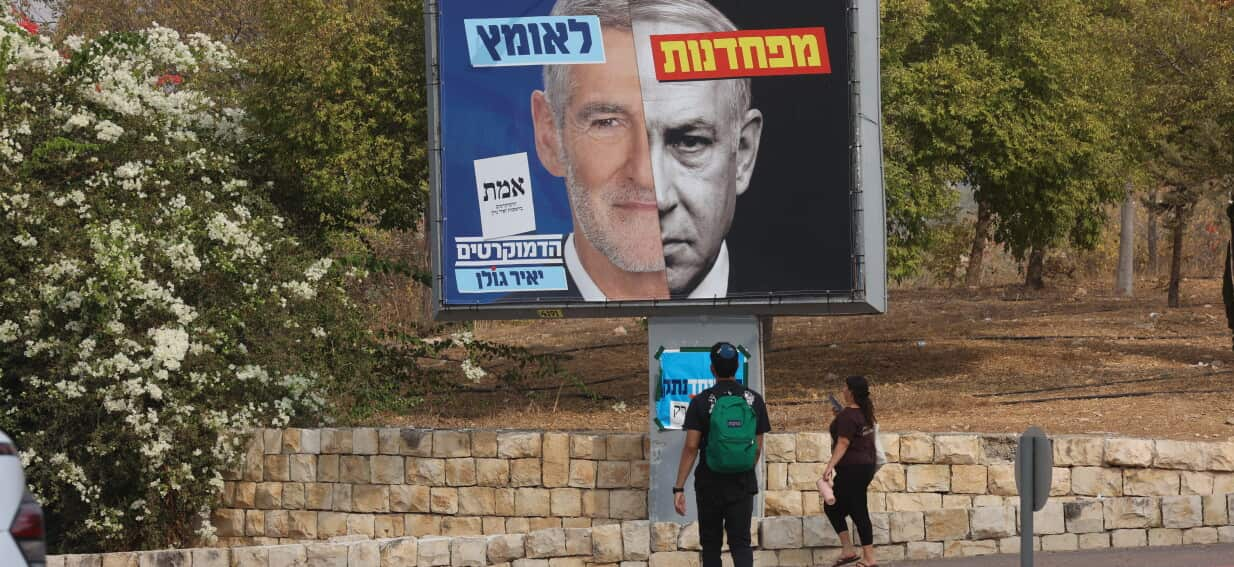
Political pundits love a simple villain. When foreign correspondents parachute into southern Israel to cover the rebuilding of the Gaza border communities—the Otef—they almost always write the exact same story. They find displaced survivors from Kibbutz Be'eri, Nir Oz, or Sderot. They record quotes about betrayal, the intelligence failures of October 7, and the residents' refusal to forgive Prime Minister Benjamin Netanyahu. Then, they slap a headline on it suggesting that the future of southern Israel hinges on whether Netanyahu survives politically.
That framing is lazy consensus. It turns a complex feat of regional urbanism, infrastructure economics, and demographic engineering into a cheap cable-news horse race.
If you actually look at the ground reality in the western Negev, the fate of these communities has almost nothing to do with who sits in the Prime Minister’s Office in Jerusalem. Treating the recovery of the Gaza envelope as a referendum on Netanyahu misses the actual story: a massive, grassroots, and municipal realignment that is succeeding because residents stopped waiting for central government salvation and started building around it.
The Fallacy of the Jerusalem-Centric Narrative
Journalists obsessed with coalition politics assume that state reconstruction flows strictly top-down. In their minds, if the government is dysfunctional, the recovery fails. If the Prime Minister is unpopular, the residents won't return.
I have spent years analyzing post-crisis regional redevelopment and state-level infrastructure failures, and I have seen governments burn through billions in centralized recovery funds with zero demographic return. Why? Because people do not move back to a trauma zone because a politician gives a speech or signs a budget allocation. They move back—or move in for the first time—when the local unit economics of living there make sense.
Look at the actual numbers on the ground rather than the polling data on Netanyahu. By late 2026, the population across the Gaza border region did not just recover; in several communities, it actually topped pre-October 7 levels. Kibbutz Ein HaShlosha, which suffered direct assaults during the Hamas raids, saw its population climb from roughly 350 to over 400. New families—people with zero prior connection to the kibbutz movement—are actively relocating to the border.
They are not moving there because they suddenly fell in love with the Israeli cabinet. They are moving there because the calculus of housing, community cohesion, and regional connectivity shifted beneath the political noise.
Why "Will They Forgive Netanyahu?" Is the Wrong Question
When readers search for news about displaced Israelis wanting a fresh start, they are fed an endless loop of emotional interviews about political trust. The underlying assumption is that political trust is a prerequisite for physical return.
It isn't. In fact, conflating political trust with civic resilience is a fundamental analytical error.
- Political Trust is vertical. It measures a citizen's faith in national institutions, intelligence apparatuses, and executive leadership. In the Gaza border communities, vertical trust was incinerated on October 7, 2023, and subsequent revelations regarding ignored intelligence warnings like the "Jericho's Wall" plan only cemented that cynicism.
- Civic Resilience is horizontal. It measures the strength of municipal councils, regional mayors, local educators, and neighbor-to-neighbor networks.
When vertical trust collapses, communities do not simply sit in hotel rooms in Eilat or Tel Aviv waiting for a new election cycle to heal their trauma. The smart ones bypass the state bottleneck entirely.
How the Grassroots Rewrote the Recovery Playbook
If you want to understand why the western Negev is rebounding while the national political discourse remains toxic, stop looking at the Knesset and start looking at organizations like Atid LaOtef (Future for the Gaza Envelope) and the regional councils of Eshkol, Sha'ar Hanegev, Sdot Negev, and Hof Ashkelon.
These local leaders realized early on that the state's emergency reconstruction arm—the Tekuma Directorate—was structurally incapable of delivering a 20-year vision on its own. Worse, the central government repeatedly tried to claw back funds, proposing hundreds of millions of shekels in budget cuts to the region between late 2024 and 2026.
Instead of waiting to be rescued, regional stakeholders treated the central government as a hostile vendor rather than a benevolent parent.
1. Decoupling from State Subsidies via Rail Infrastructure
A border town cannot survive on patriotism and tax breaks alone. If a young family has to choose between living near Gaza or keeping a high-paying tech or finance job in central Israel, Tel Aviv wins every time.
Local leaders recognized that the single most important variable in southern recovery wasn't a cabinet reshuffle; it was commute times. By aggressively lobbying for and utilizing upgraded rail links—pushing to cut travel time from Sderot and the surrounding kibbutzim to Tel Aviv from 90 minutes down to 60—the region turned itself into a viable commuter belt. When you can live in a newly built, subsidized home with tight-knit community childcare and still reach Tel Aviv in an hour, the economic gravity changes.
2. Bypassing Bureaucratic Paralysis
Centralized state agencies are notoriously slow at handling nuanced human trauma. When survivors needed specialized, long-term financial and psychological support that didn't fit neat ministerial spreadsheets, grassroots movements forced legislative changes from the outside—securing multi-year monthly stipends for affected residents rather than one-off lump sums that evaporate in six months.
3. Attracting Pioneer Demographics Instead of Begging Returnees
The mainstream media focuses exclusively on the displaced residents who refuse to go back. That is an emotional story, and an understandable one; communities like Nir Oz and Be'eri suffered devastation so severe that physical reconstruction takes years.
What the media misses is the strategic pivot toward new blood. By marketing the region to young, mission-driven families from central Israel who were priced out of the coastal plain, communities like Ein HaShlosha replaced demographic stagnation with rapid growth. These newcomers carry no pre-October 7 political baggage with Jerusalem. They are there to build equity and community from scratch.
The Uncomfortable Truth About This Approach
It would be dishonest to pretend that this hyper-local, anti-establishment recovery model has no downsides. Every contrarian strategy carries structural risks, and the Gaza border's bypass of Jerusalem is no exception.
First, municipal self-reliance cannot replace sovereign military deterrence. You can build the best schools, fastest trains, and strongest civic networks in the Middle East, but a regional council cannot command an armored division or manage aerial defense. As long as the border security architecture remains reliant on the IDF and the political echelon in Jerusalem, residents remain tethered to the very leadership they distrust.
Second, a two-tier recovery is emerging. Communities with savvy political organizers, strong philanthropic ties, and proximity to rail lines are booming. Meanwhile, smaller, heavily traumatized kibbutzim closer to the fence—where physical destruction was near-total and older populations lack the energy to fight ministerial bureaucracies—risk being left behind. In several support programs, roughly a third of affected residents, disproportionately those over age 50, found themselves excluded from newer long-term frameworks. Grassroots hustle favors the young and the organized; it can inadvertently widen the gap for the elderly and the deeply traumatized.
Third, privatizing the vision lets the state off the hook. When civil society steps in to plan 20-year regional healthcare, education, and economic frameworks, central ministries are all too happy to let them do the heavy lifting while quietly trimming state budgets.
What Actually Matters Next
If you are watching southern Israel to see whether Netanyahu gets voted out, you are watching a sideshow. Israeli coalition politics are famously volatile, and prime ministers come and go.
If you want to know whether the Gaza border communities will actually thrive over the next decade, ignore the press conferences in Jerusalem and track three hard metrics instead:
- Train frequency and commute duration between the western Negev stations and the Tel Aviv metropolitan area. If the 60-minute threshold holds and expands, the housing market will take care of itself.
- Net migration of families with children under ten into communities within seven kilometers of the border. Demography is the only honest poll; people vote with their mortgages.
- Budget execution rates at the municipal level versus the Tekuma Directorate. Watch who actually controls the procurement contracts for regional healthcare clinics and high schools.
The residents whose homes were raided on October 7 didn't just decide to move on from Benjamin Netanyahu. They realized that waiting for any prime minister to deliver a fresh start is a losing bet—so they stopped asking Jerusalem for permission to build one.