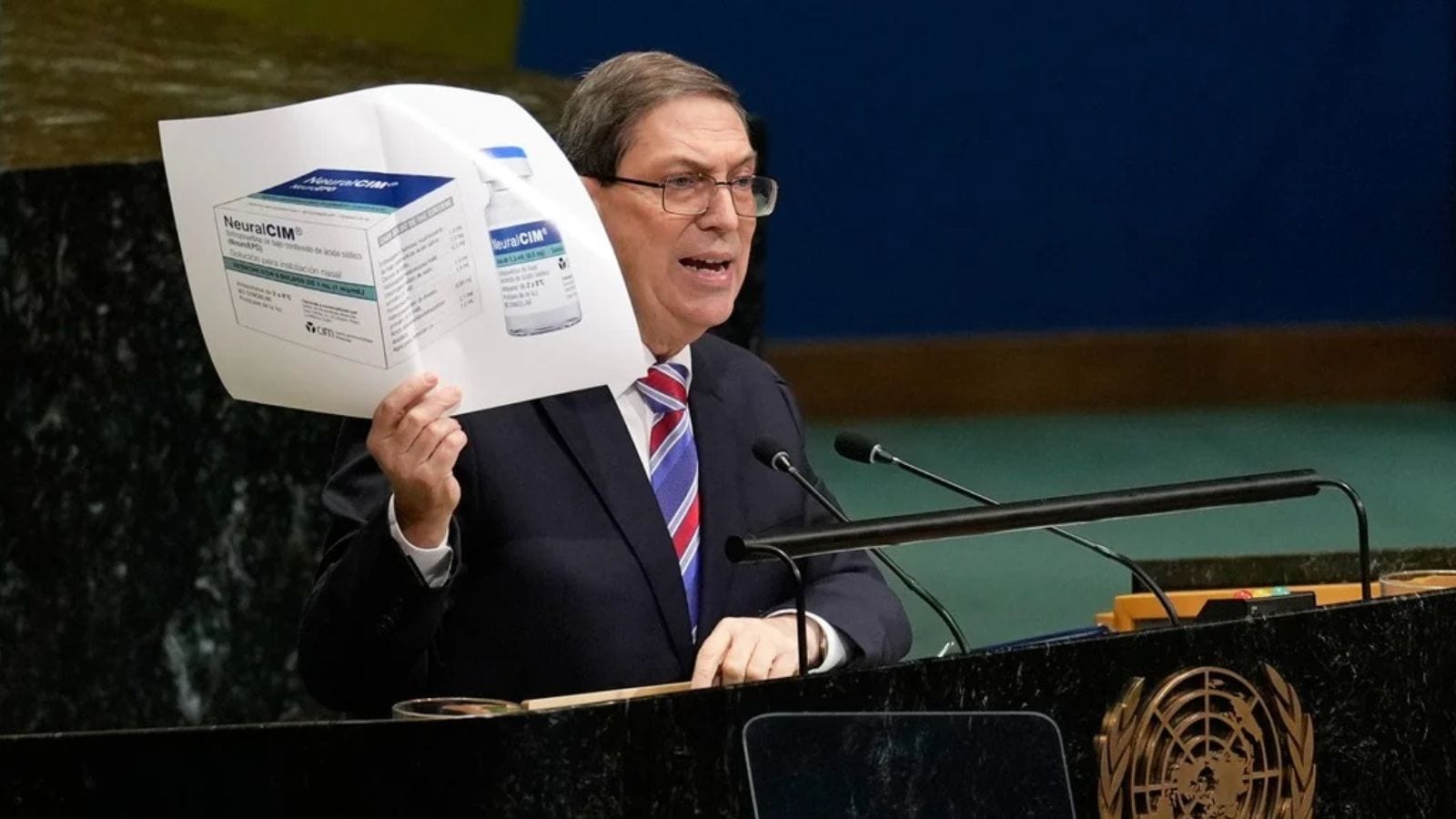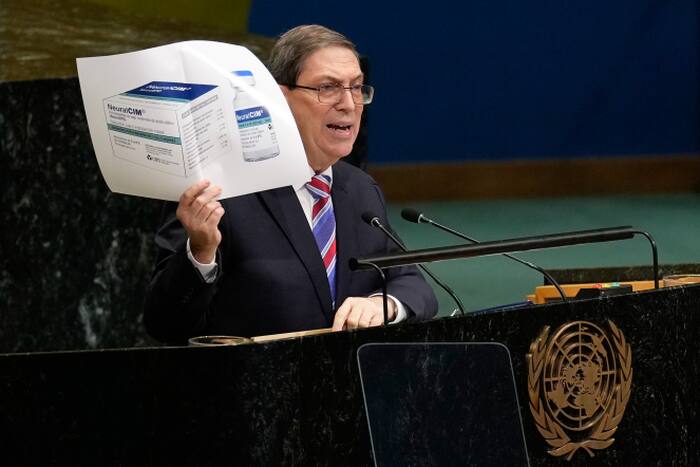
Every autumn, the diplomatic press corps puts on the exact same theater. The United Nations General Assembly gathers in New York, casts a non-binding vote condemning the United States embargo on Cuba, and reporters rush to file copy about American isolation. When a handful of nations abstain or flip after Washington lobbies them, the coverage shifts to a breathless tally of diplomatic arm-twisting.
It is lazy journalism masquerading as geopolitical analysis. For an alternative look, check out: this related article.
The mainstream coverage treats this annual resolution as a referendum on Cuban human rights or American imperial stubbornness. It is neither. By focusing on the floor count in Turtle Bay and the latest lobbying push from Washington, commentators miss the actual mechanics of why the embargo survives, why Havana secretly relies on it, and why the abstentions are a symptom of shifting global supply chains rather than sudden ideological conversion.
I have spent two decades advising cross-border risk teams and watching multinational firms burn millions trying to read tea leaves in the Caribbean. Every single executive who treats the UN vote as a leading indicator of market opening ends up losing their shirt. If you want to understand what is actually happening between Washington, Havana, and the rest of the world, you have to strip away the Cold War nostalgia and look at the balance sheets. Further coverage on this matter has been provided by BBC News.
The Lie of the Total Blockade
Start with the vocabulary. Havana calls the policy el bloqueo—the blockade. Most international media casually adopt the framing of an airtight economic siege that starves an island of basic necessities.
That is factually false.
A blockade is an act of war involving physical interdiction of ships and aircraft. What the United States maintains is a unilateral trade and financial embargo codified primarily through the Trading with the Enemy Act of 1917, the Foreign Assistance Act of 1961, the Cuban Democracy Act of 1992, and the Helms-Burton Act of 1996.
Here is the detail that breaks the narrative for almost everyone outside trade compliance circles: the United States is consistently one of Cuba’s largest suppliers of food and agricultural products.
Under the Trade Sanctions Reform and Export Enhancement Act of 2000, American agricultural exports to Cuba are completely legal, provided they are paid for in cash upfront. Hundreds of millions of dollars in frozen chicken, soybeans, and corn flow from Gulf Coast ports directly to Havana every single year. American telecommunications firms have carve-outs. Medical supplies have explicit licensing pathways.
So when diplomats stand at the UN podium and claim Washington is physically preventing food from reaching Cuban tables, they are reciting a script that collapses under five minutes of inspecting U.S. Department of Agriculture trade data. The real chokehold is not a naval perimeter. It is the financial plumbing. Because the U.S. dollar dominates global clearinghouses, foreign banks refuse to touch Cuban transactions out of fear of billion-dollar fines from the Office of Foreign Assets Control (OFAC). Havana does not suffer from a lack of willing sellers; it suffers from a lack of hard currency and creditworthiness.
Why Havana Loves the Sanctions
If you ask the average policy wonk why the embargo still exists after more than sixty years, they will point to South Florida electoral politics. They will talk about Cuban-American voters in Miami-Dade County, Senate Foreign Relations Committee vetoes, and domestic campaign finance.
That is half the equation. Here is the half nobody in diplomatic circles wants to say out loud: the Cuban government needs the embargo almost as much as Miami politicians do.
Imagine a scenario where the United States Congress wakes up tomorrow morning and repeals Helms-Burton with a unanimous vote. Every restriction vanishes. American tourists flood Varadero. U.S. banks open branches in Vedado.
What happens to the Communist Party of Cuba within eighteen months?
First, the regime loses its universal scapegoat. For six decades, every rolling blackout, every empty pharmacy shelf, every collapsed sewage pipe, and every ration card reduction has been blamed on the yanqui embargo. Without sanctions to point to, the ruling apparatus in Havana would be forced to answer a terrifying question from its own citizens: why does a centrally planned economy run by military conglomerates fail to produce enough sugar, coffee, and electricity to sustain an island of ten million people?
Second, total normalization would obliterate the state’s monopoly on capital. Right now, Cuba’s economy is dominated by GAESA, the military-run holding company that controls hotels, retail chains, remittance processing, and port infrastructure. Foreign companies wanting to do business in Cuba cannot hire workers directly; they must pay hard currency to a state employment agency, which then pays the Cuban worker a tiny fraction in devalued pesos. Open competition with American capital and labor standards would shatter that extraction model overnight.
The annual UN vote is a diplomatic gift to Havana. It hands the regime an overwhelming international majority—often 180-plus countries—validating its victimhood narrative while costing those voting nations zero political or financial capital.
Decoding the Abstentions
When a U.S. administration launches an aggressive diplomatic push to peel off votes at the UN, pundits frame it as a test of American muscle. They count the abstentions and no-votes like sports scores, arguing over whether Washington is winning or losing the room.
They are looking at the wrong scoreboard.
Nations do not abstain on the Cuba resolution because they suddenly fell in love with American sanctions law. They abstain because global diplomacy has become ruthlessly transactional, and Havana no longer has anything to trade.
During the Cold War, and even during the Venezuelan oil boom of the 2000s, Cuba punched far above its weight in the Global South. It exported doctors, intelligence officers, military advisors, and revolutionary prestige. Supporting Cuba at the UN was a cheap way for developing nations to signal independence from Washington while maintaining ties with a charismatic regime in Havana.
Look at the ledger today:
- Havana is broke. It has defaulted on its Paris Club debt restructurings multiple times. It cannot pay its bills to European, Asian, or Latin American suppliers.
- The Venezuelan lifeline snapped. Caracas can barely keep its own refineries running, leaving Cuba starved of subsidized crude oil and resulting in grid collapses that plunge the entire island into darkness for days.
- Russian and Chinese patience has limits. Moscow uses Cuba for cheap geopolitical trolling and occasional intelligence theater, while Beijing has grown openly frustrated with Havana’s refusal to implement market-oriented structural reforms that would actually allow Chinese state firms to recoup their investments.
When Washington approaches a smaller nation in Latin America, Africa, or Eastern Europe and asks them to sit out the vote—or join the opposition—the calculus for that foreign ministry has changed completely. Siding with Washington brings tangible deliverables: bilateral trade perks, security assistance, development financing, or simply avoiding friction with the world's largest consumer market. Siding with Havana brings a thank-you note from a bankrupt government that cannot even keep the lights on in its own capital.
The increase in abstentions is not a triumph of American persuasive brilliance. It is a market correction. Countries are simply refusing to spend diplomatic capital defending a failing asset.
Answering the Wrong Questions
If you search online for details about the UN vote and the U.S. embargo, you run straight into a wall of flawed assumptions. Let us dismantle the three biggest misconceptions driving public confusion.
Does the UN vote actually force the US to lift the embargo?
No. Not even close. General Assembly resolutions are non-binding expressions of international opinion. Under U.S. constitutional law, only an act of Congress can repeal the statutory framework of the embargo. A president can issue executive orders to loosen travel, expand remittance caps, or remove Cuba from the State Sponsors of Terrorism list—as the Obama administration did and the Biden administration partially revisited—but no president can unilaterally dismantle Helms-Burton. The UN vote has the exact same legal force over U.S. trade policy as an editorial in a college newspaper.
Why does the US maintain a policy that clearly hasn't toppled the regime?
Because regime change stopped being the operational metric decades ago. In Washington, Cuba policy is rarely about Havana; it is about domestic political alignment and regional deterrence. For hawkish administrations, squeezing Havana is a proxy war against Caracas and Managua, designed to raise the cost of authoritarianism in the Western Hemisphere and deny footholds to Russian and Chinese intelligence services ninety miles off the Florida coast. Measuring the embargo solely by whether the Castro family or Miguel Díaz-Canel remains in power misunderstands the game being played.
Would lifting the embargo immediately fix the Cuban economy?
No, and pretending otherwise ignores basic macroeconomics. You cannot sanction-proof a broken monetary system. Cuba’s dual-currency fiasco, price controls, ban on private wholesale markets, and criminalization of independent enterprise are entirely self-inflicted wounds. Lifting U.S. sanctions tomorrow would bring an immediate surge in tourism revenue and family remittances, which would ease short-term humanitarian suffering. Without structural property rights, independent courts, and currency convertibility, however, institutional foreign direct investment would still avoid the island. Vietnam proved that a communist party can open its economy to American capital and boom. Havana looked at the Vietnamese model, panicked at the political risk, and chose stagnation instead.
The Honest Downsides of the Hardline Approach
Contrarians lose credibility the moment they pretend their preferred lens has zero blind spots. If you argue that the UN vote is meaningless theater and that Washington’s pressure campaign is justified, you still have to confront the ugly realities of the status quo.
First, unilateral sanctions accelerate the weaponization of alternative payment rails. Every time Washington uses dollar dominance to punish third-country banks for processing Cuban transactions, it gives Beijing, Moscow, and Brussels another data point proving they need non-dollar clearing mechanisms. Over decades, maximalist sanctions erode the very financial hegemony that makes them effective.
Second, economic deprivation triggers mass migration straight to the U.S. border. Since 2021, roughly one million Cubans—nearly ten percent of the island's population—have fled the country, the vast majority heading to the United States. You cannot crush an economy ninety miles away and act surprised when its doctors, engineers, and working-age adults show up at the Rio Grande or wash ashore in the Florida Keys. Washington’s hawkish posture on Havana directly undermines its own domestic border enforcement goals.
Third, total isolation cedes the information space. When American tech, media, and consumer brands are locked out, the vacuum is filled by state propaganda and geopolitical rivals. A population with zero exposure to American commercial standards is far easier for an authoritarian apparatus to manipulate than one connected to global markets.
How to Actually Read the Next Diplomatic Cycle
Stop watching the General Assembly tally. Next time the headlines scream about the UN condemning the embargo or Washington rounding up abstentions, ignore the speeches and track the metrics that actually move the needle.
- Watch the OFAC enforcement docket, not the UN floor. Real policy shifts happen in obscure regulatory guidance from the Treasury Department. If Washington wants to tighten the screws, it targets shipping insurers and maritime registries carrying Venezuelan oil. If it wants to ease pressure, it quietly expands general licenses for independent Cuban entrepreneurs (mipymes).
- Track remittance fees and informal exchange rates. The street value of the U.S. dollar against the Cuban peso on the informal market (tracked daily by independent outlets like El Toque) tells you more about the stability of the Cuban state in ten seconds than a three-hour Security Council debate. When the peso collapses, social unrest follows.
- Follow the migration numbers from the Darién Gap and the Florida Straits. Migration is the pressure release valve of the Cuban regime. Whenever Havana feels threatened by domestic protests, it loosens exit controls and exports its dissidents northward. That metric—not a vote in New York—is the true barometer of crisis on the island.
The UN General Assembly will keep holding this vote every year because diplomats love rituals that require no heavy lifting. Reporters will keep writing the same story because the template is already saved on their hard drives. And the Cuban people will remain trapped between an inflexible bureaucracy in Havana and a domestic political stalemate in Washington.
The vote count in New York is just noise. Follow the cash, track the borders, and stop mistaking a rigged diplomatic echo chamber for reality.