Every summer, the routine repeats. Thermometers in Rome or Florence tick toward 42C, media outlets panic, and red health alerts blanket every major Italian urban center. The narrative is always identical. Cities are turning into ovens, public health systems are on the brink of collapse, and modern civilization is buckling under the weight of climate apocalypse.
It is lazy journalism, sloppy data analysis, and outright hysteria.
I have spent decades watching urban centers react to seasonal spikes, and the breathless warnings about peak temperatures miss the actual mechanics of how Mediterranean cities function. Italy is not dying of heat. It is simply experiencing July.
The False Premise of the Red Alert
The current consensus relies on raw air temperature readings to induce panic. When the national weather service flashes maximum alert levels, the assumption is that millions of citizens are walking around exposed to lethal environments. This ignores how urban geography actually works.
A thermometer reading of 42C measured at a weather station over an asphalt runway or an open concrete square tells you nothing about human exposure. It tells you what is happening in a meteorological enclosure. It does not tell you what is happening under the thick stone archways of a fourteenth-century palazzo, inside cross-ventilated apartments with marble floors, or beneath the deep shade of a plane tree in a Roman piazza.
When you look at health statistics objectively, the raw temperature number is a terrible proxy for actual mortality. The panic-peddlers point to the red alert and assume a direct line to disaster. They forget that Mediterranean cultures developed a sophisticated architecture of survival centuries before air conditioning was even a concept.
The Architectural Intelligence We Ignore
Modern urban planners love to complain about historic cities. They call them heat islands. They argue that narrow stone streets trap warmth, creating stifling canyons of stagnant air.
They have it completely backward.
Narrow streets create permanent shade corridors. High thermal mass walls absorb heat during peak hours and release it slowly long after sunset, keeping interior living spaces remarkably stable. High ceilings pull hot air upward, away from human height, creating a natural chimney effect.
I have walked through modern glass-and-steel business districts in Northern Europe during a modest heatwave and watched occupants swelter inside greenhouses that require massive mechanical energy to stay habitable. Meanwhile, in a centuries-old Roman neighborhood, residents are sitting comfortably behind thick masonry walls that regulate internal temperature naturally.
By treating historical cities as fragile relics that need emergency intervention every time the mercury rises, we discount the exact engineering principles that made human life sustainable in southern Europe long before electricity.
The Real Danger Is Behavioral, Not Meteorological
If the red alerts are mostly theater, where is the actual risk? It exists entirely in the domain of modern lifestyle disruption and bad policy.
The danger does not come from the sun being out. It comes from tourists and office workers trying to maintain northern European schedules in a southern European climate.
When you force a workforce to adhere to a rigid nine-to-five desk routine through the middle of July, locking them in sealed glass boxes or forcing them to commute during peak solar radiation, you manufacture a crisis. The traditional response to high heat was never to panic and stay indoors with artificial cooling cranked to maximum. The traditional response was the siesta.
Stop trying to force Mediterranean cities to operate like London or Frankfurt in July. The Italians who survive and thrive during these temperature spikes do not change their physiology; they change their timing. They work early in the morning, they rest during the blinding heat of the afternoon, and they reclaim the public square at midnight when the stone finally cools.
When municipal governments issue blanket red alerts that treat citizens like helpless children who cannot handle summer weather, they encourage panic rather than resilience. They promote indoor isolation over community coping mechanisms.
Why the Alarm Industry Profits From Fear
Fear sells clicks, drives broadcast ratings, and justifies emergency budgets. Every time a heatwave is branded as an unprecedented catastrophe, meteorological agencies and municipal administrations secure more funding, while media outlets harvest record engagement.
Imagine a scenario where the headlines read: "It is Summer in Italy, Temperatures are Normal for July, Drink Water and Adjust Your Schedule."
It would never run. It lacks the apocalyptic hook required to capture attention spans trained on constant crisis.
The truth is mundane, and the establishment hates mundane truths. Italy's major cities are built for this climate. They are resilient, adaptive organisms populated by people who understand thermal rhythm better than any bureaucrat sitting in an air-conditioned office in Brussels or Milan.
What You Should Actually Do
If you find yourself in Italy during a 42C heatwave, ignore the panic porn on your phone.
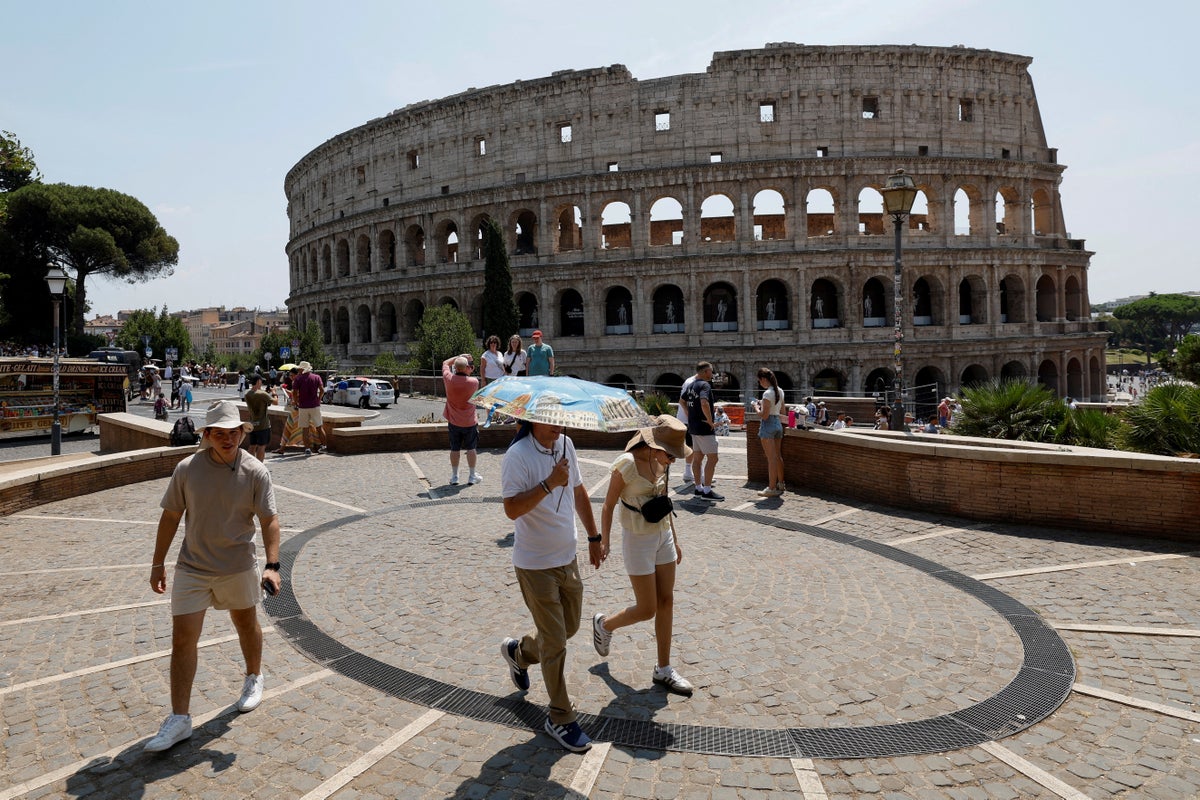
Do not try to power through a walking tour of the Colosseum at two in the afternoon. Do not rely on chemical sunscreen and portable plastic fans while wearing synthetic fabrics.
- Embrace the stone: Seek out old buildings, thick walls, and deep shade.
- Shift your timeline: Eat your main meal late, sleep through the afternoon slump, and stay up late when the city breathes again.
- Drink like a local: Stop buying lukewarm bottled water and embrace mineral-rich local customs, espresso breaks, and proper hydration habits.
The weather is not broken. Your perception of it is. Stop treating normal summer weather like a state-sponsored emergency and start learning how to live with the planet as it actually is.