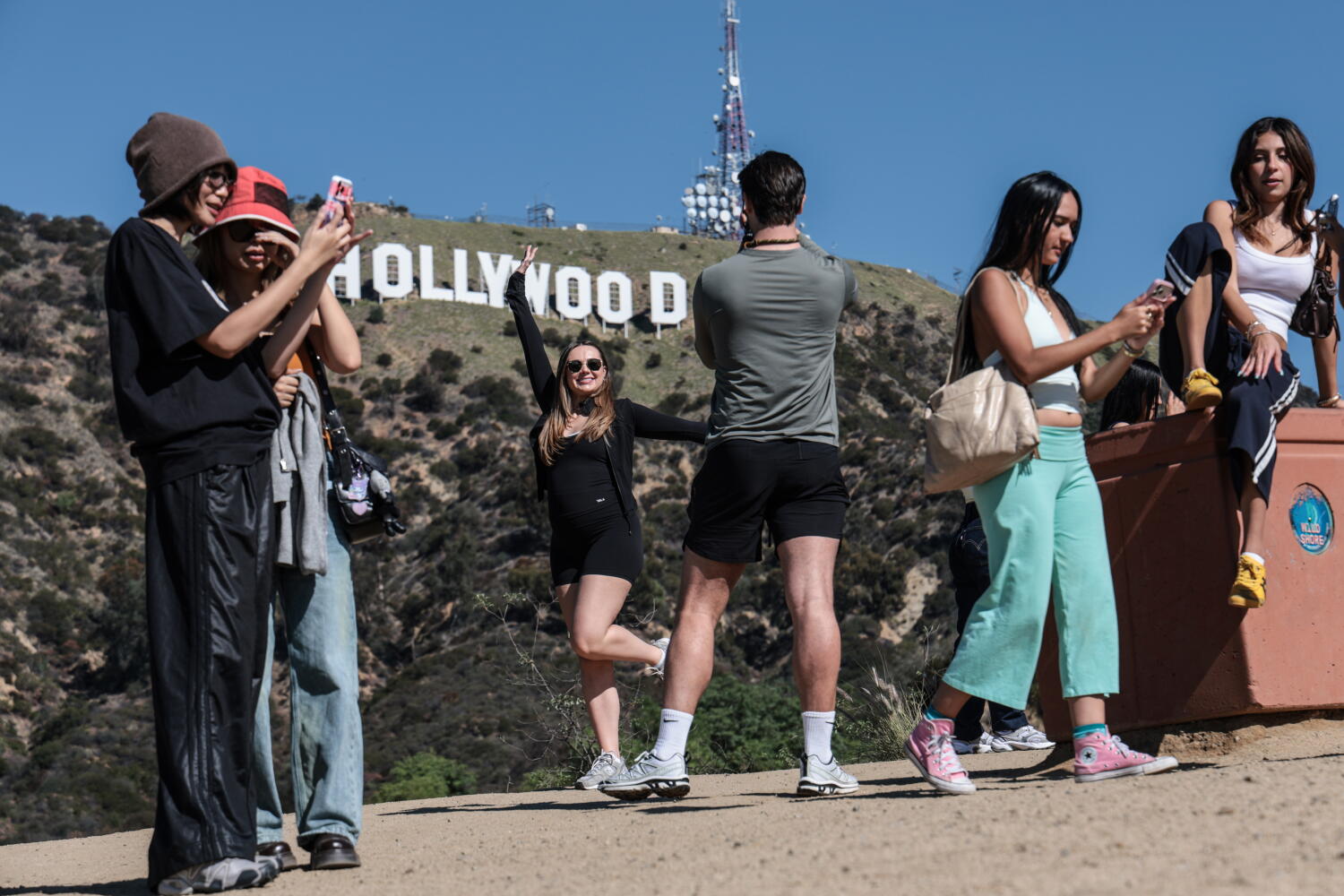
Every few months, local Los Angeles news outlets run the exact same sob story. You know the drill. A reporter stands on a steep, winding road in Beachwood Canyon, points a camera at a discarded diaper or a plastic bottle filled with amber liquid, and interviews a stressed-out homeowner. The headline writes itself. Residents living near the Hollywood Sign have had enough of the gridlock, the illegal parking, the Uber drop-offs, and the sheer volume of tourists treating their cul-de-sac like a theme park bathroom.
The lazy consensus is always the same. Big bad tourism is ruining a quiet residential neighborhood, and the City of Los Angeles is failing to protect its tax-paying citizens.
This narrative is completely backwards.
If you buy a million-dollar home directly beneath the most famous nine-letter landmark on planet Earth and then complain about foot traffic, you do not have an infrastructure problem. You have a basic comprehension problem. The residents of Beachwood Canyon and Lake Hollywood are not innocent victims of an unforeseen urban crisis. They are wealthy property owners trying to privatize a public asset they voluntarily moved next to, using sanitation horror stories as a Trojan horse to kill public access.
The Myth of the Quiet Hillside Sanctuary
Let’s look at the timeline, because chronology destroys the victimhood narrative instantly.
The Hollywood Sign went up in 1923. Originally erected as "Hollywoodland" to advertise a segregated, upscale real estate development, the letters were literally built as a giant marketing billboard to attract crowds and buyers to the hills. By the 1940s, the sign was already a global icon. By the 1970s, when Hugh Hefner threw a massive gala to save and rebuild the crumbling letters, the sign’s status as a worldwide pilgrimage site was permanently cemented.
Now, look at the deeds of the people complaining today. Unless you are a 103-year-old centenarian who bought your lot before Woodrow Wilson left office, the sign was there before you were.
When you purchase real estate in the 90068 zip code, specifically on Deronda Drive, Mulholland Highway, or Canyon Lake Drive, the proximity to the Hollywood Sign isn't a hidden defect buried in the disclosures. It is the primary selling point. Real estate agents use it to justify staggering price-per-square-foot valuations. Homeowners leverage that exact proximity to build equity, rent out guesthouses at exorbitant rates, and brag at dinner parties.
You cannot buy a house next to Fenway Park and demand that the Red Sox stop playing night games because the crowd noise wakes up your golden retriever. You cannot move onto the flight path of LAX and petition the FAA to ban jet engines. Yet, in the Hollywood Hills, wealthy NIMBYs (Not In My Backyard) have spent decades convincing local journalists that tourists looking at a public monument inside Griffith Park—a park explicitly bequeathed to the people of Los Angeles by Griffith J. Griffith in 1896 for public recreation—are somehow trespassing on private soil.
Anatomy of a Manufactured Bottleneck
The diapers and the urine bottles are real. Nobody is denying that. Finding human waste in your hydrangeas is disgusting, and it is a legitimate public health hazard.
Where the mainstream coverage fails is in diagnosing why those bottles are there. The local narrative blames the tourists for being uncivilized slobs. Any urban planner with ten minutes of field experience will tell you the truth: litter and public urination are symptoms of hostile infrastructure, not bad manners.
For over a decade, neighborhood associations in the Hollywood Hills have waged a relentless, hyper-organized guerrilla war to choke off every legitimate access point to the sign. Let’s look at the receipts:
- The Beachwood Drive Gate: In 2017, after years of aggressive litigation and lobbying by the Beachwood Canyon Neighborhood Association, the city permanently locked the pedestrian gate at the top of Beachwood Drive. This was one of the safest, most direct routes into Griffith Park to view the sign. Closing it didn't stop a single tourist from coming to Los Angeles. It simply shoved thousands of confused visitors onto narrower, steeper residential streets with zero sidewalks.
- The Signage Sabotage: Residents have repeatedly petitioned the Los Angeles Department of Transportation (LADOT) to install misleading "No Access to Hollywood Sign" signs on public streets, alongside draconian, confusing permit-parking restrictions designed to trap out-of-towners into getting towed.
- The Bathroom Blockade: The closest public restrooms to the prime viewing areas are miles away at the Griffith Observatory or down at the base of the canyons. When neighborhood groups block the installation of municipal portable toilets or permanent restroom facilities because they are "eyesores" that might "encourage more visitors," what exactly do they think is going to happen when a family of four gets stuck in hillside gridlock for ninety minutes?
I’ve watched urban municipalities blow millions of dollars fighting basic human geography, and it always ends the exact same way. When you erase legal pathways and remove basic sanitation to deter crowds, the crowds still show up—they just have nowhere to park and nowhere to pee. The residents created the exact biohazard they are now crying about on the six o'clock news.
The True Cost of Hillside NIMBYism
To understand why this dispute drags on year after year without resolution, you have to follow the friction. The conflict isn't between "locals" and "tourists." It is between a tiny, hyper-vocal enclave of wealthy homeowners and the broader public of Los Angeles.
| What Homeowners Claim They Want | What Their Policies Actually Achieve |
|---|---|
| Fire Safety: Keeping narrow roads clear for LAFD trucks during brush fires. | Gridlock Amplification: Forcing Ubers and rental cars to perform 7-point turns on dead-end streets because there is no designated drop-off zone. |
| Clean Streets: Eliminating trash, diapers, and urine bottles from residential yards. | Sanitation Deserts: Blocking public trash cans and restrooms near trailheads, guaranteeing waste ends up in the bushes. |
| Neighborhood Preservation: Protecting the quiet character of historic canyon communities. | De Facto Privatization: Turning public city streets and state-funded parkland into a private gated community without paying for private roads. |
The fire safety argument is the ultimate trump card played by hillside residents, and it is entirely valid on paper. The Santa Monica Mountains are a tinderbox. When the Hollywood Hills catch fire, narrow roads packed with stalled rental cars are a death trap.
But if fire safety were actually the top priority, the neighborhood associations would be begging the city to build a massive, high-capacity transit shuttle system and a dedicated visitor center away from the residential choke points. Instead, they fight every proposed infrastructure solution tooth and nail. Why? Because a shuttle brings more people to the mountain, and their real goal isn't managing the crowd—it’s eliminating it entirely.
Answering the Questions Nobody Wants to Touch
When people search for information about the Hollywood Sign neighborhood drama, they usually fall into the trap of the headline's framing. Let’s dismantle the most common assumptions.
Why doesn't the city just ban tourists from the Hollywood Hills?
Because it is illegal. The streets in Beachwood Canyon and Lake Hollywood are public rights-of-way funded by state and municipal tax dollars—the same tax dollars paid by residents in South LA, Boyle Heights, and the San Fernando Valley who want to take their kids to see the sign. You cannot legally erect a checkpoint to check tax brackets or zip codes on a public city street.
Why don't tourists just use the official trails?
Because the city, bowing to homeowner pressure, has made finding the official trailheads a labyrinthine nightmare. Mapping apps like Google Maps and Waze still routinely route drivers directly into residential cul-de-sacs because the city refuses to designate a clear, centralized, high-capacity gateway for the sign. Tourists aren't trying to ruin your Sunday afternoon; they are following an algorithm that dumps them onto your front lawn.
Is there actually a way to fix the trash and traffic?
Yes, and it doesn't require banning a single tourist. It requires stripping local neighborhood councils of their veto power over regional transit infrastructure.
Imagine a scenario where the City of Los Angeles treats the Hollywood Sign like the global monument it actually is—on par with the Eiffel Tower or the Statue of Liberty—rather than a local nuisance.
- Build an Aerial Tramway or Funicular: Studies have been conducted for years on running a zero-emission tram from the Warner Bros. lot side (Burbank) or from the L.A. Zoo parking lot straight up to a dedicated viewing deck behind Mount Lee. It takes 100% of the cars off the residential canyon roads, generates millions in ticket revenue, and comes with restrooms and trash cans.
- Deploy Geofenced Rideshare Lockouts: The city already has the regulatory power to force Uber and Lyft to geofence the upper canyon roads, making it impossible to request a drop-off or pickup inside the residential choke zones. Route all rideshares to a centralized transit hub at the base of the hill with a dedicated, high-frequency electric shuttle.
- Install Automated License Plate Enforcement: Stop relying on overwhelmed parking enforcement officers driving up the hill once every four hours. Put cameras at the canyon mouths. If you don't have a resident transponder and you park in a red zone, an automated ticket hits your mailbox in 48 hours.
The Uncomfortable Reality of the Contrarian Fix
Will building a tramway or a centralized visitor hub upset the purists? Absolutely.
There is a legitimate downside to formalizing the Hollywood Sign as a full-blown tourist attraction. Griffith Park is one of the largest urban wilderness areas in North America. It is home to mountain lions, mule deer, rattlesnakes, and fragile chaparral ecosystems. Pouring concrete for a visitor center or stringing cables across a canyon ridge scars the landscape and commercializes a space that has remained rugged for over a century.
You have to pick your poison. You can either accept the visual and environmental footprint of modern crowd-management infrastructure, or you can accept the diapers and urine bottles in your driveway. You cannot demand zero infrastructure and zero crowds while living beneath a global icon in a city of nearly four million people.
Until the homeowners in the Hollywood Hills admit that they live inside a tourist attraction—and start demanding the infrastructure required to handle one—the cameras will keep rolling, the trash will keep piling up, and nobody is going to feel sorry for them. Pack a trash bag, call your councilmember to demand public toilets, or sell your house and move to Bakersfield.