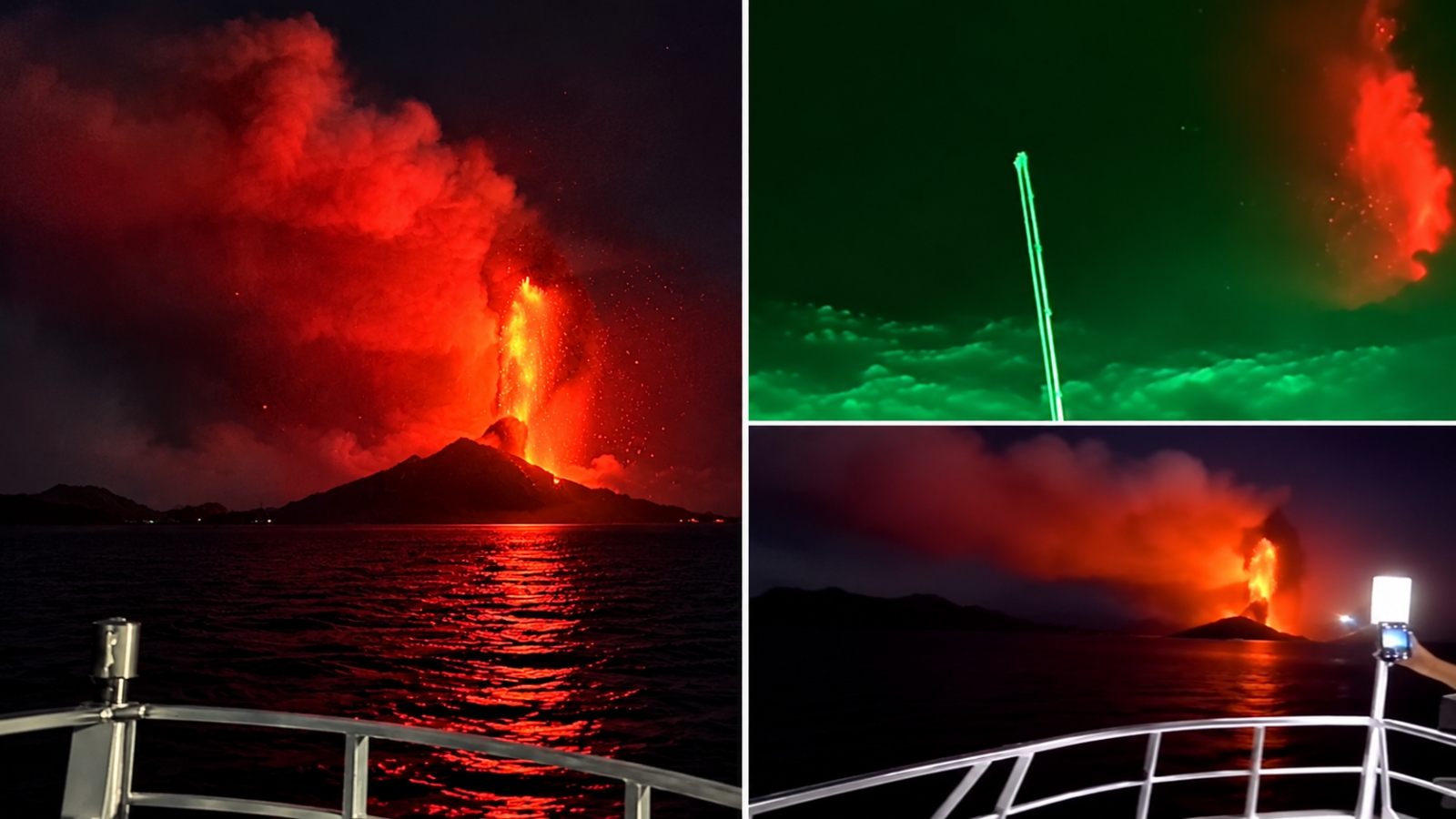
Every time Anak Krakatau so much as clears its throat, global media outlets dust off thirty-year-old stock footage, slap an apocalyptic headline on a thumbnail, and trigger a fresh wave of knee-jerk panic. Authorities rush to establish safety perimeters, tourists scramble to cancel itineraries, and armchair volcanologists on social media start typing out doomsday prophecies about a repeat of 1883.
It is exhausting, it is scientifically illiterate, and it is costing local economies millions of dollars based on pure theater.
Let us get one thing straight right out of the gate. Anak Krakatau is not a ticking time bomb waiting to wipe out Southeast Asia. It is a persistent, predictable, and remarkably active construction site. Treating every minor Strombolian burp or ash plume as an extinction-level event reveals a fundamental misunderstanding of how arc volcanism operates.
The Lazy Consensus Of Volcanic Panic
The mainstream narrative treats every eruption as an unprecedented emergency. Read any standard wire service report on Indonesia’s Anak Krakatau eruptions, and you will find the same tired formula: a dramatic mention of the 1883 Krakatoa cataclysm, a stern warning from disaster management agencies to stay miles away, and a heavy implication that the entire Sunda Strait is seconds away from collapsing into the ocean.
This is intellectually lazy reporting. It trades nuance for clicks.
Anak Krakatau translates directly to "Child of Krakatoa." Children grow, they throw tantrums, and they constantly rearrange their rooms. Since it emerged from the sea in 1927, this cone has been building itself up and blowing itself apart in a continuous, cyclic loop. In December 2018, a massive sector collapse triggered a tragic tsunami because a significant portion of the southwestern flank slid into the water. That was a real hazard, driven by rapid, unstable lateral growth.
However, authorities and headline-chasers have weaponized that specific tragedy to brandish a permanent red alert over every subsequent puff of steam. They want you to believe that safety means absolute zero tolerance for geological activity. In the real world, zero tolerance means zero progress and total economic strangulation for the fishing and tourism communities who actually live alongside the mountain.
Geological Reality Versus Media Theater
To understand why the standard exclusion zones are often massively over-calibrated, look at the mechanics. Volcanologists monitor deformation, seismic tremors, and gas emissions. When Anak Krakatau erupts, it is typically venting pressure through its primary conduit or parasitic vents. It is letting off steam. Literally.
A closed system builds catastrophic pressure. An open, frequently venting system is doing what it is supposed to do.
When the Center for Volcanology and Geological Hazard Mitigation raises the alert level, they are operating under a bureaucratic liability shield. Governments must protect themselves from lawsuits. If a rogue fisherman ignores common sense, sails directly into the exclusion zone, and gets hit by a stray ballistic rock, the agency gets blamed. So, they draw massive circles on a map that encompass entire regions of perfectly safe waters and habitable shores.
I have spoken with researchers stationed around the Sunda Strait who quietly admit that the operational danger zones are often bloated by a factor of three just to keep insurance companies and regional politicians calm.
The Cost Of Overreaction
Every time a major outlet screams about Anak Krakatau blowing its top, regional tourism takes a direct hit. Hotels in Carita and Anyer see mass cancellations. Local boat operators lose their daily wages. Fishermen are chased out of rich, fertile waters long before any genuine hazard manifests.
Panic has a body count, and it is usually measured in lost livelihoods, severe debt, and economic stagnation for communities that depend on steady, rational risk management rather than panic-driven isolationism.
Instead of treating the volcano like an unpredictable monster, we should treat it like what it is: a dynamic feature of a living planet that requires empirical tracking, not emotional hysteria.
How To Read Volcanic News Like An Insider
If you want to cut through the noise the next time an alert flashes across your screen, ignore the headlines entirely. Do not look at the pretty pictures of red lava flows captured with long-exposure lenses designed to make a small burp look like Mordor.
Instead, check the seismic amplitude charts. Look at sulfur dioxide flux data. Check whether the deformation sensors show sustained inflation or deflation. Real volcanology is boring. It is numbers on a spreadsheet, tiltmeter readings, and seismic wave frequencies.
When the data shows steady tremor counts without rapid baseline inflation, the mountain is just breathing. It is clearing its throat. It is doing its job.
Stop letting sensationalist algorithms dictate your understanding of the earth beneath our feet. Anak Krakatau is not trying to kill us. It is just building an island.