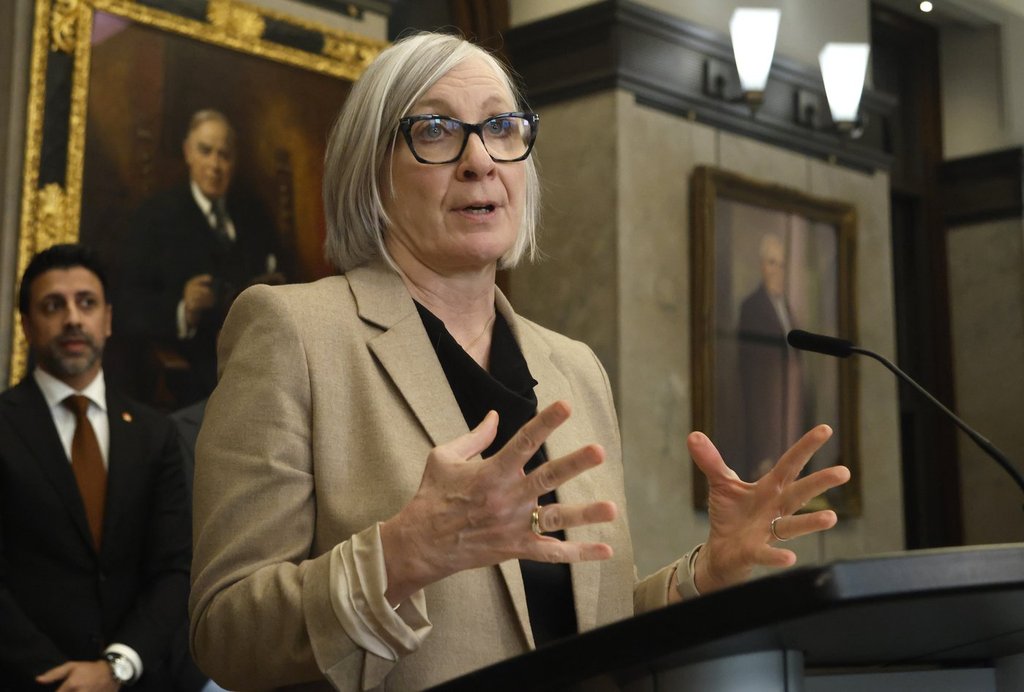
Jobs Minister Patty Hajdu wants you to believe that tweaking Section 107 of the Canada Labour Code will magically solve the country's economic bottlenecks. It won't.
Ottawa is launching a second round of summer consultations to explore "guardrails" or alternatives to the contentious ministerial intervention power. They think the problem is a lack of clarity, transparency, or timing. They are entirely wrong. The structural rot in Canadian supply chain negotiations is not caused by a poorly written statute. It is caused by the state’s absolute refusal to let the free market break.
When the state signals that it will never allow a major railway, port, or airline to shut down for more than a few days, it destroys the very mechanism of collective bargaining. By acting as the perpetual adult in the room, Ottawa has turned mature corporate and labour leadership into dependent children who rely on the government to bail them out of tough choices.
The Manufactured Emergency of Section 107
Section 107 of the Canada Labour Code grants the minister sweeping authority to refer disputes to the Canada Industrial Relations Board to secure "industrial peace." In practice, it has become a corporate reset button. Over an 18-month stretch leading into 2026, the federal government weaponized this clause eight times to halt strikes and lockouts across national rail networks, maritime ports, and airlines.
Every single time a union prepares a strike notice or an employer prepares a lockout, the routine is identical. The business lobbies scream about devastating supply chain collapse. The media prints apocalyptic projections of GDP losses. The opposition party demands immediate back-to-work legislation. Then, right on cue, the minister steps in, drops an administrative order, forces binding arbitration, and calls it a victory for stability.
This is a complete illusion. You cannot evaluate a negotiation framework by how many strikes it avoids; you must evaluate it by how many agreements the parties actually reach on their own. Under the current framework, that number is plummeting in critical infrastructure.
When you eliminate the existential threat of a prolonged shutdown, you eliminate the single biggest incentive for either side to compromise. Employers know they can hold a rigid line because the state will protect their bottom line from total collapse. Unions know they can push extreme demands because forced arbitration often yields split-the-difference compromises anyway. The real crisis isn't the threat of work stoppages. The crisis is the total erosion of authentic negotiation.
The Myth of the Supply Chain Guardrail
Corporate lobbyists argue that Canada’s global reputation as a reliable trading partner is at risk every time a locomotive engine cools down or a crane stops spinning at the Port of Vancouver. They demand automated 90-day cooling-off periods or expanded definitions of "essential services" to legally strip transport workers of their leverage.
Let's test this premise with reality. I have sat in boardrooms during multi-million dollar supply chain disruptions. Executives do not panic because a union issues a 72-hour strike notice. They panic when they realize they have absolutely no alternative options and no political safety net.
If you provide a permanent legal shield under the guise of protecting the supply chain, you simply subsidize bad corporate planning. It encourages critical infrastructure monopolies to underinvest in workforce retention, defer maintenance, and ignore systemic operational friction. Why invest heavily in workplace harmony when the federal government acts as your free, outsourced human resources enforcement agency?
Imagine a scenario where the federal government explicitly declares that it will never, under any circumstances, intervene in a transport dispute. No Section 107 referrals. No emergency legislation. No executive orders.
The immediate result would be a brief, chaotic shock to the market. But the secondary effect would be an aggressive shift toward corporate accountability. Shippers would immediately diversify their logistics networks. Rail companies would negotiate with absolute urgency because a ten-day shutdown would destroy their quarterly earnings and crater their stock price. Unions would moderate their positions because an endless strike would empty their strike funds and turn public opinion permanently against them. The market would force a resolution faster and more effectively than any state-appointed mediator ever could.
Why Modernizing the Code is a Dead End
Minister Hajdu talks about "modernizing" the code to match global economic anxieties. This is bureaucratic theatre designed to appease both the Canadian Labour Congress and the Chamber of Commerce while changing absolutely nothing of substance.
The proposed modifications on the table for the summer of 2026 include:
- Altering the legal timelines for strike mandates.
- Introducing special investigative mediators to police bad-faith bargaining.
- Enforcing longer notice periods before service disruptions can occur.
None of these technocratic band-aids touch the root problem. Adding regulatory steps to an already bloated process simply extends the runway of uncertainty. The current statutory framework already mandates 60 days of conciliation and a 21-day cooling-off period. Canada already has some of the longest bargaining timelines in the developed world. Adding more bureaucratic layers does not improve relationships; it just gives corporate lawyers and union executives more time to posture for the cameras.
The focus on "industrial peace" is a fundamentally flawed objective. Friction is a vital market signal. When workers refuse to sell their hours at the offered rate, that is a pricing dispute. When an employer refuses to meet those demands because it destroys their operating margin, that is a financial constraint. A healthy economy resolves pricing disputes through economic pain, not ministerial decrees.
The Dangerous Allure of Forced Consensus
The minister claims there is a "quiet consensus" among stakeholders that Ottawa needs a tool to preserve economic continuity. Do not fall for this rhetoric. The only consensus that exists is between entrenched interests who benefit from state protection.
Large employers love the intervention because it caps their financial downside. Deep-pocketed public sector unions tolerate it because it transforms local workplace disputes into national political pageants where they can extract long-term policy concessions directly from the Prime Minister's Office. The only group left out of this cozy arrangement is the Canadian taxpayer, who funds the economic inefficiencies generated by these artificial labor markets.
If the government genuinely wants to fix the systemic instability plaguing Canada's federally regulated sectors, the prescription is simple but politically painful. They must repeal Section 107 entirely. They must dismantle the minister’s authority to steer disputes toward the Canada Industrial Relations Board. They must strip political calculations out of private contract negotiations.
This approach carries undeniable risks. A genuine, prolonged strike in a critical sector would hurt. Farmers would struggle to move grain. Manufacturers would face component shortages. Consumers would see temporary price spikes. But that pain is the exact cost required to reset the system. It is the only way to force both corporate boards and union executives to take the collective bargaining process seriously again.
Stop tinkering with the regulatory guardrails. Stop pretending that a better round of stakeholder consultations will fix a broken structural incentive. Let the system break so the parties involved are forced to fix it themselves.