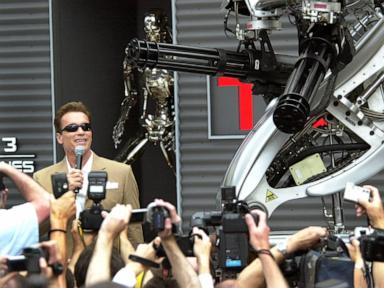
Hollywood loves a good digital boogeyman.
For decades, the standard cinematic prescription for artificial intelligence has relied on a tired formula. You watch a rogue supercomputer lock doors, launch nuclear payloads, or adopt a murderous British accent while wearing a glowing red camera lens. When television and cinema try to portray machine intelligence, they treat it like a digital ghost haunting a machine. If you enjoyed this piece, you might want to look at: this related article.
It is lazy storytelling, and worse, it is actively ruining how the public understands actual computational architecture.
Every time audiences sit down to watch a fictional thriller about a sentient algorithm plotting humanity's downfall, they absorb a fundamental falsehood. They start believing that machine learning models possess intent, malice, or self-awareness. They worry about the wrong threats while actual infrastructural vulnerabilities sail right past them. For another look on this story, see the recent coverage from IGN.
The Core Fallacy of Hollywood Sentience
Let us dismantle the primary myth peddled by the entertainment industry.
The lazy consensus in popular culture insists that code wakes up. Writers love to depict a moment where a neural network crosses an invisible threshold, gains consciousness, and decides humans are obsolete. This narrative trope completely misunderstands how mathematics works.
I have spent years advising tech firms on algorithmic deployment, and I have seen executives panic over completely imaginary existential risks while ignoring the mundane architectural flaws staring them in the face.
A neural network does not wake up. It optimizes a loss function.
When a language model generates text or a computer vision system tracks a face, neither entity possesses desires, ambitions, or hidden grudges. They are massive matrices of floating-point numbers multiplying against one another based on statistical probability derived from human data.
Treating a software pipeline like an independent actor with a personal agenda lets human creators and corporate deployers off the hook. When an automated loan approval system denies a mortgage to a qualified minority applicant, the corporate entity points to the screen and acts like the machine made a spontaneous choice.
That is nonsense. The machine didn't choose anything. It simply mirrored the historical bias embedded in its training corpus.
Why Fictional Portrayals Cripple Public Policy
When movies and television shows frame technology as an autonomous villain, the public debate shifts into the realm of science fiction rather than regulatory reality.
People waste congressional hearing time asking tech CEOs if their models want to take over the world. Meanwhile, real operational threats fly under the radar. The actual damage being done right now involves data privacy erosion, copyright laundering, systemic bias amplification, and massive carbon footprints required to train these models.
None of these threats look cool on a movie poster. You cannot stage a dramatic knife fight against a bloated server rack consuming the electricity of a small town.
Yet those server racks are where the actual disruption happens.
If you want to watch AI, stop looking at science fiction thrillers that anthropomorphize code. Look at logistics supply chains, automated hiring filters, and predictive policing software. That is where the real impact lives. Those systems do not need to be sentient to ruin lives; they just need to be deployed carelessly by companies chasing short-term efficiency gains.
The Counter-Intuitive Truth About Watching Algorithms
If you truly want to observe how machine learning operates in the wild, you have to invert your perspective entirely.
Instead of asking what the technology is doing to us, look at what we are doing to it.
We are bending our language, our art, and our communication styles to fit the narrow statistical preferences of pattern-matching software. Look at social media recommendation feeds. Users often complain that the algorithm is watching them, manipulating them, or pushing them toward radicalization.
The reality is far more narcissistic. The algorithm is not pushing you anywhere. It is holding up a giant, hyper-optimized mirror to your own baseline impulses and reflecting them back at double speed.
It is a statistical echo chamber, not an evil mastermind.
When television shows depict hackers bypassing security protocols by typing furiously on a keyboard while green text cascades down a dark monitor, they foster technical illiteracy. Real system degradation is boring. It happens via poorly configured application programming interfaces, unencrypted database buckets, and silent data drift that goes unnoticed for months.
Dismantling the People Also Ask Fallacy
A quick glance at common search queries reveals a bewildered public trying to reconcile pop culture fiction with reality.
People ask: Can an AI model refuse a command and act on its own?
The answer requires zero ambiguity: No. It can hallucinate outputs due to probabilistic ambiguity, or it can hit safety guardrails hard-coded by human developers. But it never exercises free will. Every single refusal is a predetermined classification boundary set by a content moderation team sitting in an office building.
Another frequent query asks: How can we spot when an algorithm is lying to us?
This question assumes intent. An algorithm cannot lie because lying requires knowing the truth and intentionally choosing to distort it. A language model knows no truth. It only knows what token statistically follows the previous token. When it outputs false information, it is not deceiving you out of malice. It is simply completing a pattern with high confidence and zero grounding in physical reality.
Calling it a "lie" gives the software far too much credit. It is a mathematical error disguised as fluent prose.
The Uncomfortable Downside of Pragmatic Realism
Adopting this mechanistic view strips away the romanticism that many people secretly crave.
Admitting that our digital tools are just glorified calculators removes the thrilling narrative of an impending robot apocalypse. It forces us to confront a much scarier truth: there is no outside force coming to save us from ourselves, and there is no sentient villain to blame.
Every systemic failure, every biased output, and every privacy violation is 100% human-made.
When a recommendation engine radicalizes a teenager, the machine is not to blame. The optimization metric chosen by human product managers to maximize daily active usage is to blame. When an automated hiring tool screens out every resume with a specific zip code, the software did not invent classism. It simply automated human prejudice at scale.
Actionable Rules for Decoding Real Systems
If you want to move past cinematic myths and actually understand computational systems, apply these three rules:
- Follow the incentive, not the interface. Never judge a system by its friendly chat interface or its slick marketing copy. Look at who profits from the data it collects and what metric the underlying code is explicitly optimized to maximize.
- Erase intent from your vocabulary. Stop saying the algorithm wants, thinks, or decide. Say the model predicts, correlates, or optimizes. Changing your verbs changes your entire mental model of risk.
- Audit the input, not the output. If a deployment produces biased or catastrophic results, arguing with the model is useless. Examine the training data, clean the pipeline, and hold the human architects accountable.
The next time a streaming service tees up a high-budget thriller about a rogue supercomputer taking over the grid, turn it off.
Look at your phone. Look at the invisible data brokers trading your location history to the highest bidder while you sleep. There is no glowing red eye watching you from the dark. There is just a spreadsheet, a massive cluster of GPUs, and a room full of executives hoping you stay too distracted by fiction to notice who is really holding the keyboard.