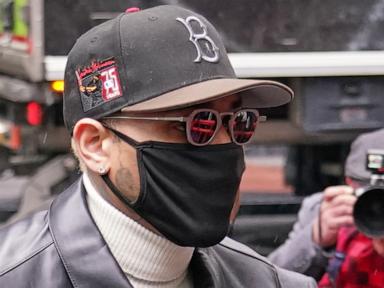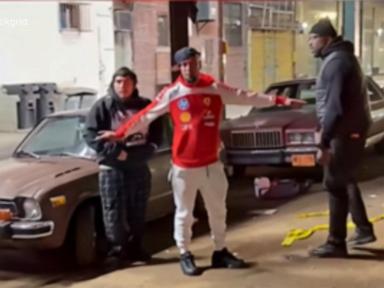
You clicked on a grainy vertical video of a guy in handcuffs next to a catering truck, and you thought you were witnessing raw, unfiltered Hollywood chaos.
You were not. You were looking at a press release disguised as a police blotter. Building on this theme, you can also read: What Ten Million Dollars Buys When Borders Close.
Every single week, local news outlets and entertainment aggregators push out the exact same formulaic headline. A man gets arrested near a film set. A bystander films the flashing red and blue lights. The internet loses its mind speculating about unhinged stalkers, A-list meltdowns, or runaway productions terrorizing quiet neighborhoods. The competitor piece you just read treats a routine municipal perimeter breach like breaking investigative journalism. It feeds you the cheapest form of rubbernecking available while completely missing the actual mechanics of how modern film sets operate, how location security works, and why these "incidents" miraculously surface right when a mid-budget project needs free organic reach.
Let us dismantle the entire premise of film set arrest coverage. Experts at Deadline have provided expertise on this trend.
The Myth of the Unprotected Hollywood Set
The lazy consensus pushes a simple, dramatic narrative. A massive, chaotic movie crew rolls into town, fails to secure its borders, and leaves high-profile talent exposed to dangerous trespassers until local law enforcement swoops in to save the day.
Anyone who has ever actually worked on a union film set knows this is pure fantasy.
A major production does not just show up on a public street with a camera and hope for the best. Before a single grip truck parks on asphalt, a location manager has spent months negotiating with the municipal film office, local precincts, and private property owners. Under standard industry protocols established by organizations like the Association of Film Commissioners International (AFCI) and local guilds such as Teamsters Local 399, productions are legally required to hire off-duty police officers—commonly referred to in the industry as "detail" or "paid detail"—whenever they occupy public rights-of-way.
These officers are not standing around eating donuts. They are paid double-time rates out of the production's above-the-line or below-the-line security budget to enforce a strict legal boundary called a lock-up.
When you see a headline claiming someone was "arrested near a film set," you need to understand what "near" actually means in legal and logistical terms. Film permits grant productions temporary exclusive control over specific stretches of sidewalk, street lanes, or park zones. If an intoxicated pedestrian, an aggressive paparazzo, or a stubborn local resident refuses to walk around a designated lock-up, the paid detail officer issues a verbal warning. If that person takes two more steps past the orange cones, they are detained for criminal trespass or obstruction of a permitted event.
There is no dramatic takedown. There is no threat to the lead actor. It is an administrative boundary dispute that happens on almost every major location shoot from Atlanta to Vancouver to London. Turning a routine lock-up violation into breathless viral news is the equivalent of writing a breaking news story every time a bouncer asks someone to leave a nightclub patio.
Why Media Outlets Weaponize Proximity
Look closely at the phrasing used in these viral clips. "Man arrested near film set."
Notice the deliberate ambiguity. The headline never says the suspect breached the soundstage. It never says the suspect interacted with the cast. It uses the word near because geographic proximity is the oldest trick in the clickbait playbook. If a guy gets arrested for public intoxication three blocks away from where a Marvel unit is filming establishing shots, an editor will slap the movie's title into the subheadline to hijack search traffic.
I have watched studio publicity teams and independent producers manipulate this exact dynamic for years. When a production is stuck in the dead zone between principal photography and the first teaser trailer, keeping the project in the public consciousness is notoriously difficult. Paid media buys during production are a waste of money because audiences forget about a movie six months before it hits theaters.
What does work? Friction.
A leaked photo of a damaged prop car. A rumor about a crew dispute. A grainy video of a police cruiser parked outside basecamp. These micro-scandals generate millions of impressions on social platforms for zero ad spend. Publicists do not even have to fabricate the arrests; they simply stop suppressing the bystander footage. Normally, production assistants (PAs) are trained to aggressively block sightlines and ask bystanders to delete footage of basecamp operations. When a project needs buzz, those PAs suddenly look the other way while a crowd films a routine trespassing citation from across the street.
You think you are getting a behind-the-scenes scoop. You are actually acting as an unpaid distribution channel for a marketing department.
The Real Security Threat Nobody Films
If you want to understand genuine danger on a film set, stop looking at the guy arguing with a beat cop outside the perimeter cones. The real threats never end up on TikTok, and they rarely result in a public arrest.
Here is what actually keeps veteran production security directors awake at night:
- Corporate Espionage and Drone Incursions: High-value intellectual property is worth hundreds of millions of dollars before a single frame is color-graded. Professional leakers use commercial-grade thermal drones launched from miles away to capture costume designs, set pieces, and plot reveals. Counter-drone operations and signal jamming require federal aviation clearance and specialized private contractors, not local patrol officers.
- Organized Equipment Theft: A single camera package—an ARRI Alexa 35 paired with vintage anamorphic lenses—easily exceeds $250,000 in value. Organized crime rings actively track production schedules via public film commission listings, targeting overnight holding lots and grip trucks. These thefts happen silently at 3:00 AM, long after the bystanders and local news stringers have gone home.
- Fixated Persons and Stalkers: When a genuine threat targets an A-list actor, the protocol is total silence. Close-protection specialists—often former diplomatic security or military personnel hired directly by the talent's agency—handle extractions quietly. The last thing a studio or an actor wants is a public arrest that validates the stalker's delusion of a personal connection or inspires copycats.
Imagine a scenario where a genuinely dangerous individual breaches inner perimeter security and approaches a lead actor during a night shoot. You would never see a vertical video of that arrest the next morning. The production's legal team would immediately invoke non-disclosure agreements with crew members, coordinate with law enforcement to seal initial incident reports under ongoing investigation exemptions, and quietly relocate basecamp before sunrise.
The louder and more public a "film set arrest" appears on your feed, the less consequential it actually was.
People Also Ask About Film Set Arrests
Search engines are flooded with repetitive, surface-level questions whenever one of these clips goes viral. Let us strip away the fluff and answer them directly.
Can you get arrested for filming a movie set from the street?
No, not if you are standing on unrestricted public property. Under established legal principles in the United States, the United Kingdom, and most Western jurisdictions, there is no expectation of privacy in public spaces. If you are standing on a public sidewalk outside the permitted lock-up zone and filming toward a film set, police cannot legally arrest you for taking video. However, the moment a production's permit legally closes that specific section of sidewalk to pedestrian traffic, remaining in that zone constitutes trespassing. Police can arrest you for failing to vacate a permitted area, even if your camera is off.
Do actors or directors press charges when someone disrupts a set?
Almost never. Talent and directors are insulated from operational logistics by multiple layers of management. The legal entity holding the filming permit—usually a single-purpose LLC created specifically for that production, such as "Blue Sky Productions LLC"—is the complainant of record. The Unit Production Manager (UPM) or the Assistant Director signs off on security incident reports, while the municipal police department prosecutes the misdemeanor offense. Actors rarely even know an arrest happened three hundred yards away at basecamp.
Why do film sets take over entire city blocks for tiny scenes?
Because modern filmmaking requires an absurd amount of logistical infrastructure that never appears on screen. A two-minute dialogue scene in a coffee shop requires a generator truck to power lighting rigs, a camera truck, a grip and electric truck, hair and makeup trailers, cast holding trailers, catering tents, and parking for over a hundred crew members. Productions rent entire blocks not to inflate their egos, but to prevent random delivery vans, loud motorcycles, or wandering pedestrians from ruining a $50,000-per-hour shoot.
The Downside of Calling Out the Noise
Taking a cynical view of viral production news comes with an obvious blind spot. If you dismiss every police presence near a film shoot as trivial lock-up enforcement or manufactured publicity, you risk ignoring legitimate labor and safety failures when they actually occur.
The film industry has a documented, tragic history of cutting corners on safety to save money and stay on schedule. From fatal helicopter crashes to negligent firearm handling and exhausted crew members dying in commuter crashes after sixteen-hour shifts, real negligence happens behind closed soundstage doors. Those systemic failures are driven by corporate greed and broken scheduling models, not by random guys wandering onto a street corner in handcuffs.
The danger of obsessing over sensationalized bystander videos is that they distract audiences and regulators from the real abuses happening inside the perimeter. When the public consumes outrage over a trespasser getting arrested near a catering tent, studios face zero pressure to fix the brutal working conditions happening ten feet away on the actual set.
How to Read Entertainment News Like an Insider
The next time a headline screams about chaos, arrests, or police interventions on a movie set, run it through a simple three-step filter before you click or share:
- Check the exact preposition. If the headline says near, outside, or blocks away from a film set, the incident has nothing to do with the production. A crime occurred in a city, and a movie happened to be filming in the same zip code.
- Look at the camera angle. If the footage is shot from across a four-lane avenue behind yellow tape, you are watching routine crowd control. Paid detail officers are doing the exact job they were hired to do.
- Check the release calendar. Look up the project's current status on industry trackers. If the movie is wrapping principal photography, entering post-production, or sitting thirty days out from a trailer drop, treat every "leaked" onset disturbance as earned media strategy.
Stop rewarding media outlets for packaging mundane municipal citations as Hollywood drama. Mute the aggregators, ignore the vertical bystander clips, and recognize that on a real film set, the only thing truly criminal is how easily your attention gets bought.