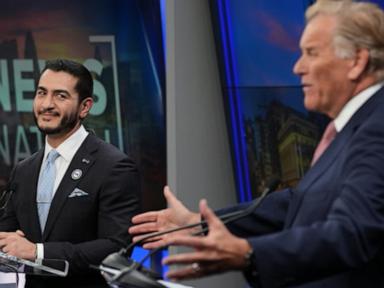
Political media loves a brawl. Every two years, cable networks and digital outlets package ninety minutes of complex policy, economic friction, and legislative records into four-minute highlight reels designed to spike your blood pressure. They call them "biggest moments." They frame every midterm face-off as a heavyweight title fight where one zinger ends a career and one stutter hands the gavel to the opposing party.
It is theater. Worse, it is a deliberate misdirection that keeps voters fixated on rehearsed soundbites while the actual mechanics of midterm elections happen entirely off-camera.
If you spent last night refreshing social media to see who "won" the latest Senate or gubernatorial showdown, you played right into the hands of campaign consultants who stopped caring about live television audiences a decade ago. The viral clip you watched over your morning coffee was not an unscripted flash of brilliance. It was a pre-tested focus-group line, workshopped by media trainers, timed to fit a vertical video aspect ratio, and pushed to partisan influencers before the moderator even moved to the next question.
The Myth of the Decisive Midterm Knockout
Mainstream coverage treats midterm debates like presidential showdowns, assuming a single exchange can swing tens of thousands of undecided voters overnight. That premise falls apart the moment you look at actual voter behavior in off-year elections.
Presidential elections draw massive, low-information electorates who tune in late and occasionally get swayed by a viral moment. Midterm elections are fundamentally different beasts. Turnout drops significantly, and the electorate that actually shows up is older, wealthier, hyper-engaged, and overwhelmingly locked into its partisan identity months before candidates ever step behind a podium.
I have sat in war rooms where twenty-something staffers high-fived over a brutal one-liner that racked up two million views on X, only to watch internal tracking polls move by zero point zero percent the following Tuesday. Campaigns burn hundreds of thousands of dollars on debate prep—hiring Hollywood lighting consultants, staging mock town halls, and memorizing attack lines—not to persuade the mythical undecided voter in the middle, but to appease anxious donors who demand to see their candidate draw blood on television.
Political scientists have studied this phenomenon for decades. Researchers like Christopher Achen and Larry Bartels, alongside extensive empirical work from scholars studying campaign effects such as Joshua Kalla and David Broockman, have repeatedly demonstrated that persuasive campaign messaging has minimal impact on general election vote choice once partisan attachments harden. Voters do not watch a debate to learn where a candidate stands on fiscal policy; they watch to cheer for their team and collect ammunition for arguments with their neighbors.
Why Highlight Reels Are Worse Than Watching Nothing
When you skip the full broadcast and consume only the "biggest moments" curated by news outlets, you are getting a distorted sample of reality. News editors select clips based on conflict, outrage, and visual drama. A nuanced twenty-minute exchange about municipal bond ratings, healthcare reimbursement rates, or agricultural subsidies dies on the cutting room floor because it lacks a sharp intake of breath or a finger-point.
Here is what happens when highlight culture dictates political coverage:
- Candidates abandon substance for bait. Knowing that only ten-second bursts will survive the news cycle, politicians refuse to answer direct questions. Instead, they pivot immediately to pre-scripted attack lines designed to provoke an emotional reaction from their opponent.
- Moderators lose control of the room. Rather than enforcing time limits and demanding factual precision, moderators allow crosstalk because shouting matches generate better ratings and higher social media engagement.
- Voters mistake volume for competence. A candidate who excels at delivering rehearsed zingers under hot studio lights may be completely incapable of managing a state agency, negotiating a budget, or drafting coherent legislation.
The Uncomfortable Truth About Who Actually Decides Midterms
If midterm debates do not change minds, why do campaigns still obsess over them? Because debates serve a completely different function than the press claims. They are not persuasion events. They are fundraising and turnout engines.
Consider a realistic scenario playing out in competitive districts right now. A challenger trailing by four points in late October does not go into a televised debate hoping to flip suburban moderates. That challenger goes into the debate with one objective: manufacture a clean, high-contrast clip that can be embedded into a text-message fundraising blast within ninety seconds of the broadcast ending.
That single clip goes out to a national list of small-dollar donors. Those donors, furious at whatever outrageous thing the opponent just said, chip in twenty-five dollars apiece. By midnight, the campaign has raised three hundred thousand dollars. That money does not go toward more television ads explaining policy. It goes straight into paid digital persuasion, direct mailers, and ground-game canvassing operations aimed at dragging low-propensity partisan voters off their couches on Election Day.
The debate was merely the raw material for a direct-response marketing funnel.
| What Media Claims Debates Do | What Debates Actually Accomplish |
|---|---|
| Educate undecided swing voters on policy | Generate viral clips for small-dollar fundraising blasts |
| Expose character flaws under pressure | Reward candidates who memorize focus-grouped zingers |
| Shift momentum in tight statewide races | Reinforce existing partisan biases among base voters |
| Hold incumbents accountable for their record | Allow incumbents to dodge records with rehearsed pivots |
Answering the Questions Voters Should Actually Ask
When people search for debate recaps, they usually type variations of the same tired queries into search engines. Every single one of those questions rests on a flawed assumption about how democracy works.
Who won last night's midterm debate?
Nobody won, because debates do not have objective scoring systems. Post-debate snap polls are notoriously unreliable because partisan audiences tune in at wildly different rates depending on how enthusiastic they feel about their party's prospects. If supporters of Party A are fired up, they watch the debate in higher numbers and flood the post-debate surveys, creating an illusion of victory that vanishes when you weight the sample properly.
Do midterm debates actually change polls?
Rarely, and almost never permanently. When a poll bumps two or three points after a high-profile face-off, pollsters call it a "bounce," which is really just differential non-response. Supporter enthusiasm temporarily makes one side more willing to answer their phones when pollsters call. Within ten days, the enthusiasm fades, response rates normalize, and the race returns to the exact baseline dictated by the national economy, presidential approval ratings, and partisan lean.
What should voters look for instead of viral moments?
Watch the unglamorous moments when a candidate is forced off their talking points. Look at how they handle follow-up questions when a moderator actually presses them on a contradiction in their voting record. Pay attention to whether they can explain how a proposed program will be paid for without resorting to magical thinking about cutting "waste, fraud, and abuse." Most importantly, ignore the crowd reactions and the post-game pundit panels entirely.
How to Audit a Candidate Without Watching a Single Debate
If you want to make an informed decision in the midterms without wasting ninety minutes on televised posturing, strip away the performance entirely and look at the paper trail.
- Read the legislative scorecard, not the campaign website. Campaign platforms are written by communications directors to sound agreeable to everyone. Actual roll-call votes, bill sponsorships, and committee attendance records show you what a politician prioritizes when nobody is watching.
- Follow the campaign finance disclosures. Federal and state election commissions publish itemized donor lists. Look past the headline totals and check which industries, political action committees, and out-of-state bundlers are funding the operation. Money reveals obligations far more reliably than a ninety-second closing statement.
- Check local news archives from two years ago. National cable networks parachute into states three weeks before an election and treat every issue like brand-new drama. Local beat reporters have been covering these candidates for years. Search their archives to see if the candidate's current talking points contradict what they told local business groups or union halls during the primary.
- Evaluate staff turnover and management. Running a congressional office or a state executive branch is an operational job. High staff turnover, missed legislative deadlines, and chaotic campaign rollouts are massive red flags that a candidate cannot manage an organization, regardless of how charismatic they look on television.
The Flaw in Ignoring Debates Completely
To be fair, dismissing televised debates entirely carries a real blind spot. While staged highlight reels are useless, unscripted pressure still occasionally exposes genuine cognitive or temperament failures that paper records hide. A candidate who completely freezes when challenged on basic constitutional mechanics, or who loses their temper over a routine question from a local journalist, is giving you real data about how they handle stress.
The problem is not that candidates stand on a stage and answer questions. The problem is that modern broadcast formats and highlight-driven journalism have stripped away the friction required to produce those honest moments. Ninety-second response windows and thirty-second rebuttals are specifically engineered to prevent deep probing. Any competent politician can survive thirty seconds of scrutiny by reciting a memorized pivot.
Stop Rewarding the Circus
Media companies will keep publishing "Biggest Moments" roundups because outrage clicks pay the bills. Campaign managers will keep staging fake viral confrontations because gullible pundits treat them like historic turning points.
You do not have to participate in the charade. The next time a breathless headline urges you to watch a candidate "destroy" their opponent in a high-stakes midterm showdown, close the tab, pull up their actual voting record, and judge them by what they have done rather than what they rehearsed.