The financial press is selling you a fairy tale.
The Dow Jones, the S&P 500, and the Nasdaq "opened cautious" because of Iran ceasefire talks? That is a lie. It is a post-hoc narrative constructed by underpaid desk journalists who need to pin a complex, multivariable mathematical move on a single, easy-to-digest headline. Markets do not "wait" for geopolitical peace. Markets price in the probability of structural shifts weeks before a diplomat even picks up a pen. Also making news lately: The Federal Reserve Independence Myth and Why Jerome Powell Staying is the Real Risk.
If you are trading based on today’s ceasefire headlines, you are the liquidity for the people who actually know what they are doing.
The Myth of the Geopolitical Catalyst
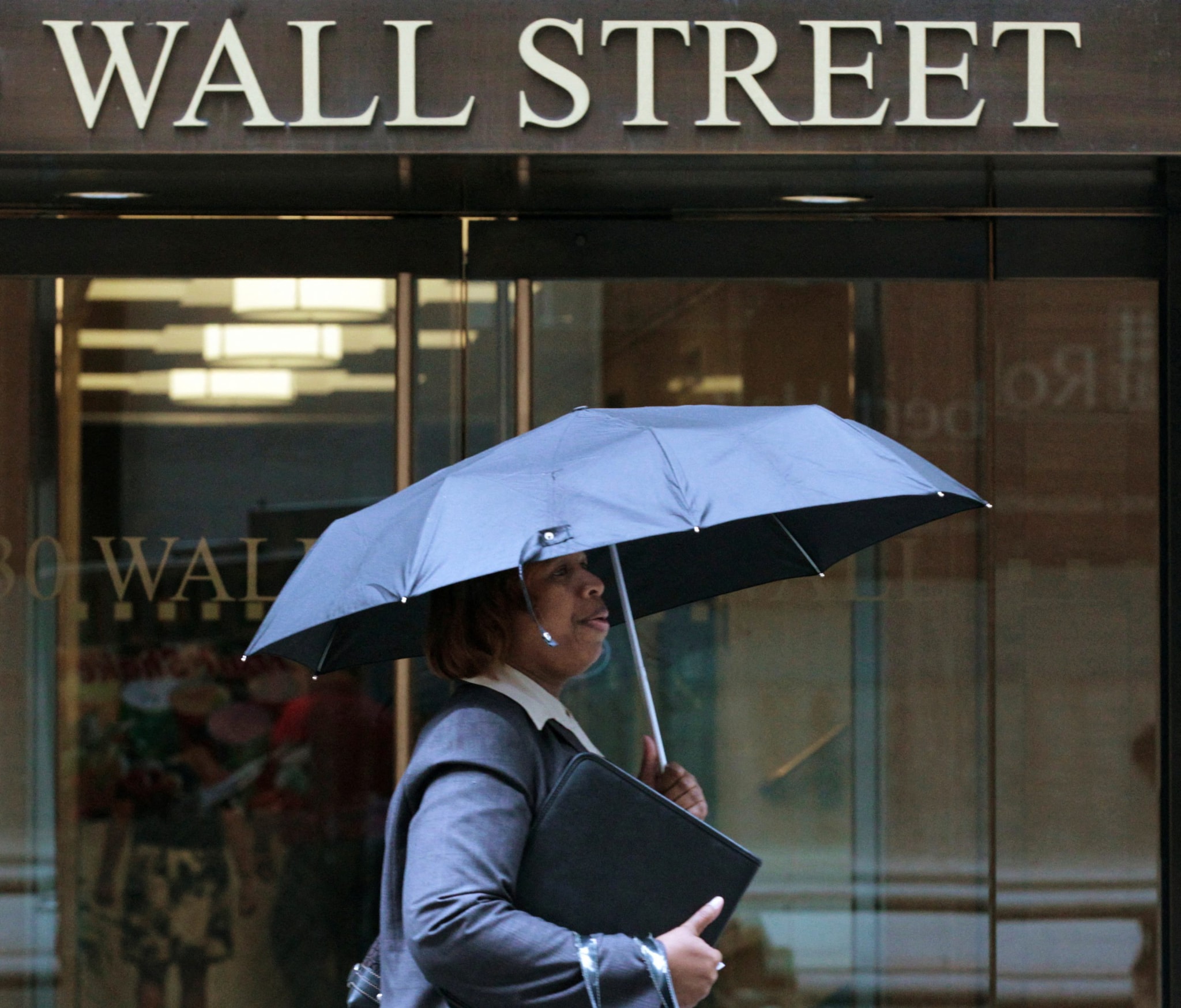
Wall Street loves a good war story because it provides a convenient bogeyman. When the indices trade flat or dip 0.2% at the open, the "consensus" is that investors are sitting on their hands, trembling over the latest update from the Middle East. More details on this are explored by CNBC.
This is fundamentally wrong.
Professional capital does not move based on "caution." It moves based on Positioning, Liquidity, and Volatility Surface.
- Positioning: Most institutional desks were already hedged or flat going into the weekend. The "cautious open" isn't a reaction to the news; it’s a lack of forced buying.
- The Gamma Trap: When markets sit in a tight range, it’s often because of dealer hedging requirements near large options expiration strikes. It has nothing to do with whether a ceasefire is signed at 10:00 AM or 2:00 PM.
- The Algorithmic Lag: Modern markets are dominated by High-Frequency Trading (HFT) and CTA trend-followers. These bots are reading data feeds, not New York Times editorials. They react to price breaks and volume clusters.
I have watched retail traders blow entire accounts trying to "front-run" peace talks. They see a headline, buy the "recovery," and get smashed when the market drops anyway. Why? Because the "smart money" used that tiny bump in liquidity to exit their positions.
Stop Asking if the News is Good or Bad
People always ask: "Is a ceasefire good for the S&P 500?"
That is the wrong question. The right question is: "Is the news already in the price?"
By the time you read a headline on a major financial news site, the information has already traveled through fiber-optic cables at near-light speed, been processed by NLP (Natural Language Processing) engines, and executed upon by execution bots. You are reacting to the echoes of a bomb that went off three minutes ago.
In many cases, "good news" is a sell signal. This is the classic "Buy the Rumor, Sell the News" mechanic. If the market expects a ceasefire, the price rises in anticipation. When the ceasefire actually happens, there are no buyers left. The only thing left to do is sell.
If you want to understand market direction, stop looking at the news and start looking at the Credit Markets.
The bond market is the adult in the room. While equity traders are hyperventilating over a tweet about Iran, the bond market is looking at inflation expectations, credit spreads, and the overnight repo rate. If the 10-year Treasury yield isn't moving, the "geopolitical tension" is just noise.
The High Cost of False Correlation
The competitor article claims the Nasdaq is "cautious."
The Nasdaq is a basket of technology stocks. Microsoft, Apple, and Nvidia do not care about a local ceasefire in the Middle East as much as they care about the USD/JPY carry trade or the cost of capital.
When the news cycle links these two things, it creates a false correlation in the mind of the investor. You start thinking, "If peace happens, tech goes up." This is a dangerous oversimplification. If peace happens but the Dollar strengthens significantly, your tech stocks might actually tank.
Common Misconception: Gold is a Safe Haven
Every time there is a headline about Iran, journalists tell you to buy gold.
Reality: Gold often drops during the actual "crisis" because big funds need to sell their winners (gold) to cover margin calls on their losers (equities). Gold is a hedge against currency debasement, not a magic shield against headlines.
Common Misconception: Volatility Means Risk
Reality: Volatility is just the speed of price discovery. True risk is a permanent loss of capital. A "cautious" market with low volatility is often more dangerous because it hides the buildup of systemic leverage.
The Insider's Edge: Trade the Reaction, Not the Event
If you insist on following these events, you must change your framework.
I’ve spent years in the pits and behind screens. The most successful traders I know do not try to predict the news. They wait for the news to hit, and then they trade the failed reaction.
Imagine a scenario where a definitive ceasefire is announced. The S&P 500 spikes for 30 seconds, then immediately gives back all the gains and breaks below the morning low. That is a "bull trap." It tells you that despite the "good news," the market is structurally weak. That is a high-conviction sell signal.
The "lazy consensus" article tells you what happened. A superior perspective tells you why what didn't happen matters more.
If the market doesn't rally on good news, it's going lower.
If the market doesn't sell off on bad news, it's going higher.
The Brutal Truth About "Market Sentiment"
Journalists use the word "sentiment" when they can't explain the math.
"Sentiment was weighed down by Middle East concerns."
Translation: "We don't know why the market is down, but this is the biggest news story today, so we'll link them together."
True sentiment is found in the Put/Call Ratio and the VIX term structure.
If the VIX is in contango—meaning longer-term volatility is priced higher than short-term—the market isn't "cautious" about a ceasefire. It’s behaving normally. If the VIX spikes into backwardation, then you have a real panic. Anything else is just the daily ebb and flow of capital being moved around for tax purposes, rebalancing, or hedging.
Stop Being a News Consumer and Start Being a Data Observer
The media needs you to be anxious. They need you to refresh your browser every five minutes to check the status of a negotiation. This makes you an emotional trader. Emotional traders lose money to the people who stay cold, calculated, and focused on the tape.
Here is your actionable order:
- Turn off the TV. Bloomberg and CNBC are entertainment, not education.
- Ignore the "Open Cautious" headlines. The first 30 minutes of the trading day are driven by retail emotion and overnight order matching. It is the least reliable indicator of the day’s true trend.
- Watch the USD. The US Dollar index (DXY) is the true barometer of global stress. If the DXY is dumping, the market is "on." If the DXY is ripping, the market is "off."
The world is messy. Ceasefires come and go. Borders shift. But the mechanics of a limit order book remain the same.
Stop looking for a reason "why" the market moved. The price is the reason. The move is the truth. Everything else is just a story told to people who are too lazy to read the charts.
Delete your news alerts. Watch the flow. Stop being the exit liquidity for the people who realized hours ago that the ceasefire was already priced in.