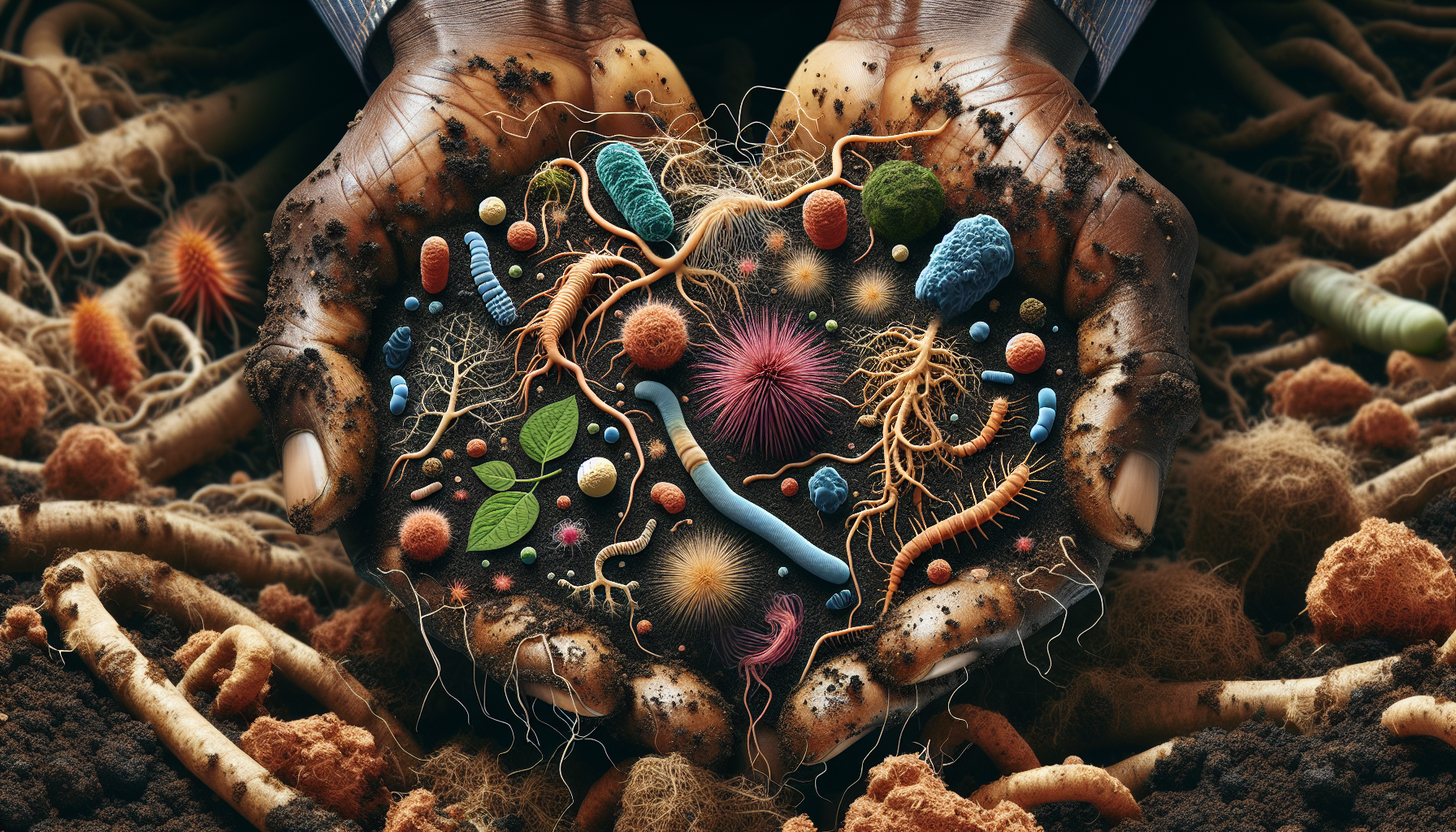
The narrative is seductive: hidden beneath your feet lies a miniature intelligence agency, a microscopic early warning system that tells us exactly when an ecosystem is about to turn to dust. If you believe the headlines, all we need to do is decode the "memories" and "chemical signals" of soil bacteria, and we can stop desertification in its tracks.
It is a comforting fairy tale. It suggests that if we just monitor the right microbes, we can predict disaster before a single blade of grass withers.
I have spent enough time in the field watching venture-backed agricultural startups burn through millions trying to engineer "microbial solutions" to realize that this perspective is not just lazy—it is fundamentally broken. We are anthropomorphizing the dirt. We are projecting altruism onto organisms that are, by nature, indifferent to our survival.
The Myth of Microbial Altruism
The "lazy consensus" argues that plants call out for help and microbes rush to their aid, creating a harmonious, symbiotic response to drought. Researchers love this because it sounds like a well-ordered supply chain. It suggests a collaborative intent that simply does not exist.
The reality? Microbes are not your friends. They are not plant assistants. They are opportunistic scavengers looking for carbon.
Recent data clarifies that drought-tolerant microbes do not appear because a plant "cried for help." They appear because the environment became so hostile that only the most selfish, hardy organisms survived. The fact that these microbes happen to make plants more resilient is an accidental byproduct of their own survival, not a coordinated rescue mission.
Imagine a scenario where you are in a burning building. You run to the exit. Someone else happens to be running behind you, so they follow your path and escape, too. Did you save them? No. You saved yourself, and they were lucky enough to be in your wake. That is the "microbial legacy" everyone is currently hyperventilating about.
Stop Decoding Memory, Start Mapping Entropy
The obsession with microbial "memory" is a distraction. Scientists talk about how drought-stricken soil "remembers" its past, creating a legacy effect that impacts future crops. They argue this is a predictive tool for desertification.
This is like trying to predict a house fire by analyzing the soot patterns left behind after the structure has already burned down. By the time the microbial community structure has shifted to reflect a "drought memory," the ecological death spiral is often already locked in.
We are treating symptoms while ignoring the thermodynamic reality of soil degradation. Desertification isn't a failure of microbial communication; it is a failure of energy flux. When you strip the organic matter and kill the soil structure through industrial mono-cropping, you change the physics of how water moves through the pores. No amount of "probiotic" soil inoculation will fix a fundamental loss of soil architecture.
Expertise Versus Trendy Buzzwords
The field is currently obsessed with "biotech interventions" and "engineered microbiomes". If you see a company promising to "leverage" microbial memory to save your farm, check their burn rate and keep your wallet shut.
True ecological resilience is not found in a bottle of lab-grown bacteria. It is found in the management of the physical soil environment. If you want to stop land degradation, quit looking at the genetic code of your bacteria and start looking at the carbon content and the infiltration rates of your soil.
You need to understand the distinction between adaptation and manipulation.
- Adaptation is the long-term, evolutionary response of a native microbial community to its specific site.
- Manipulation is the attempt to force-feed a synthetic, "beneficial" microbial cocktail into a degraded, hostile environment where it has no business surviving.
The latter almost always fails because it ignores the environment that selected the microbes in the first place. You cannot bypass the hard work of soil building with a quick fix of proprietary bugs.
The Hard Truth About Early Warning
People ask if we can use these systems to mitigate human and financial impacts. My answer is simple: if you need a web-based early warning system to tell you your soil is dying, you haven't been walking your land.
The indicators are not hidden in the metagenomics of the soil; they are visible to the naked eye. Crusts, compaction, loss of cover, and the change in plant succession are the only warning systems that matter. When you start relying on high-tech dashboards to do the work of observation, you lose the intuition required to manage land effectively.
The academic push for "integrated, people-centred, model-based" systems is just another way to institutionalize failure. It moves the focus from the ground to the office, from the farmer to the consultant, and from action to analysis.
If you want to save your soil, stop looking for a secret signal in the dirt and start feeding the life that is already there. Stop over-tilling. Stop over-extracting. Stop believing that technology will save you from the consequences of your own management.
The soil doesn't need a warning system. It needs an end to the abuse. Turn off the sensors, stop the data mining, and go put some organic matter back into the ground. Everything else is just noise.