The headlines are screaming again. Tanker wars. Global oil chokepoints. The imminent collapse of the modern energy grid because a few fast boats are buzzing a destroyer in the Persian Gulf. Most "expert" analysis on the US-Iran friction regarding the Strait of Hormuz reads like a 1980s Cold War thriller script. They want you to believe we are one stray missile away from $200 oil and a global depression.
They are wrong. For a deeper dive into similar topics, we suggest: this related article.
The obsession with the "chokepoint" narrative is a relic of a pre-shale, pre-renewables world that ignores the actual mechanics of modern naval warfare and energy logistics. We aren't witnessing a prelude to World War III; we’re watching a highly choreographed piece of kinetic theater where both sides are incentivized to keep the lights on while pretending they’re ready to blow the fuse.
The Myth of the Total Blockade
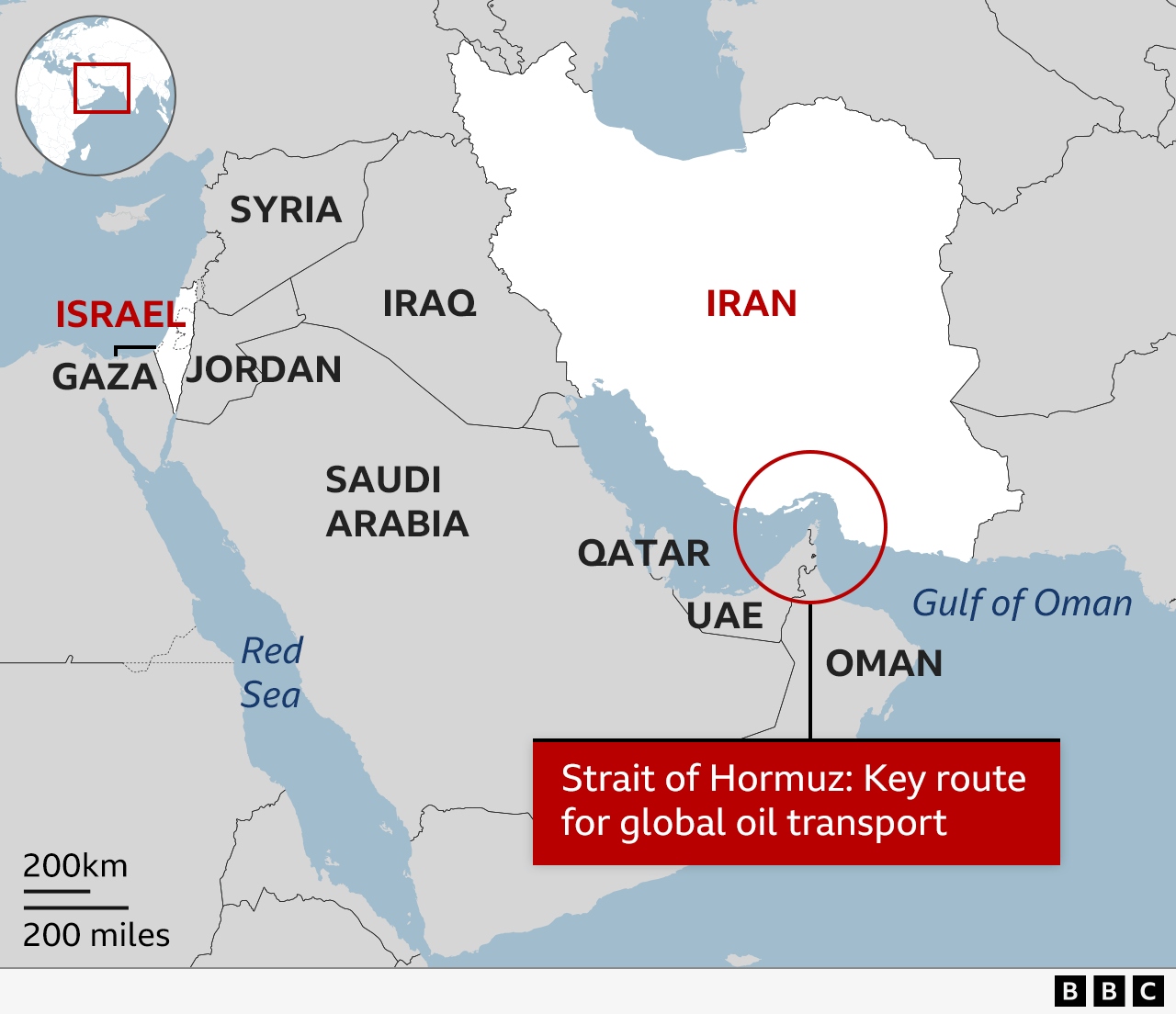
Every time tensions spike, the "lazy consensus" warns that Iran will "close" the Strait. Let’s look at the geography. The Strait of Hormuz is about 21 miles wide at its narrowest point, but the actual shipping lanes—the deep-water channels capable of carrying VLCCs (Very Large Crude Carriers)—are only two miles wide in each direction, separated by a two-mile buffer. For further details on this issue, comprehensive reporting can be read at The New York Times.
The assumption is that sinking a few ships would create a physical barrier. It wouldn't. The Persian Gulf isn't a bathtub; it's a massive body of water. Sinking a tanker in a two-mile-wide lane doesn't block the Strait; it just creates a navigational hazard that ships will sail around.
More importantly, closing the Strait is a suicide pact. Iran’s economy, already suffocating under sanctions, relies almost entirely on the very waters they threaten to close. They aren't just threatening the Great Satan; they’re threatening their own lungs. China, Iran’s primary customer, has zero interest in seeing its energy supply lines severed. If Tehran actually plugged the hole, they wouldn't just be fighting the US Navy; they’d be alienating the only superpower keeping their central bank on life support.
Energy Independence Has Changed the Math
In 2008, a disruption in the Gulf would have been catastrophic for the American consumer. Today? It’s a market blip. The United States is the world’s largest producer of oil and gas.
$Domestic Production = 13 Million+ Barrels Per Day$
While oil is a fungible global commodity—meaning prices spike everywhere when supply drops anywhere—the US is no longer "dependent" on the Middle East in the structural sense. The Strategic Petroleum Reserve (SPR), despite recent drawdowns, remains a massive psychological and physical buffer.
The people losing sleep over Hormuz are in New Delhi, Tokyo, and Seoul. For the US, the Strait is no longer a vital organ; it’s a geopolitical lever. We stay there to protect the interests of our allies and to maintain the Petrodollar’s dominance, not because we’ll run out of gas at the pump if a mine hits a hull.
The Asymmetric Warfare Illusion
Commentators love to talk about Iran’s "swarming tactics"—the idea that hundreds of small, fast-attack craft can overwhelm a Billion-dollar Arleigh Burke-class destroyer. It sounds terrifying on paper. In practice, it’s a turkey shoot.
The US Navy has spent the last two decades perfecting Point Defense Systems. Between the Phalanx CIWS (Close-In Weapon System), which spits 4,500 rounds of tungsten per minute, and the integration of laser weapon systems (LaWS) currently being tested on transport docks, a "swarm" of speedboats is essentially a collection of floating targets.
The real threat isn't a blockade; it's insurance premiums. The "war" in the Strait is fought in the backrooms of Lloyd’s of London, not on the bridge of a warship. When a threat is issued, the "war risk" insurance for a tanker triples. That cost gets passed to the consumer. Iran knows they don't have to win a naval battle; they just have to make it too expensive for the world to ignore them.
The Hidden Logic of the "Threat"
Why does the US keep leaning into the "imminent threat" narrative? Because it justifies a massive forward-deployed presence that keeps regional players in check. If the Strait were truly safe, the US wouldn't have a reason to park a carrier strike group in the North Arabian Sea.
The tension is the point. It maintains a high-stakes status quo that prevents any single regional power—be it Iran or Saudi Arabia—from gaining total hegemony.
The "People Also Ask" Reality Check
You’ll see questions like: Can Iran actually stop all oil flow?
The honest answer is: No. They can delay it. They can make it expensive. They can cause a week-long panic. But the US Fifth Fleet is specifically designed to clear mines and escort tankers. The technical capability to reopen the Strait exists and is exercised constantly.
Will a war in the Strait cause a global depression?
Unlikely. The world has learned to bypass chokepoints. From the East-West Pipeline in Saudi Arabia to the Abu Dhabi Crude Oil Pipeline that terminates in Fujairah, millions of barrels per day can already move to market without ever entering the Strait of Hormuz.
The Logistics of the "New Normal"
If you want to understand the real tension, look at the rise of the "Dark Fleet"—the shadow tankers moving Iranian and Russian oil outside the traditional Western financial system. These ships operate without standard insurance, often turning off their transponders (AIS).
The real danger isn't a formal blockade by the Iranian Navy; it's a catastrophic oil spill from an uninsured, dilapidated shadow tanker that creates an environmental disaster so large it physically prevents traffic. That’s the "nuance" the mainstream media ignores. They’re looking for a smoking gun; they should be looking for a leaking hull.
Stop waiting for the "big one." The "big one" is already happening. It’s a slow-motion grind of sanctions, cyber-attacks, and insurance hikes. The Strait is open, it will stay open, and the threats are just the cost of doing business in a world where energy is the ultimate weapon of theater.
The US isn't "scared" of Iran closing the Strait. They’re counting on the threat of it to keep their presence in the region undisputed.
Walk away from the map. The battle isn't for the water; it's for the price of the risk.