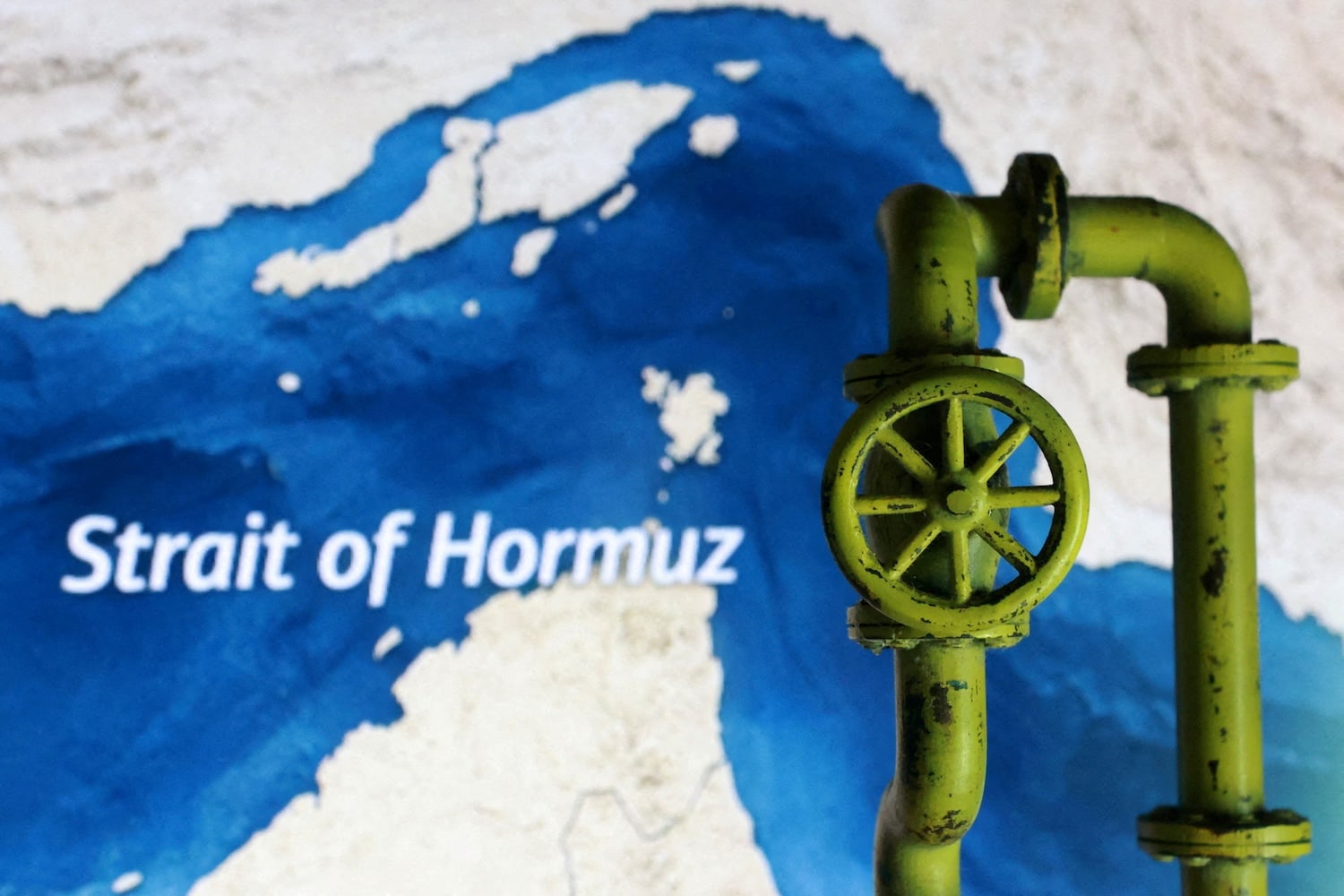
The United Nations Security Council is currently moving toward a vote on a resolution intended to safeguard shipping in the Strait of Hormuz, a narrow waterway that serves as the world's most critical oil chokepoint. This legislative push follows a period of intense diplomatic friction where China successfully blocked language that would have authorized the use of force to protect commercial vessels. The current resolution focuses on "freedom of navigation" and international legal frameworks, but its lack of enforcement teeth exposes a widening rift in how the world’s superpowers intend to police the high seas.
For decades, the global economy has operated under the assumption that the U.S. Navy would act as the ultimate guarantor of maritime trade. That era is ending. The move to the UN floor signifies a desperate attempt to replace American naval hegemony with a multilateral consensus that, so far, appears brittle. While the resolution aims to condemn attacks on tankers and infrastructure, it offers no clear mechanism to stop them.
The China Veto and the New Reality of Neutrality
Beijing’s decision to scrub "kinetic" language from the draft was not an act of chaos, but a calculated business move. China is the largest importer of crude oil passing through the Strait. You might think they would be the first to demand a heavily armed escort for every tanker. Instead, they have opted for a policy of strategic non-interference.
By blocking a mandate for international force, China ensures that it does not become entangled in a Middle Eastern conflict that could jeopardize its belt-and-road investments. Beijing prefers a security vacuum that it can navigate through bilateral deals rather than a Western-led coalition that dictates the rules of engagement. This leaves the UN with a "symbolic" resolution—a document that wagging fingers at aggressors while the insurance premiums for shipping companies continue to skyrocket.
The shipping industry operates on thin margins and high risks. When a resolution fails to include enforcement, the market treats it as noise. We are seeing a divergence where "friendly" ships—those with specific national flags or those carrying cargo for specific buyers—receive safe passage through back-channel diplomacy, while the rest of the world’s fleet is left to gamble with their hulls and crews.
Why the Strait of Hormuz Defies Standard Diplomacy
The geography of the Strait is a tactical nightmare. At its narrowest point, the shipping lanes are only two miles wide in either direction, separated by a two-mile buffer zone. It is a shooting gallery. Because these lanes fall within the territorial waters of regional powers, the legal definition of "transit passage" is constantly under fire.
International law, specifically the UN Convention on the Law of the Sea (UNCLOS), is supposed to govern these waters. However, the interpretation of UNCLOS is where the security council falls apart. One side views the Strait as an international highway where ships can move without restriction. The other side views it as a sovereign gateway where passage is a privilege that can be revoked if a vessel is deemed a threat to national security.
The resolution currently under debate attempts to bridge this gap by reaffirming the right of innocent passage. But "innocent" is a subjective term in a theater of war. If a tanker is carrying oil to a nation under sanctions, is its passage still innocent? The UN has no answer for this, and as long as the Security Council remains divided on the definition of a threat, the Strait will remain a zone of unpredictable seizures and "shadow" operations.
The Insurance Trap for Global Trade
The real-world impact of this diplomatic gridlock is felt in the boardrooms of London and Singapore. Lloyd’s Market Association has already designated the Persian Gulf and the Strait of Hormuz as high-risk areas. This isn't just a label; it is a massive financial levy on global trade.
When the UN fails to provide a credible security framework, war risk premiums spike. A single transit can cost a shipowner hundreds of thousands of dollars in additional insurance alone. These costs are never absorbed by the shipping lines. They are passed down to the refinery, then to the gas station, and finally to the consumer. The resolution in its current form does nothing to lower these premiums because insurers do not bet on resolutions; they bet on destroyers and patrol boats.
The Failure of Regional Alliances
We have seen various attempts at "coalitions of the willing" to patrol these waters. None have been truly effective. The European-led missions often lack the hardware to deter state-level actors, while U.S.-led initiatives are viewed with suspicion by regional players who fear escalation.
The UN resolution is meant to provide a "neutral" umbrella for these efforts, but that neutrality is its greatest weakness. By trying to please everyone—the U.S., China, Russia, and the regional powers—the Security Council has produced a document that is legally dense but operationally hollow. It calls for "de-escalation" and "restraint," words that hold little weight when a fast-attack craft is approaching a commercial vessel in the middle of the night.
The Rise of the Private Maritime Security Sector
As the UN bickers over phrasing, the industry is taking matters into its own hands. We are seeing an unprecedented surge in the use of Private Maritime Security Companies (PMSCs). These are not UN-sanctioned entities; they are private contractors, often former special forces, hired to provide "on-board" protection.
This privatization of maritime security is a direct result of the Security Council’s paralysis. If the international community cannot guarantee safety, the market will provide its own. However, this creates a dangerous precedent. Private security teams operate under different rules of engagement than national navies. A misunderstanding between a private guard and a regional navy could spark the very conflict the UN is trying to avoid.
The Technological Gap in Monitoring
One overlooked factor in the UN debates is the role of "Dark Fleets." Thousands of ships are now operating with their Automatic Identification System (AIS) transponders turned off to avoid detection or sanctions. This makes the job of any UN-sanctioned patrol nearly impossible.
The resolution mentions the need for better "transparency" and "cooperation," but it provides no funding for the satellite infrastructure or the drone surveillance needed to track these ghost ships. Without real-time data on who is in the Strait and what they are carrying, "freedom of navigation" is a blind man’s game. The Security Council is attempting to regulate an environment it can no longer even see clearly.
A Systemic Shift in Global Power
The standoff over the Hormuz resolution is a microcosm of the new world order. The U.S. is no longer willing or able to be the world's policeman for free. China is unwilling to let the U.S. set the terms of global security but is also unwilling to take over the responsibility itself. The UN is caught in the middle, trying to use 20th-century diplomacy to solve 21st-century hybrid warfare.
The vote will likely pass in a diluted form. There will be handshakes and press releases. But the underlying tension—the reality that the most important oil artery in the world is effectively unguarded by international law—will remain.
Shipowners are already looking for alternatives. We see increased interest in the Northern Sea Route and the expansion of pipelines that bypass the Strait entirely. These are multi-billion dollar bets that the UN will never be able to fix the security situation in Hormuz. The "victory" of passing a resolution is a hollow one if the ships it is meant to protect are already charting courses elsewhere.
The failure to include enforcement language is a signal to every regional actor that they can continue to push the boundaries of maritime law without facing a unified international response. It turns the Strait of Hormuz into a testing ground for gray-zone tactics. If you can seize a ship and the only consequence is a strongly worded letter from New York, there is no reason to stop.
The global maritime community is watching the Security Council not for a solution, but for a confirmation of their worst fears. That confirmation is arriving in the form of a resolution that prioritizes political consensus over actual safety. Trade routes are the veins of the global body; when they are blocked or threatened, the entire system begins to fail. The UN is currently offering a bandage for a severed artery.
Physical security on the water requires more than ink and paper. It requires a commitment to a shared set of rules and the collective will to enforce them. Neither of those currently exists. Until the major powers decide that the stability of global trade is more important than their individual geopolitical maneuvering, the Strait of Hormuz will remain a volatile vacuum where the highest bidder—or the boldest aggressor—sets the rules.
The resolution will go to a vote. It will likely receive the necessary support. And the next morning, the captains of the tankers entering the Persian Gulf will still be looking over their shoulders, knowing they are essentially on their own.



