The air in the Oval Office usually smells of old paper and the heavy weight of history, but when the doors closed for the meeting between Donald Trump and Pakistan’s General Asim Munir, the atmosphere carried the sharp, metallic tang of a world on edge. Outside, the global economy was gasping.
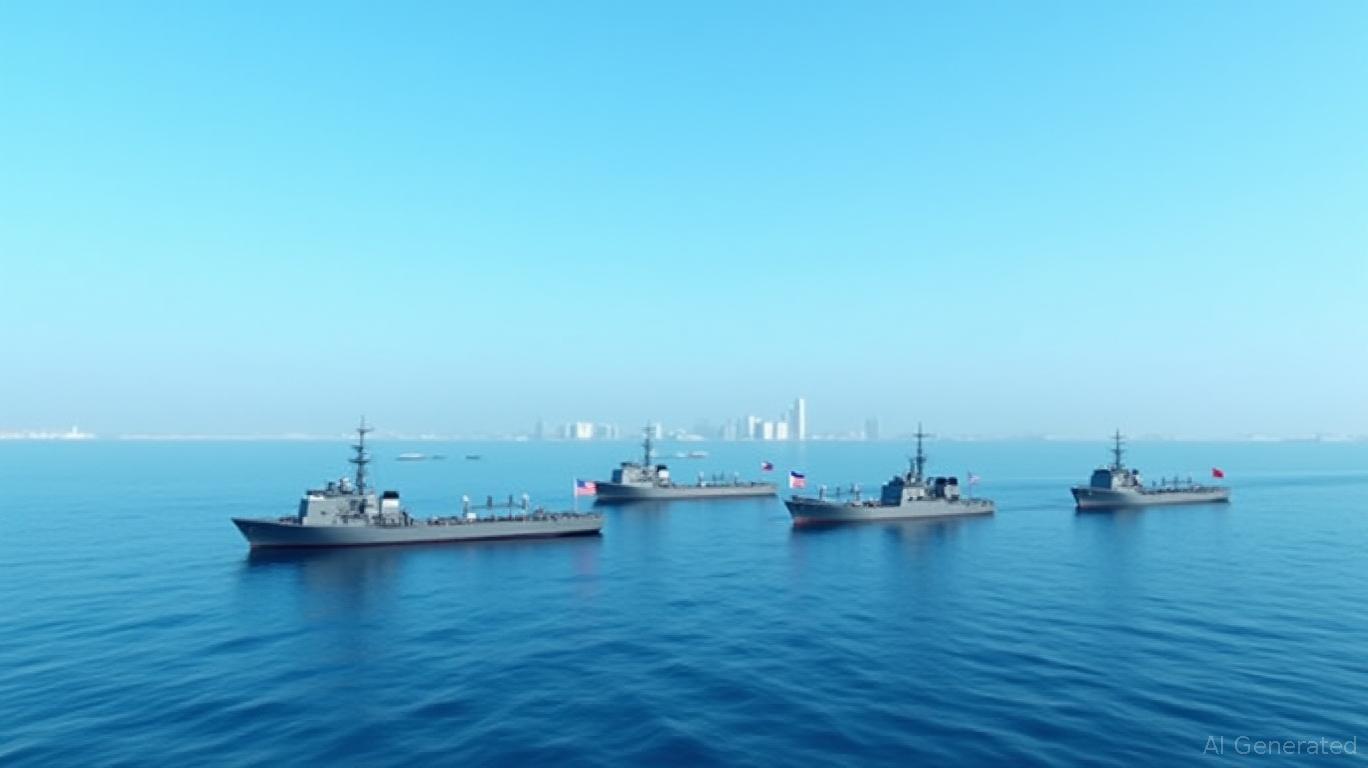
For weeks, the Strait of Hormuz—the world’s most vital jugular vein for oil—had been under a suffocating blockade. It wasn't just a line on a map or a strategic maneuver in a textbook. It was the reason a father in Ohio couldn't afford the gas to drive to work. It was why a factory in Punjab had fallen silent, its machines stilled by the sudden evaporation of affordable energy.
Then came the report that changed the temperature of the room: Trump is ready to rethink the blockade.
The Chokehold on the Horizon
To understand why this shift matters, you have to look past the podiums and the press releases. You have to look at the water.
The Strait of Hormuz is a narrow strip of sea, barely twenty-one miles wide at its tightest point. Through this slender gap flows roughly one-fifth of the world’s total oil consumption. When that flow stops, the world doesn't just slow down. It breaks.
Think of a grandmother in Karachi sitting in the dark because the local power grid, starved of fuel, has flickered out. Think of the logistics manager in London watching shipping insurance rates climb so high that his entire fleet is grounded in port. These are the stakes Munir carried into the room. Pakistan, a nation often caught between the grinding gears of superpowers, felt the pressure more than most. For Munir, this wasn't about abstract diplomacy. It was about the survival of a state.
Trump’s approach to the blockade has never been traditional. Where past administrations might have leaned on decades of state department white papers and cautious back-channeling, Trump treats the global stage like a high-stakes closing room. The blockade was a lever. He pulled it to exert maximum pressure, to see who would bend and who would break. But levers can be pushed back.
The General and the Negotiator
Asim Munir is not a man prone to public outbursts. He is a soldier, accustomed to the quiet calculations of the GHQ in Rawalpindi. When he sat across from Trump, he wasn't just representing a military; he was representing a desperate regional reality.
Pakistan needs the oil to flow. More importantly, it needs the volatility to end.
The report suggesting Trump is "ready to rethink" the blockade isn't a sign of sudden altruism. It is a calculated pivot. In the world of realpolitik, a "rethink" usually means the previous pressure has either achieved its goal or has become too expensive to maintain. The cost wasn't just measured in dollars; it was measured in the growing resentment of allies and the simmering instability of partners like Pakistan.
Consider the hypothetical scenario of a merchant vessel, the Blue Horizon, sitting idle just outside the Gulf. The captain knows that every hour he waits is a hundred thousand dollars lost. His crew is nervous. They are miles from home, caught in a geopolitical standoff they didn't ask for. When the news hits the wire that the U.S. might ease the pressure, that captain doesn't think about "strategic reorientation." He thinks about his daughter's birthday. He thinks about moving again.
The Hidden Architecture of the Deal
Why now? Why Munir?
The relationship between the United States and Pakistan has always been a jagged one, defined by periods of intense cooperation followed by cold silences. By choosing this moment to signal a shift, Trump is signaling a return to a transactional, bilateral style of leadership. He is bypasssing the multilateral institutions that usually handle these crises, opting instead for the directness of a general-to-president dialogue.
The "rethink" is likely tied to broader guarantees. You don't give up a blockade for free.
The invisible stakes involve regional security, counter-terrorism cooperation, and perhaps most importantly, a check on Iranian influence. If the blockade eases, it’s because a different kind of pressure has been applied elsewhere. It’s a shell game played with tankers and battalions.
It is easy to get lost in the jargon of "maritime security" and "energy corridors." But if you strip away the suits and the medals, you find a very human fear: the fear of being left in the cold. The global energy market is a delicate web. When one strand is plucked in Hormuz, the vibration is felt in every gas station and every kitchen on the planet.
The Weight of the Word
A "report" is a fragile thing. It isn't a signed treaty. It isn't a permanent peace. It is a trial balloon, released into the wind to see how the world reacts.
If the markets respond favorably, if the price of crude begins to dip, the "rethink" becomes a policy. If the reaction is one of perceived weakness, the door slams shut again. This is the dance of the modern era—power is exercised through the threat of chaos, and then retracted to provide the relief of order.
The world watches Asim Munir’s return to Pakistan with bated breath. Did he get what he came for? Or was he merely the first witness to a new direction in American foreign policy?
We often talk about these events as if they are inevitable, as if the movements of nations are like the tides—vast, impersonal, and unstoppable. They aren't. They are the result of specific men in specific rooms making choices based on ego, necessity, and the desperate hope of avoiding a total collapse.
The blockade of Hormuz was a shadow over the world’s recovery. If that shadow is truly lifting, it isn't because the underlying tensions have vanished. It's because the people holding the flashlight decided it was time to point it somewhere else.
The Blue Horizon might finally start its engines. The grandmother in Karachi might see her lights flicker back to life. But the memory of the dark remains, a reminder of how easily the world’s lifeblood can be pinched shut by a single hand in Washington or a single general from the East.
The sword is still there; it has simply been returned to the scabbard for a moment of uneasy, calculated quiet.