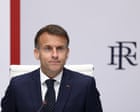
The cessation of hostilities between the United States and Iran represents more than a diplomatic relief valve; it is a structural recalibration of the Middle Eastern security architecture that directly impacts European economic and energy sovereignty. While initial media reports focus on the "welcome" nature of the ceasefire, a rigorous analysis reveals that European leaders are not merely reacting to peace, but are pricing in the reduction of a systemic risk premium that has suppressed Continental growth for several fiscal quarters. This de-escalation functions as a critical pivot point for three distinct strategic domains: maritime insurance liquidity in the Persian Gulf, the viability of the Joint Comprehensive Plan of Action (JCPOA) frameworks, and the internal political cohesion of the European Union.
The Mechanics of Regional Stabilization
The stability of the Persian Gulf operates as a primary input for European energy pricing. When kinetic friction between Washington and Tehran increases, the immediate result is an expansion of "war risk" premiums in the shipping industry. This cost is not absorbed by carriers but is passed through the supply chain, manifesting as inflationary pressure on European consumers. The ceasefire effectively resets the Maritime Risk Coefficient, which had reached a ten-year high prior to the agreement.
The cessation of drone and missile exchanges provides a predictable operational environment for energy exports. European capitals, particularly those with high dependencies on liquefied natural gas (LNG) and crude imports via the Strait of Hormuz, view this ceasefire as a non-monetary stimulus package. The logic follows a clear sequence:
- Reduction in kinetic threats leads to lower insurance hulls and machinery premiums.
- Decreased freight costs stabilize the landed price of energy.
- Stabilized energy prices allow the European Central Bank (ECB) greater latitude in managing interest rate cycles without the volatility of external supply shocks.
The European Diplomatic Arbitrage
European powers—specifically the E3 (France, Germany, and the United Kingdom)—have historically functioned as the "balancing weight" in the US-Iran relationship. The ceasefire validates the European preference for "strategic patience" over "maximum pressure." This outcome strengthens the hand of European diplomats who argue that the Continent’s security is best served by a functional, rules-based framework rather than a series of ad hoc military deterrents.
However, this diplomatic success creates a secondary challenge: the Divergence of Objectives. While the United States views the ceasefire as a tactical pause to redirect resources toward the Indo-Pacific or Eastern Europe, European leaders view it as a foundational step toward a permanent regional security architecture. This mismatch in intent suggests that the current stability is a "fragile equilibrium" rather than a terminal resolution of conflict. The E3 must now navigate the gap between Washington’s desire for a low-maintenance status quo and Tehran’s demand for permanent sanctions relief.
The Economic Connectivity Function
A dormant conflict allows for the reactivation of trade corridors that have been paralyzed by the threat of secondary sanctions and physical insecurity. For European industry, the "brink" mentioned in initial reports was an existential threat to the International North-South Transport Corridor (INSTC) and other Eurasian trade aspirations.
The strategic value for Europe lies in the diversification of transit. If the US-Iran ceasefire holds, the geopolitical risk associated with the "Middle Corridor" drops significantly. This creates a specific set of advantages:
- Infrastructure Investment: Sovereign wealth funds and private equity can re-evaluate projects in the Caucasus and Central Asia that were previously deemed "high-risk" due to potential spillover from a US-Iran conflict.
- Energy Diversification: While direct Iranian oil remains under various sanctions regimes, the regional stability allows for more consistent output from neighboring producers who utilize shared infrastructure.
- Migration Control: Regional volatility is a primary driver of irregular migration toward the EU. Stabilization in the Middle East functions as a preventive measure for the social and political friction that migration surges cause within the European bloc.
The Nuclear Non-Proliferation Bottleneck
The most significant structural risk remaining is the lack of a permanent successor to the original nuclear agreements. The ceasefire manages the symptoms of the conflict—kinetic strikes and proxy warfare—but does not address the underlying Nuclear Proliferation Velocity. European leaders recognize that without a formal return to a monitoring regime, Iran’s breakout time continues to shorten regardless of the absence of active combat.
The current strategy employed by Brussels involves leveraging the ceasefire to re-introduce technical inspectors. The logic is that "visibility" is a prerequisite for "stability." If the US-Iran de-escalation does not lead to an IAEA-monitored framework within the next two fiscal quarters, the ceasefire will likely be viewed by markets as a temporary tactical repositioning rather than a strategic peace.
Internal EU Political Friction Points
The "welcome" from European leaders is not monolithic. There is a distinct cleavage between Western European states and those on the Eastern Flank. For Berlin and Paris, the ceasefire is a win for the "strategic autonomy" narrative. For Warsaw and the Baltic states, any deal that allows the US to pivot away from the Middle East raises concerns about the depth of the American commitment to the European theater, specifically regarding Russian containment.
This creates a Resource Allocation Paradox:
- A peaceful Middle East allows the US to focus on the Atlantic and Pacific.
- However, a peaceful Middle East also reduces the immediate need for the US to maintain a heavy troop presence in the Mediterranean, which has historically provided a "backstop" for European security.
European leaders are therefore forced to increase their own defense spending even as they celebrate the peace. The ceasefire does not reduce the need for European rearmament; it merely changes the justification from "active crisis management" to "long-term strategic readiness."
The Strategic Forecasting of Conflict Decay
To determine if this ceasefire is a permanent shift or a temporary lull, analysts must monitor the De-escalation Velocity Indicators. These are quantifiable metrics that signal whether the parties are committed to the new status quo:
- Proxy Activity Frequency: A 70% reduction in non-state actor engagements in the Levant and Yemen over a 90-day period.
- Sanctions Enforcement Elasticity: The degree to which the US Treasury overlooks minor "technical violations" of oil exports to allow the Iranian economy to breathe.
- Diplomatic Frequency: The transition from back-channel intelligence meetings to public-facing ministerial dialogues.
If these indicators remain stagnant, the "step back from the brink" is merely a pause in a secular trend toward higher-intensity conflict.
Operational Realignment for Continental Firms
For European multinational corporations, the immediate recommendation is a "Wait and See" approach to CAPEX (Capital Expenditure) in the region, coupled with an aggressive optimization of supply chains. The ceasefire offers a window to lock in lower shipping rates and energy hedges while the risk premium is artificially suppressed.
The structural play for the EU is to institutionalize the ceasefire into a regional "Hotline Agreement." By creating a formal mechanism for crisis communication that includes European mediators, the Continent can ensure it is not sidelined the next time tensions fluctuate. Relying on Washington’s internal political cycle to dictate European energy and security stability is a fundamental strategic flaw. The E3 must move to transform this bilateral US-Iran pause into a multilateral security framework that can survive a change in the US administration. Failure to do so within the current window will result in a return to the "brink" by the next election cycle, with the added cost of lost diplomatic momentum.