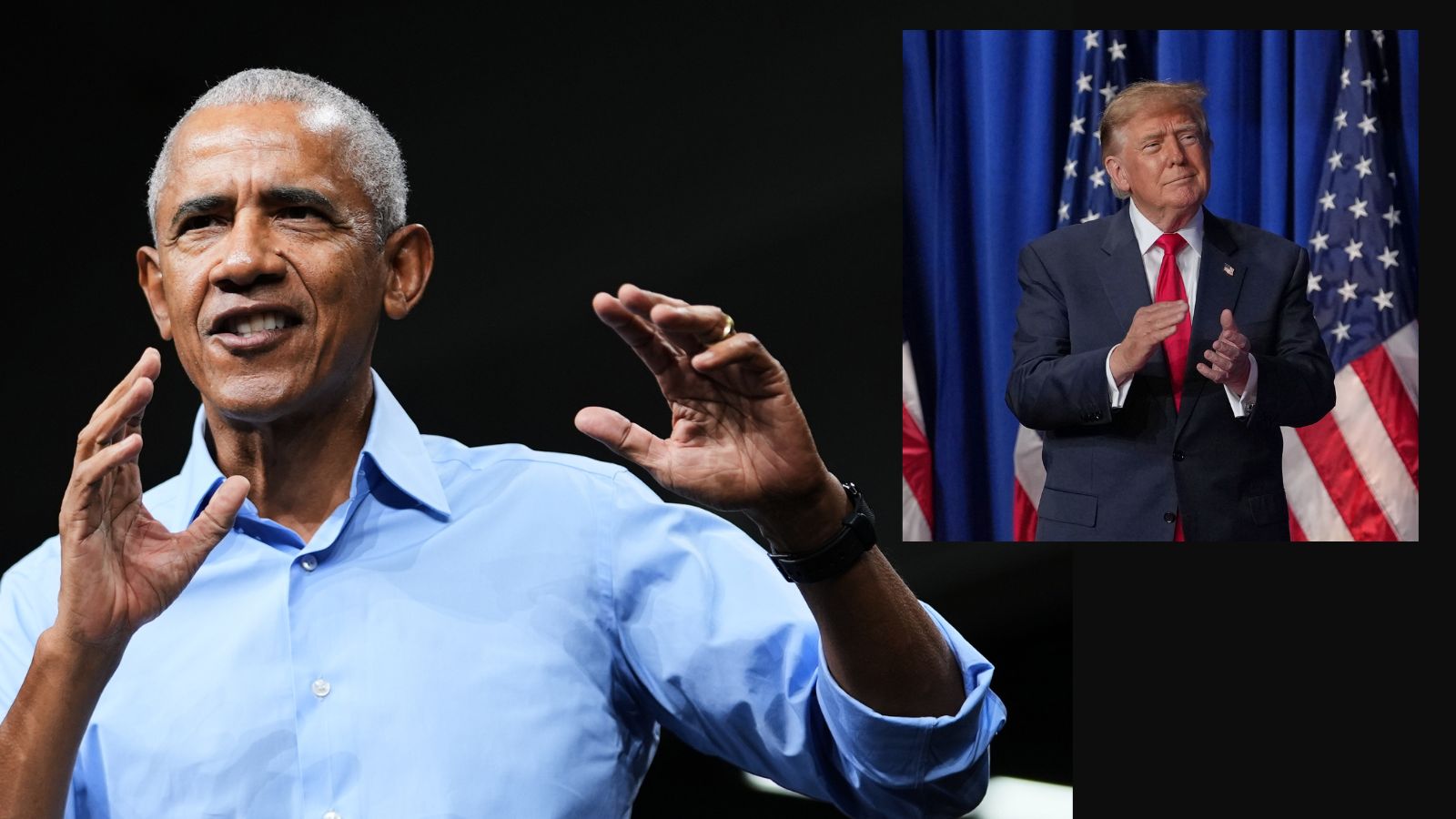
Political campaigns frequently deploy personal attack advertisements targeting a rival’s family members to trigger asymmetric emotional responses, while opposing leaders invoke institutional norms to reframe the attack as a disqualifying character flaw. When former President Barack Obama condemned a campaign advertisement linked to Vivek Ramaswamy’s political orbit that featured an opponent’s mother, the exchange illustrated a recurring strategic collision in modern electoral communication: the tension between high-arousal negative framing and institutional norm enforcement. Standard political reporting treats such clashes as isolated moments of outrage. In practice, they represent calculated moves within a predictable game-theoretic framework governing voter attention, media amplification, and reputational risk.
The Structural Anatomy of Family-Adjacent Attack Advertising
In political communication, targeting an opponent’s immediate family—specifically parents, spouses, or children—violates an informal boundary known as the collateral non-combatant norm. Campaigns rarely cross this threshold by accident. Instead, strategists calculate that the shock value of breaching a widely accepted social rule will generate earned media volume far exceeding the cost of the initial media buy.
The mechanism relies on three sequential phases:
- The Norm Breach: An advertisement introduces a biographical or financial detail involving a candidate's relative, framing it as evidence of hypocrisy, elitism, or moral compromise. By centering the narrative on a parent, the ad shifts the critique from abstract policy disagreements to foundational character traits.
- The Asymmetric Attention Spike: Legacy media outlets and social media algorithms prioritize novelty and moral conflict over policy white papers. The breach itself becomes the primary news hook, forcing reporters to cover the controversy surrounding the ad rather than fact-checking its underlying premises.
- The Defensive Trap: The targeted candidate faces a binary choice with no frictionless exit. Ignoring the ad allows the narrative to fester unchallenged in low-information voter segments; responding directly elevates the attack to the top of the news cycle and forces the candidate to discuss their personal life rather than their platform.
This dynamic exposes a critical vulnerability in conventional campaign playbooks. When an attacker operates outside traditional decorum, standard rebuttal frameworks—such as issuing policy clarifications or relying on surrogate fact-checks—fail because they address the literal claim rather than the emotional disruption caused by the medium.
Norm Enforcement as a Counter-Mobilization Strategy
When a high-profile political figure like Barack Obama intervenes to criticize an opponent’s tactics using terms like "cruelty" and a lack of "decency," the intervention functions as institutional norm enforcement rather than simple moral commentary. In political science, norm enforcement occurs when a high-status actor publicly penalizes a rule-breaker to re-establish behavioral boundaries and rally a coalition around shared civic values.
The effectiveness of this counter-strategy depends on specific structural conditions:
- Messenger Credibility and Authority: A critique of political decency carries weight only when delivered by an actor whose brand is closely tied to institutional stability. Obama’s political persona relies heavily on appeals to civic restraint and aspirational rhetoric, allowing him to frame the ad not merely as an attack on a single candidate, but as an assault on baseline public standards.
- Reframing the Moral Axis: The original attack ad attempts to define the moral axis around accountability or authenticity (e.g., exposing hidden family advantages). Norm enforcement shifts the moral axis to empathy and basic human decency. If the electorate accepts the new framing, the attacker’s intended strength—ruthless candor—is inverted into a liability: petty malice.
- Base Consolidation Over Persuasion: High-profile condemnations rarely persuade committed supporters of the attacking candidate, who often view norm-breaking as evidence of strength against a corrupt establishment. Instead, the intervention stabilizes the defending coalition, reduces voter apathy among moderate segments, and provides down-ballot candidates with a unified talking point.
However, norm enforcement carries a distinct operational limitation. Over-reliance on outrage rhetoric can trigger moral fatigue among undecided voters. When political leaders routinely label standard partisan friction as existential breaches of decency, the rhetorical currency devalues, leaving campaigns without an effective escalation mechanism when genuinely unprecedented transgressions occur.
The Economics of Outrage and Media Amplification
To understand why campaigns continue to produce ads featuring rivals' family members despite predictable pushback, analysts must examine the attention economy of modern political media. Paid media impressions are expensive and increasingly fragmented across streaming platforms, social feeds, and local broadcasts. Earned media—news coverage generated without direct payment—remains the most cost-effective distribution channel available to a campaign.
The cost-benefit calculus of a provocative advertisement follows a clear trajectory:
- Low Production and Placement Costs: A digital-first video or targeted regional spot requires minimal capital outlay compared to a statewide broadcast blitz.
- High Algorithmic Velocity: Platforms optimize for engagement metrics—comments, shares, and quote-posts—which spike sharply when content triggers moral indignation. Both supporters sharing the ad to signal alignment and critics sharing it to express disgust contribute equally to its algorithmic reach.
- Third-Party Validation Through Condemnation: When a national figure like Obama condemns the ad, the story graduates from campaign gossip to national political news. The condemnation validates the ad's importance, driving curious voters to seek out the original clip.
This creates a structural paradox for norm enforcers. Publicly denouncing a tactic intended to provoke outrage inadvertently fulfills the attacker’s primary distribution goal. The defender wins the moral framing battle among their own base, while the attacker secures millions of dollars in free visibility among broader audiences.
Evaluating Voter Reception Across Electorate Segments
The impact of both the attack ad and the subsequent condemnation varies significantly across distinct voter cohorts. Treating the electorate as a monolith leads to flawed strategic conclusions about who "won" the news cycle.
Partisan Base Voters
For core supporters of the attacking candidate, the inclusion of a rival’s family member is rarely viewed as cruel. Through the lens of affective polarization—where opposing partisans view each other not merely as wrong, but as existential threats—aggressive tactics are interpreted as necessary warfare. Conversely, core supporters of the targeted candidate experience the ad as a personal affront, increasing their emotional investment and likelihood to donate or volunteer.
Swing and Low-Information Voters
Undecided voters and those with low political engagement process these exchanges differently. Lacking deep ideological anchors, they rely heavily on heuristics—mental shortcuts—to evaluate candidate fitness. While they may not follow the granular details of the ad's accusations, they readily register the violation of basic social etiquette. Attacking a mother violates a near-universal cultural taboo, creating an immediate visceral discomfort that can depress favorability ratings for the sponsoring campaign, particularly among suburban and female demographics.
Institutionalists and Civic Moderates
This segment prioritizes predictability, governance competence, and adherence to democratic guardrails. For institutionalists, Obama’s critique directly activates their primary voting criteria. By linking the ad to a broader decline in public decency, the intervention transforms a localized campaign spat into a referendum on leadership temperament.
Operational Limitations of Negative Personalization
While personal attack ads generate immediate attention, they suffer from diminishing returns and severe structural risks that often undermine long-term electoral viability.
- Sympathy Inversion: When an attack appears disproportionate or mean-spirited, it generates a boomerang effect, converting a vulnerable opponent into a sympathetic figure. Voters instinctively recoil when power is used to punch down at non-public figures, neutralizing whatever substantive point the ad originally attempted to make.
- Brand Contamination: Candidates who build their identities around disruption or anti-establishment critique must maintain a delicate balance between being perceived as a "fighter" and being perceived as a "bully." Crossing into family territory frequently pushes a candidate past the threshold of acceptable aggression, permanently damaging their crossover appeal in a general election.
- Loss of Message Discipline: Every news cycle spent defending the ethics of an attack ad is a news cycle lost on core economic, security, or healthcare messaging. For challengers attempting to build credibility as viable executives, allowing the campaign to devolve into personal drama reinforces doubts about their readiness to govern.
Strategic Counter-Measures for Targeted Campaigns
When a campaign faces a personal attack involving family members, reacting purely on instinct guarantees falling into the attacker’s amplification trap. Operational discipline requires executing a calibrated response protocol designed to capture the moral high ground without feeding the adversary's distribution engine.
- Deploy High-Status Surrogates Immediately: The targeted candidate should avoid becoming the primary voice of outrage, which can appear defensive or weak. Instead, deploy respected external validators—such as former presidents, senior statesmen, or respected community leaders—to deliver the norm-enforcement critique. This separates the candidate from the mud while ensuring the condemnation carries maximum institutional weight.
- Pivot Rapidly from Personal Defense to Public Stakes: Acknowledge the breach briefly to establish moral clarity, then immediately pivot to how the attacker’s lack of judgment reflects their approach to governance. The logical bridge is straightforward: a leader who lacks basic restraint during a campaign will lack the temperament required to manage complex policy crises.
- Restrict Paid Amplification of the Rebuttal: Never spend campaign funds running counter-ads that repeat or show clips of the original attack. Keep the norm-enforcement messaging confined to earned media and targeted surrogate commentary, starving the original ad of the cross-channel oxygen it needs to dominate the broader information environment.
- Weaponize the Contrast in Persuasion Channels: In direct-to-voter communications—such as targeted digital ads aimed at undecided suburban households—highlight the contrast in temperament without repeating the specific smear. Use the incident as background evidence to reinforce a broader narrative of stability versus chaos.
Campaigns that master this sequence neutralize the shock value of personal attacks while converting the opponent's aggression into a durable character liability. In an era of hyper-polarized media, the decisive advantage belongs not to the campaign willing to break the most norms, but to the organization capable of weaponizing those breaches to prove its own fitness for leadership.