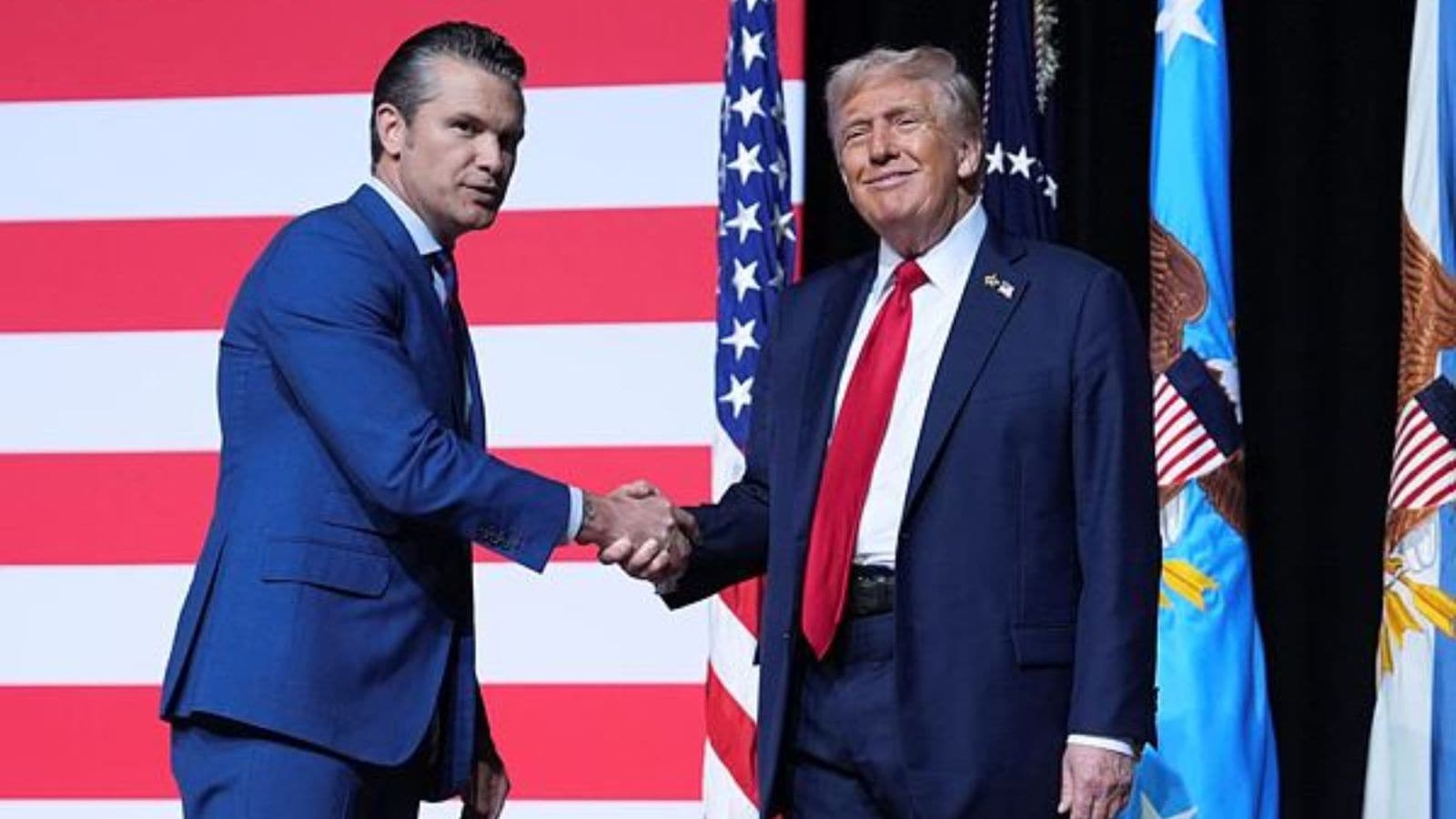
The shift in Middle Eastern geopolitics is currently defined by a transition from kinetic confrontation to a high-stakes negotiation framework where "mercy" functions not as a moral impulse, but as a calculated instrument of psychological and structural dominance. When a regional power like Iran signals a desperate need for a ceasefire, it marks a failure of its internal exhaustion-management systems. The U.S. administration’s decision to grant a reprieve—characterized by Defense Secretary Pete Hegseth as an act of mercy—is better understood as the tactical preservation of a weakened adversary to prevent a chaotic power vacuum while maintaining maximum leverage.
The Mechanics of Escalation Dominance
The current dynamic relies on the principle of escalation dominance: the ability of one party to control the pace, intensity, and termination of a conflict at every level. The Iranian request for a ceasefire suggests that the "Cost of Persistence" has officially eclipsed the "Value of Resistance." In high-stakes brinkmanship, this tipping point occurs when three specific variables collapse simultaneously:
- Kinetic Attrition: The physical destruction of command-and-control infrastructure has reached a level where the state can no longer project power effectively beyond its borders.
- Economic Suffocation: The internal cost of maintaining a war footing while under extreme sanctions creates a domestic instability risk that outweighs the benefits of regional posturing.
- Proxy Fragmentation: When the central hub (Tehran) can no longer reliably fund or direct its peripheral agents (the "Axis of Resistance"), the strategic depth of the nation evaporates.
Choosing "mercy" in this context is a sophisticated method of reinforcing a hierarchy. By granting a ceasefire when the opponent is at their most vulnerable, the United States establishes a precedent where the opponent’s survival is explicitly contingent on American permission. This creates a psychological ceiling on future Iranian aggression; they now know exactly where the breaking point lies and that their adversary possesses the data and the will to reach it.
The Strategic Utility of the Reprieve
The decision to halt offensive operations at the moment of an enemy's collapse is rarely about altruism. It is a structural maneuver designed to address specific geopolitical bottlenecks.
Preserving the Diplomatic Off-Ramp
Total collapse of a regime often leads to unpredictable "Hydra-headed" insurgencies or the rise of even more radicalized factions. By allowing the current structure to remain intact but humbled, the U.S. retains a single, identifiable entity with which to negotiate. It is far easier to manage a desperate central government than a dozen fractured warlords.
Resource Reallocation
The logistical burden of a total military victory—including occupation and reconstruction—is immense. A ceasefire allows the U.S. to "freeze" the conflict, maintaining its gains without the high overhead of continued kinetic engagement. This frees up naval and aerial assets for other theaters, specifically the Indo-Pacific, without technically conceding any ground in the Middle East.
Testing Compliance under Duress
A ceasefire born of "begging" is a laboratory for compliance. The U.S. can now observe whether the Iranian leadership will actually dismantle specific proxy pipelines or if they will use the breathing room to re-arm. If the latter occurs, the justification for a final, more devastating strike becomes politically and legally unimpeachable on the international stage.
Quantifying the "Begging" Threshold
To understand why a state of Iran’s stature would reach a point of pleading for cessation, one must analyze the decay of its internal stability metrics. The Iranian state operates on a dual-loyalty system: the regular military and the IRGC. When these two entities begin to compete for diminishing resources, the risk of a coup or internal civil war spikes.
The request for a ceasefire indicates that the Iranian leadership recognized a "Terminal Degradation Point." This is the moment when the state's internal security apparatus is no longer capable of suppressing domestic dissent because too many resources are diverted to external defense. The U.S. intelligence community likely identified this friction, and the administration’s response was tuned to exploit it. By stopping just short of total destruction, the U.S. forces the Iranian leadership to focus inward on its own survival, effectively neutralizing them as an external threat for a predictable cycle.
The Role of Rhetorical Dominance in Foreign Policy
Secretary Hegseth’s use of the term "mercy" serves a dual-purpose signaling function. Domestically, it projects a position of absolute strength and moral high ground, aligning with a "Peace through Strength" doctrine. Internationally, it signals to allies and adversaries alike that the U.S. is no longer interested in the "forever war" model of incrementalism.
Instead, the administration is signaling a binary approach:
- Total Pressure: Until the breaking point is reached.
- Sovereign Grace: Once the adversary acknowledges defeat.
This departs from previous strategies that relied on complex multilateral treaties. The new framework is transactional and hierarchical. It assumes that stability is not reached through mutual understanding, but through a clear, undisputed disparity in power.
Risks of the "Mercy" Doctrine
While this approach maximizes short-term leverage, it introduces two primary systemic risks:
- The Sunk Cost of Survival: If the Iranian regime interprets "mercy" as a permanent shift toward isolationism by the U.S., they may use the reprieve to double down on nuclear breakout capabilities as a final insurance policy. The "mercy" must be framed as a temporary state, contingent on visible, measurable de-escalation.
- Ally Misalignment: Regional partners like Israel or Saudi Arabia may view a ceasefire as a missed opportunity to eliminate a long-standing threat. This creates a "trust deficit" where allies might feel compelled to take unilateral action to finish what the U.S. started, potentially dragging the U.S. back into a conflict it just sought to pause.
The efficacy of this strategy depends entirely on the "Monitoring and Response Loop." If the U.S. does not pair its mercy with a granular, intrusive verification of Iranian activity, the ceasefire becomes nothing more than a subsidized refueling stop for a wounded predator.
The Implementation of Controlled Friction
The U.S. is now moving toward a phase of "Controlled Friction." This involves maintaining the sanctions architecture at 100% capacity while providing minor, symbolic "humanitarian" outlets that keep the Iranian population from total revolt but do nothing to strengthen the regime's military capacity.
Success in this phase requires:
- Vigilant Proxy Decoupling: Forcing Tehran to publicly distance itself from groups like Hezbollah or the Houthis as a condition of the ongoing ceasefire.
- Currency Manipulation: Using the global banking system to ensure that any "mercy-based" aid or trade is strictly non-fungible, meaning it cannot be converted into military hardware.
The current ceasefire is not an end to the conflict; it is the transition of the conflict into a more cost-effective medium. The U.S. has moved the war from the battlefield—where costs are high—to the boardroom and the central bank, where the U.S. possesses a permanent, structural advantage.
The strategic play here is to keep Iran in a "Zombie State" configuration: too weak to project power or threaten regional stability, yet just functional enough to prevent the chaos of a power vacuum. This requires the U.S. to periodically alternate between "unrelenting pressure" and "calculated mercy" to keep the Iranian leadership in a state of perpetual reactive posture. The next logical move is the formalization of a "Status Quo Plus" agreement, where the U.S. demands specific, irreversible concessions in exchange for the continuation of the current ceasefire, effectively turning "mercy" into a subscription-based model of national survival for the Iranian state.



