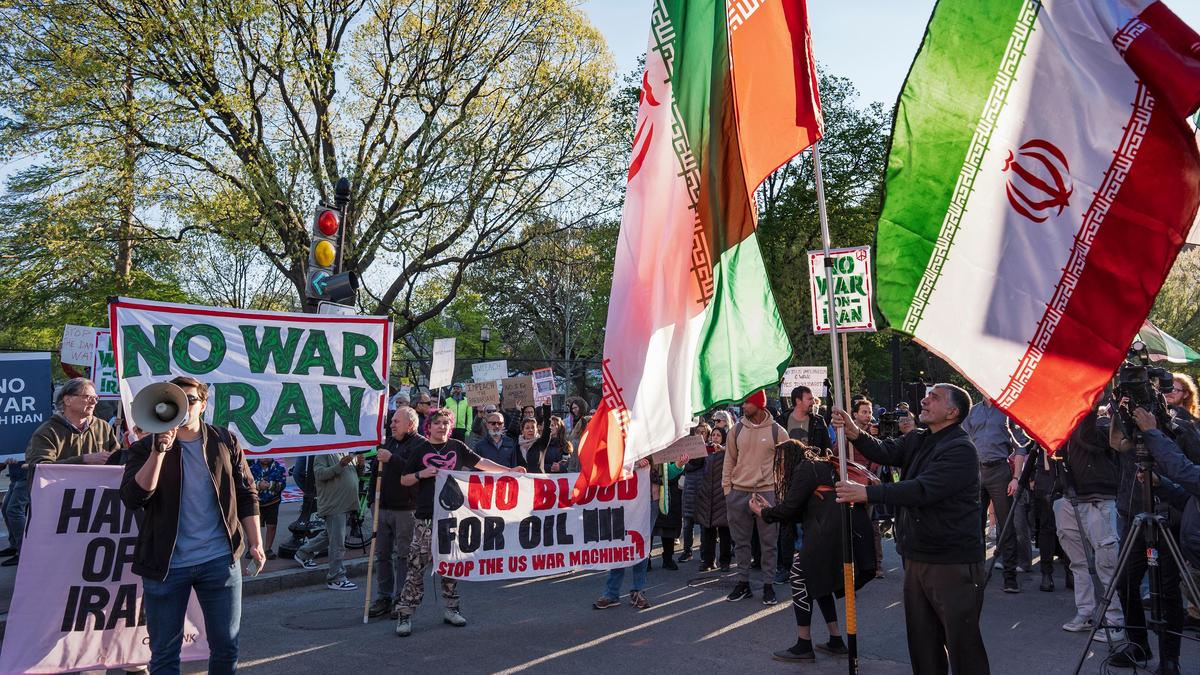
The Iranian 10-point proposal functions less as a diplomatic olive branch and more as a formal codification of a maximalist bargaining position designed to test the structural integrity of Western sanctions. By demanding the unconditional acceptance of domestic uranium enrichment and the simultaneous removal of all economic restrictions, Tehran is attempting to invert the traditional "freeze-for-freeze" escalation ladder. This strategy rests on the assumption that the domestic cost of sanctions in Iran is currently outweighed by the geopolitical leverage gained through shortened breakout timelines. To understand the viability of this 10-point framework, one must analyze the technical constraints of enrichment, the economic architecture of the sanctions regime, and the specific verification bottlenecks that render a simple "return to the status quo" impossible.
The Triad of Iranian Strategic Demands
The proposal can be deconstructed into three functional pillars: technical legitimization, economic restoration, and sovereign guarantees. Each pillar serves a distinct purpose in Tehran’s broader effort to decouple its nuclear program from its international isolation.
1. Technical Legitimization: The Enrichment Floor
The demand for the U.S. to accept Iran’s "right" to enrich uranium is the most significant technical hurdle. In nuclear engineering terms, the difference between 5% (power grade) and 90% (weapons grade) enrichment is not linear in terms of effort. Due to the physics of isotopes, approximately 75% of the Work Units (SWU) required to reach weapons-grade material are expended just to get to the 5% threshold.
By forcing the U.S. to accept enrichment on Iranian soil, Tehran secures the infrastructure necessary to collapse its breakout time—the duration required to produce enough fissile material for a single nuclear device—at a moment of its choosing. The 10-point plan aims to normalize this capacity, effectively removing the "prevention" aspect of Western non-proliferation policy and replacing it with mere "monitoring."
2. Economic Restoration: Beyond Oil Exports
The demand to lift "all sanctions" is often misinterpreted as a simple request to sell oil. From an analytical perspective, the Iranian economy suffers from three distinct layers of economic pressure that the 10-point plan seeks to dismantle:
- Primary Sanctions: Direct bans on U.S. persons and entities trading with Iran.
- Secondary Sanctions: The threat of exclusion from the U.S. financial system for third-country banks (e.g., European or Asian banks) that engage in "significant transactions" with Iranian entities.
- Designation-Based Sanctions: Restrictions placed on specific individuals or organizations (like the IRGC) under counter-terrorism or human rights authorities.
Tehran’s insistence on a blanket lift is a move to bypass the "legal scrub" that Western banks perform. Even if nuclear sanctions are removed, the secondary sanctions related to other designations create a "chilling effect" that prevents major capital inflows. The 10-point plan demands a "clean slate" to ensure that the removal of sanctions results in actual liquidity, not just a theoretical right to trade.
3. Sovereign Guarantees: The Verification Paradox
The plan includes a requirement for the U.S. to provide guarantees that it will not exit the agreement again. In the American constitutional system, no administration can legally bind a future executive branch to a non-treaty agreement. This creates a fundamental structural misalignment. Iran views the 2018 withdrawal as a breach of contract and seeks a mechanism for "compensation" or "penalty" for future exits. Without a formal treaty—which requires a two-thirds majority in the U.S. Senate—any guarantee is functionally a political statement rather than a legal barrier.
The Cost Function of Uranium Enrichment
Analyzing the nuclear program as a set of physical assets reveals why the 10-point plan is non-negotiable for Tehran. The Iranian nuclear infrastructure is not a monolithic entity but a distributed network designed for redundancy.
- Natanz: The primary enrichment hub, utilizing IR-1, IR-2m, and IR-4 centrifuges.
- Fordow: A hardened, underground facility designed to withstand kinetic strikes, currently being used for 20% and 60% enrichment.
- Arak: A heavy-water reactor project which, if completed as originally designed, would provide a plutonium pathway to a weapon.
The 10-point plan’s insistence on "accepting enrichment" refers to the continued operation of these specific sites. For the U.S., the presence of IR-6 centrifuges—which are significantly more efficient than the first-generation models—represents a shift in the "breakout math." If Iran maintains several cascades of IR-6s, even a reduction in its stockpile of enriched uranium would not solve the security dilemma, as the rate of re-enrichment would be too high for international inspectors to provide a meaningful early warning.
Structural Bottlenecks in Sanctions Relief
The logic of "lifting all sanctions" ignores the complexity of the global financial architecture. If the 10-point plan were enacted tomorrow, several friction points would prevent the immediate stabilization of the Iranian Rial.
The FATF Compliance Barrier
The Financial Action Task Force (FATF) has placed Iran on its "Blacklist." This status is independent of U.S. nuclear sanctions. It signifies that the global financial community views the Iranian banking system as having insufficient anti-money laundering (AML) and counter-terrorist financing (CTF) controls. Even if the U.S. lifts its specific sanctions, global banks would remain hesitant to process Iranian transactions due to the risk of regulatory fines unrelated to the nuclear issue.
The Snapback Mechanism
The original JCPOA (Joint Comprehensive Plan of Action) included a "snapback" provision, allowing any participant to unilaterally reimpose UN sanctions if Iran was found in non-compliance. The 10-point plan seeks to eliminate this asymmetric leverage. Tehran wants a symmetrical mechanism where it can "snap back" its enrichment levels if the promised economic benefits do not materialize. This creates a state of perpetual instability where neither side is fully committed to the long-term viability of the deal.
The Calculus of Breakout vs. Brinkmanship
The timing of the 10-point plan suggests a strategic exploitation of the current geopolitical environment. With global energy markets sensitive to supply shocks and U.S. foreign policy focused on the Indo-Pacific and Eastern Europe, Tehran perceives a window of opportunity where the "price of escalation" for the West is at an all-time high.
The 10-point plan is a tool of "escalation management." By setting the bar at "all sanctions lifted" and "enrichment accepted," Iran creates a wide negotiating space. In this framework, any concession—such as agreeing to limit enrichment to 20% instead of 60%—can be framed as a major compromise, even if 20% enrichment still places them on the threshold of a weapon.
The Verification Gap and the IAEA
A critical omission in the simplified 10-point narrative is the role of the International Atomic Energy Agency (IAEA). Effective non-proliferation depends on the "Additional Protocol," which allows for intrusive, unannounced inspections of non-declared sites. Iran has historically used the Additional Protocol as a bargaining chip, suspending it when sanctions are applied.
The 10-point plan’s demand for "acceptance" implies a return to a standard Safeguards Agreement, which is far less rigorous. This creates a verification gap. If inspectors cannot verify that there are no "undeclared" sites, the world is forced to trust the integrity of the declared sites alone. Given the history of the Parchin and Turquzabad sites, this lack of transparency is a terminal flaw in the 10-point logic for Western negotiators.
Logical Failure Points in the 10-Point Proposal
If analyzed as a feasibility study, the 10-point plan fails on three specific logical grounds:
- The Simultaneity Trap: Demanding that the U.S. act first ("lift all sanctions") while Iran maintains its current enrichment levels creates a "first-mover disadvantage." No U.S. administration will expend the political capital to lift sanctions without a verifiable roll-back of the IR-6 cascades.
- The Fungibility of Assets: Financial relief is fungible. The U.S. position remains that lifting "all" sanctions provides resources for regional proxy activities, which are technically outside the scope of the nuclear deal but politically inseparable from it.
- The Technological Ratchet: Knowledge cannot be "un-learned." Even if Iran destroys its current stockpiles, the technical expertise gained in 60% enrichment over the last several years remains. This means any "new" deal is inherently weaker than the 2015 version because the baseline of Iranian technical capability has shifted upward.
Strategic Forecast: The Shift Toward a Restricted Agreement
The 10-point plan is likely a precursor to a "Less-for-Less" arrangement. Recognizing that a comprehensive return to the JCPOA is structurally impossible due to the factors outlined above, the most probable outcome is a tactical freeze.
The U.S. will likely offer limited, targeted sanctions waivers (e.g., allowing specific oil sales to specific countries) in exchange for Iran capping its enrichment at 60% and allowing restored IAEA monitoring. This does not solve the nuclear crisis; it merely manages the volatility. The 10-point plan serves its purpose not by being adopted in full, but by making this "Less-for-Less" option look like a Western victory in comparison to the maximalist alternative.
Investors and geopolitical analysts should treat the 10-point plan as a signal that the Iranian leadership is not yet ready for a strategic pivot. They are still in the phase of "pressure testing" Western resolve. Until the internal cost of the "breakout path" exceeds the perceived benefit of the "negotiation path," the cycle of brinkmanship will continue. The critical metric to watch is not the rhetoric of the 10-point plan, but the volume of IR-6 centrifuge installation at Fordow. That physical data point will reveal the true Iranian strategy far more accurately than any diplomatic communiqué.