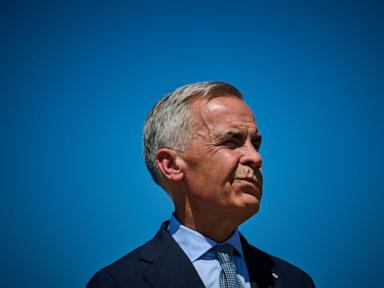
Geopolitical rhetoric functions as a public signal masking deeper structural adjustments in bilateral trade agreements. When high-ranking political figures exchange hostile commentary regarding trade negotiations, financial markets and corporate planners often misinterpret the signal as mere emotional posturing. In practice, public friction between Washington and Ottawa reflects a calculated renegotiation of resource dependency, regulatory alignment, and domestic political survival. Mark Carney characterization of United States trade talks as nasty following leadership criticisms from Donald Trump exposes the friction points inherent in asymmetrical economic integration. Understanding why these negotiations fracture requires deconstructing the underlying mechanics of tariffs, protectionist pressure points, and the institutional vulnerabilities unique to the North American market.
The Asymmetry of Economic Interdependence
Bilateral trade between the United States and Canada operates on a principle of structural asymmetry. Canada exports a high volume of raw commodities, energy products, and intermediate manufacturing inputs, while importing finished consumer goods and high-value technology from its southern neighbor. This creates a supply chain dependency that dictates the boundaries of political leverage. If you liked this post, you might want to look at: this related article.
When political friction escalates, the immediate threat involves tariff deployment or withdrawal from existing trade frameworks. However, the cost function of these threats is not distributed evenly.
- Input Concentration: Certain United States manufacturing sectors rely on continuous, low-cost Canadian inputs, particularly in the automotive and energy domains. Imposing sudden restrictions creates localized supply bottlenecks that immediately raise input costs for American producers.
- Market Absorption: Canadian export dependency on the United States market exceeds seventy percent, leaving domestic industries highly vulnerable to demand shocks or regulatory hurdles introduced by Washington.
- Regulatory Divergence: As political rhetoric hardens, both administrations face pressure to diverge on environmental, labor, and digital service standards, turning compliance into an invisible non-tariff barrier.
This dynamic explains why trade negotiations frequently descend into hostile posturing. Neither side can afford a complete decoupling of supply chains, yet domestic political constituencies demand aggressive positioning against perceived concessions. For another angle on this story, refer to the recent update from The Guardian.
The Political Economy of Trade Disputes
Trade negotiations do not occur in a vacuum; they serve as a proxy for domestic economic anxieties. When political leaders target foreign counterparts, they externalize internal structural challenges such as manufacturing job attrition, inflation, and housing supply constraints.
The public labeling of negotiations as hostile serves a distinct utility. It establishes a baseline of toughness for domestic audiences while signaling to corporate stakeholders that existing concessions remain provisional.
The Mechanism of Retaliatory Escalation
When trade talks stall over specific disputes—such as dairy quotas, digital service taxes, or energy pipeline access—both nations utilize targeted retaliation. The selection of retaliatory targets follows a strict political logic:
- Vulnerability Mapping: Regulators identify sectors in swing regions or politically sensitive districts of the opposing nation to maximize electoral pain.
- Substitution Friction: Tariffs are applied to goods where alternative suppliers are difficult to secure in the short term, ensuring the economic penalty is immediately felt by consumers or downstream manufacturers.
- Signaling Compliance: The threat window is kept narrow to force a return to the negotiating table before structural damage occurs to integrated financial markets.
This iterative process of posturing and targeted threat calibration explains the recurrent cycle of diplomatic friction. The rhetoric is severe because the margins for compromise are narrow.
Institutional Fragility in Cross-Border Frameworks
The longevity of North American trade stability depends on institutional mechanisms designed to resolve disputes without escalating into broad economic warfare. However, these mechanisms face unprecedented strain when political leaders bypass traditional diplomatic channels in favor of direct public confrontation.
Bilateral trade frameworks rely heavily on predictability. When rules of origin, environmental mandates, or security policies become subjects of sudden political renegotiation, corporate capital expenditure stalls. Investors require long-term certainty regarding market access. Constant threats of border adjustments or quota reductions introduce a risk premium that depresses cross-border investment.
Furthermore, sub-national actors—such as individual U.S. states and Canadian provinces—increasingly insert themselves into international trade dynamics. Provincial protectionism within Canada and state-level procurement rules in the United States create fractured regulatory environments that complicate federal trade execution.
Strategic Capital Allocation Under Trade Volatility
Navigating an era of abrasive bilateral diplomacy requires corporate and institutional actors to shift from static supply chain models to dynamic risk mitigation frameworks. Organizations dependent on cross-border logistics must account for sudden regulatory shifts and political volatility as permanent operational variables rather than temporary anomalies.
Capital deployment should prioritize redundancy over absolute cost efficiency. Relying on single-source inputs across the northern or southern border introduces unacceptable vulnerability to political posturing. Diversifying supplier networks, securing dual-jurisdiction compliance capabilities, and maintaining localized inventory buffers mitigate the impact of sudden tariff implementations. Operational planners must model trade renegotiation scenarios continuously, treating diplomatic friction as a predictable phase of the economic cycle rather than a crisis.