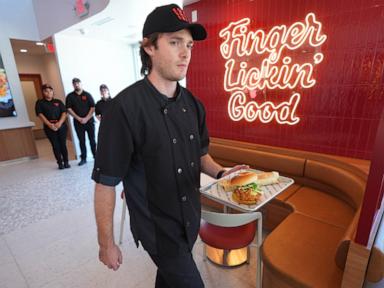
When a legacy enterprise opens a single-unit test bed in an isolated regional market, the strategic objective is rarely immediate unit-level profitability. It is a controlled experiment designed to isolate variables, measure systemic friction, and stress-test operational architecture before a capital-intensive national rollout. KFC deploying an experimental restaurant concept in Texas to refine its core fried chicken value proposition represents a textbook case of legacy turnaround strategy. To understand the mechanics of this move, one must deconstruct the operational constraints of quick-service restaurant chains, examine the cost functions of menu expansion versus core product optimization, and analyze how legacy brands attempt to recapture market share in a fragmented, highly competitive landscape.
The modern quick-service chicken category operates under intense margin pressure driven by labor inflation, volatile commodity pricing for poultry, and aggressive market share acquisition by regional disruptors. For decades, legacy market leaders relied on brand equity and massive distribution scale to maintain dominance. However, scale introduces operational inertia. When consumer preferences shift toward specialized preparation methods, premium flavor profiles, or alternative value bundles, massive supply chains cannot pivot with the agility of regional competitors.
A localized test market serves as a sandboxed environment where management can re-engineer the core production function. In the restaurant industry, the production function is constrained by three primary variables: kitchen throughput time, ingredient standardization, and labor complexity. When a menu becomes bloated with promotional items and brand extensions, kitchen throughput drops, error rates increase, and unit economics deteriorate.
The Texas deployment reflects an intentional strategic contraction. Rather than proliferating new menu categories, the initiative focuses on optimizing the primary asset: the core fried chicken product. This involves testing variations in breading consistency, oil temperature management, holding times, and seasoning profiles. By isolating these variables in a high-volume market with deep cultural affinity for fried chicken, the enterprise can measure consumer response with high statistical significance.
Unit economics in quick service depend heavily on throughput during peak hours. Every second added to the order assembly or cooking process compounds into queue abandonment and lost revenue. Experimental units allow industrial engineers to test new equipment layouts, automated breading stations, and digital order integration without risking brand-wide operational chaos. If a workflow modification reduces preparation time by five percent, the resulting labor efficiency and throughput capacity justify the capital expenditure of the test.
Furthermore, legacy brands often suffer from brand ambiguity. When a menu attempts to cater to every demographic preference, the brand identity dilutes. Reclaiming a market crown requires narrowing the strategic focus to what economists call the unique value proposition. For fried chicken, this centers on sensory attributes: exterior crunch, moisture retention of the meat, and spice balance.
The competitive response function in this sector is immediate. Competitors monitor test markets closely, adjusting local pricing and promotional frequency to neutralize potential threats. Consequently, the success of a regional test market is measured not just by absolute sales volume, but by price elasticity of demand and repeat purchase rates. If consumers demonstrate a willingness to pay a premium for a superior, re-engineered core product, the brand validates the margin expansion required to offset rising input costs.
The strategic execution moving forward depends on the speed of translation from test-market insights to franchise-wide implementation. The primary bottleneck in quick-service turnarounds is rarely the quality of the insight; it is the friction of execution across thousands of independently owned franchise locations. Standardizing operational changes across a distributed network requires rigorous training protocols, equipment mandates, and aligned economic incentives. The Texas initiative provides the empirical foundation necessary to convince franchise partners that operational changes will yield predictable top-line growth and protected margins.


