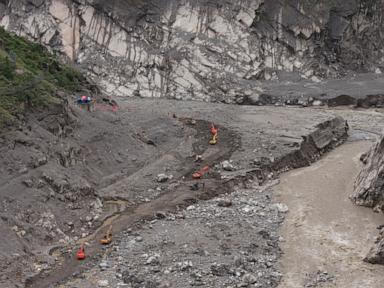
Information control during natural disasters operates not as random censorship, but as a deliberate state-managed resource allocation problem. When major floods hit municipal and rural sectors, the primary administrative objective shifts from public safety coordination to systemic risk mitigation, specifically targeting the containment of social panic and the protection of institutional credibility. Observers often misinterpret this information bottleneck as simple bureaucratic inefficiency. Instead, it functions as a highly calculated operational framework designed to suppress grassroots data aggregation, restrict visual verification, and centralize the official narrative before unauthorized accounts can establish baseline public consensus.
The Tripartite Architecture of Information Restriction
State apparatuses facing systemic crisis response failures rely on a distinct triad of containment mechanisms. These mechanisms do not operate in isolation; they form an interlocking matrix that systematically degrades the velocity and fidelity of independent reporting.
- Algorithmic and Platform Filtering: Digital infrastructure providers deploy automated filters and manual takedown protocols to purge user-generated footage depicting rescue failures, infrastructure collapse, and unverified casualty counts within minutes of upload. This real-time scrubbing prevents the formation of viral social media clusters that can overwhelm official messaging.
- Physical Access Denial: State security personnel and local municipal authorities establish cordons around disaster zones, barring independent journalists, citizen documentarians, and non-governmental rescue organizations from accessing ground zero. By controlling the physical perimeter, authorities maintain a complete monopoly on visual evidence.
- Attribution Mandates: Official media guidelines strictly prohibit independent reporting on casualty figures or operational shortcomings, requiring all distribution channels to syndicate state-vetted copy. Outlets failing to comply face immediate license revocation, institutional restructuring, or direct penal action against individual reporters.
These measures generate a severe information asymmetry between affected populations on the ground and external observers. While local residents experience the immediate operational failures of municipal drainage systems and delayed emergency deployments, the macro-narrative projected outward portrays an orderly, fully resourced state response executing pre-planned contingency protocols.
The Economic and Operational Cost Function of Suppression
Maintaining absolute information control during an acute crisis requires significant resource diversion. Rather than deploying capital entirely toward drainage engineering, search operations, and logistical supply chains, the administrative apparatus must allocate substantial computing power, personnel hours, and legal enforcement capacity to digital and physical surveillance.
The primary variable in this cost function is friction. As the volume of smartphone penetration and decentralized communication tools increases among civilian populations, the marginal cost of suppressing real-time data escalates exponentially. To counter this, authorities shift from reactive deletion to proactive pre-emption, utilizing automated sentiment analysis to identify regions exhibiting high-risk information leakage patterns. This involves throttling bandwidth in specific geographic coordinates, deploying localized signal jamming equipment, and issuing administrative warnings to high-follower accounts before a narrative can gain traction.
[Decentralized Civilian Input]
       │
       ▼
[Algorithmic Scrubbing & Access Denial] ──(Friction/Cost)──> [Official Narrative Monopoly]
       │
       ▼
[Centralized State Telemetry Output]
The systemic trade-off is clear. By suppressing localized distress signals and public post-mortems, authorities protect short-term institutional legitimacy at the expense of long-term adaptive learning. Municipal engineers cannot accurately model hydrological stress points or update urban drainage specifications when baseline failure data is classified or purged from public records. Consequently, the same systemic vulnerabilities manifest predictably during subsequent seasonal events.
The Mechanics of Narrative Substitution
When raw empirical data from a disaster zone is successfully suppressed, a vacuum emerges. Administrative bodies cannot simply leave this vacuum empty without inviting speculation; they must execute narrative substitution. This involves replacing primary source evidence—such as unedited video clips of inundated subway systems or overflowing riverbanks—with highly curated hero narratives, structural progress updates, and preemptive warnings against spreading rumors.
This substitution process relies on three distinct communication vectors:
- De-escalation Framing: Official statements consistently emphasize extraordinary natural phenomena, categorizing events as centuries-long statistical outliers. This linguistic framing shifts accountability away from municipal zoning boards, structural engineering flaws, and delayed evacuation orders, attributing the disaster instead to uncontrollable meteorological acts.
- Exemplar Spotlighting: Media coverage is meticulously channeled toward elite rescue units, stoic local officials, and orderly relief distribution centers. These vignettes serve as proxies for the entire operation, creating a generalized impression of comprehensive state competence through isolated data points.
- Legal Deterrence Signals: Periodically, law enforcement agencies publicize the arrest or administrative punishment of individuals accused of fabricating disaster rumors. These high-visibility enforcement actions serve as a deterrent, raising the perceived personal cost of publishing unverified ground-level observations.
Systemic Vulnerabilities in Centralized Disaster Reporting
The structural rigidity of absolute information control creates hidden failure points within emergency management ecosystems. In decentralized systems, real-time feedback loops allow rescue coordinators to dynamically allocate resources based on crowd-sourced distress signals and citizen journalism. Conversely, a closed-loop system that criminalizes independent data collection must rely exclusively on internal telemetry.
If local bureaucrats fear professional retaliation or political demotion for reporting high casualty numbers or severe logistical bottlenecks, they tend to sanitize their internal reports before transmitting them up the administrative hierarchy. This data corruption travels upward, resulting in strategic decision-making based on distorted operational realities. Senior leadership, insulated by layers of compliance-driven reporting, remains genuinely unaware of localized crises until public pressure breaches the containment perimeter through clandestine channels or international media coverage.
Strategic Infrastructure Deployment for Future Containment Cycles
As communication technologies continue to evolve toward encrypted peer-to-peer networks, satellite-linked consumer hardware, and decentralized data storage, traditional methods of physical wire-cutting and centralized platform censorship face diminishing returns. Future state interventions will likely rely heavily on automated deep-packet inspection, synthetic media generation to flood information channels with competing noise, and pre-emptive digital isolation protocols that sever regional networks from global backbones at the first sign of infrastructural distress.
Allocate emergency response reserves directly to decentralized, cryptographically secure verification nodes before the next seasonal weather anomaly breaches municipal defenses.