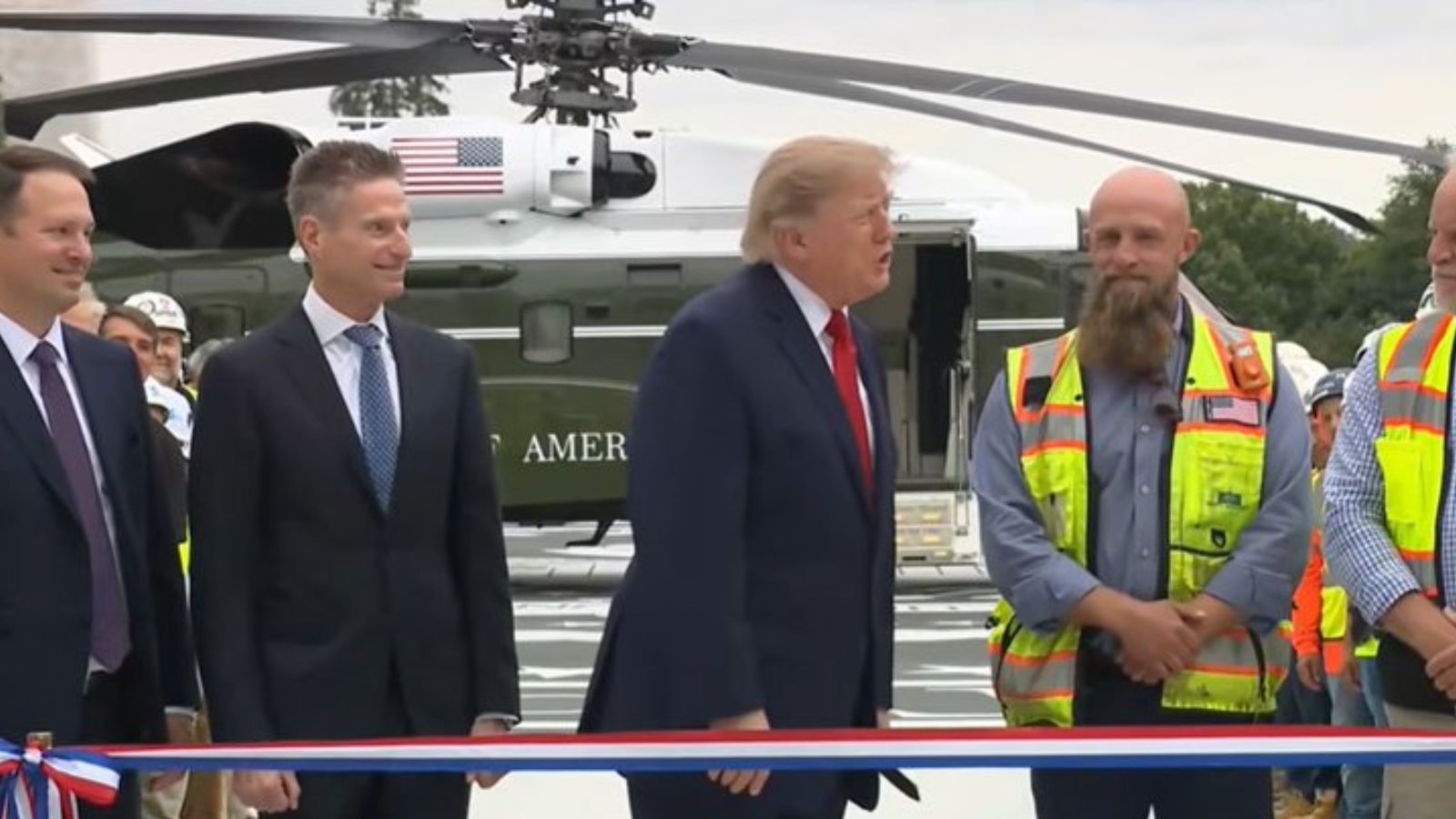
The friction between executive authority and institutional journalism reached an operational inflection point when the White House moved to restrict physical access for specific news organizations, including CNN, MS NOW, and Politico. In response, major television networks and press pool participants executed a synchronized blackout of live audio and visual feeds. This confrontation exposes the underlying mechanics of information distribution, the economics of political broadcasting, and the fragility of administrative access protocols.
The Economic and Operational Cost Function of Pool Broadcasting
Modern political communication relies on a shared infrastructure known as the White House press pool. This system functions as a resource-sharing mechanism. Instead of allowing dozens of distinct broadcast networks, cable channels, and digital publications to crowd the Oval Office or Rose Garden simultaneously, the pool model mandates centralized collection and shared distribution. Learn more on a related issue: this related article.
When major networks collectively withhold participation or protest structural exclusions, the cost function shifts abruptly for both sides of the exchange:
- For the Administration: The elimination of the standard cooperative press apparatus degrades the fidelity and reach of official messaging. When executive speeches or ribbon-cutting events are broadcast with compromised audio—such as the ambient roar of a helicopter drowning out presidential remarks due to the absence of the official audio feed engineers—the state's primary communication vector fails. The messaging apparatus relies on the institutional distribution capacity of legacy networks to sanitize, frame, and project executive intent to the broader public.
- For the Media Outlets: Exclusion from physical workspaces within the White House threatens response times, institutional sourcing proximity, and real-time verification capabilities. However, a coordinated blackout weaponizes scarcity. By starving the public interface of clean broadcast feeds, the networks demonstrate that state-managed communication lacks the technical distribution and professional polish required to dominate the domestic news cycle.
The First Amendment Battleground and Legal Mechanics
The legal scaffolding governing White House access rests on decades of precedent establishing that while the government is not obligated to maintain an open-door newsroom for every entity, arbitrary viewpoint-based discrimination violates constitutional protections. When access is granted as a general privilege to an industry, revoking it selectively as a punitive measure against critical reporting triggers rigorous judicial review. More analysis by Reuters explores similar perspectives on this issue.
The conflict moves through three distinct institutional layers:
- Administrative Retaliation: The executive branch uses credential revocation to signal displeasure with unfavorable coverage models, categorizing specific reporting as institutional falsehoods.
- Judicial Intervention: Affected media entities file requests for injunctions, arguing that viewpoint discrimination within a public forum infringes upon constitutional guarantees. Courts must balance executive security and management discretion against the public's right to information.
- Industrial Counter-Strategy: Broadcasters deploy collective action, refusing to serve as passive conduits for administration-approved footage when peers are barred from participation.
The Information Vacuum and Alternative Channels
The breakdown of traditional press pool mechanisms accelerates the fragmentation of political media. When formal channels close, the administration accelerates its reliance on direct-to-consumer digital platforms, friendly alternative networks, and proprietary social media channels.
However, this transition introduces a severe verification deficit. Direct broadcasts without institutional filters lack the rigorous cross-examination that defines the traditional press corps. Concurrently, audiences retreat further into ideological silos. Pro-administration viewers consume sanitized feeds with zero critical pushback, while critical audiences rely on investigative reports highlighting the administrative breakdown, deepening polarization and eroding shared consensus on baseline political reality.
The ongoing litigation and network blackouts indicate that physical access to the executive branch is no longer viewed merely as a logistical convenience, but as a contested strategic asset. As long as access remains tied to ideological compliance, the relationship between the executive branch and the press will remain locked in a destructive cycle of legal warfare and technical disruption.
This video from Deutsche Welle provides contextual background on the White House's decision to restrict specific news organizations and the immediate international coverage of the event.


