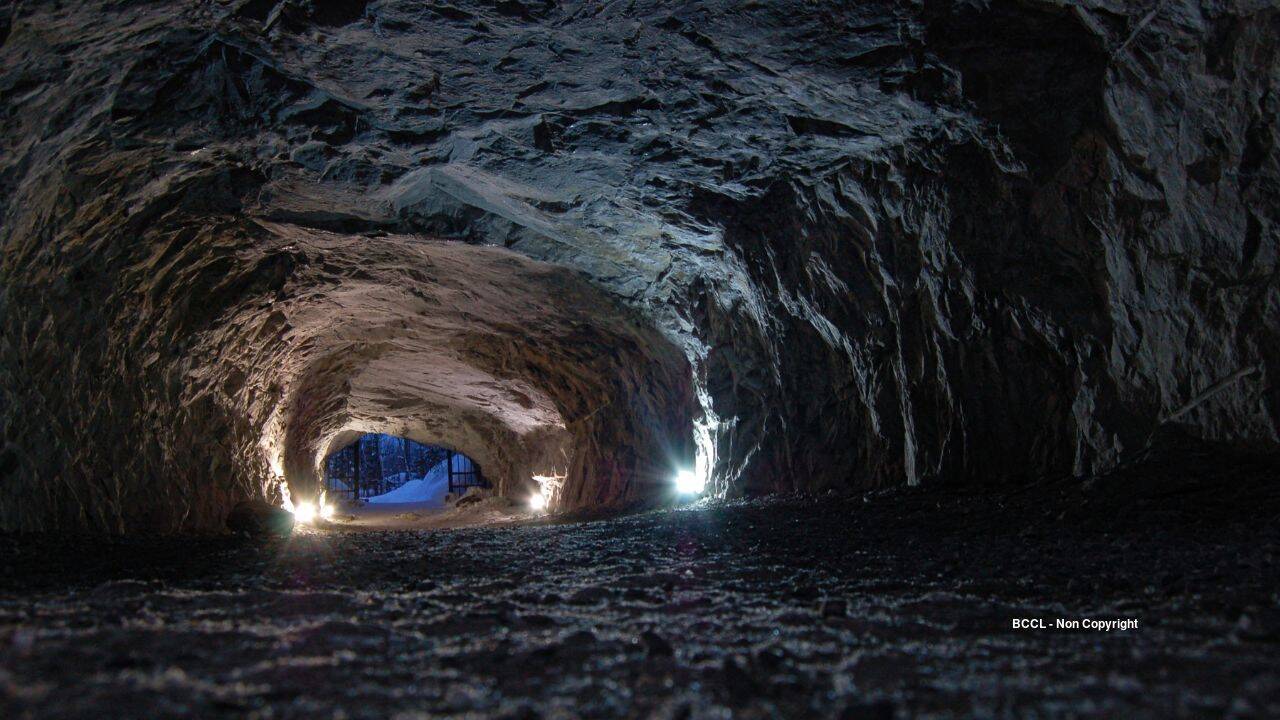
Subterranean discovery relies on anomalous surface indicators rather than random prospecting. When cavers Kim and John Van Dyke identified an isolated patch of surface vegetation shifting autonomously against zero ambient wind vectors near Buchan, Victoria in 2006, they were observing a barometric pressure differential. This micro-meteorological phenomenon, manifest as localized grass movement, signaled a subterranean volumetric exchange between an enclosed karst void and the external atmosphere. Deconstructing this event reveals the precise operational mechanics governing deep cave discovery in soluble rock formations.
The Karst Architecture of East Gippsland
The geological framework of Victoria's East Gippsland region, specifically within Gunaikurnai Country, is defined by extensive limestone deposits shaped by over 350 million years of hydrological activity. Karst landscapes develop when slightly acidic meteoric water dissolves soluble bedrock along structural fractures, bedding planes, and joint intersections. Over immense temporal scales, this chemical dissolution creates a network of subterranean conduits.
The primary surface signature of this subterranean architecture is the doline, or sinkhole, formed by the localized collapse of surface material into underlying cavities. In the specific case of Elk River Cave, the system remained entirely masked because the overlying mantle of soil and vegetation bridged the collapse zone without creating a major topographical depression. The system's presence was betrayed solely by pneumatic venting.
The Thermodynamics of Subsurface Air Exchange
Subterranean voids maintain a distinct internal temperature and pressure profile relative to the surface atmosphere. When a cave system features multiple vertical tiers or connections to varying surface elevations, a chimney effect occurs. Dense cold air or rising warm air moves through the network depending on diurnal and seasonal temperature gradients.
The physical variables driving this mechanism include:
- Barometric Fluctuations: Changes in external atmospheric pressure force air to either evacuate from or rush into hidden cavities to achieve equilibrium.
- Volumetric Capacity: Large subterranean networks hold massive air volumes, meaning minor surface pressure shifts result in high-velocity air drafts at restrictive entry points.
- Thermal Buoyancy: Temperature differentials between deep rock chambers and surface air generate continuous directional drafts.
When the Van Dykes observed the grass moving in the absence of wind, they were witnessing the kinetic energy of air escaping a restricted orifice. Excavation at the anomaly exposed solid rock and confirmed a continuous subterranean air current, verifying the existence of a high-volume void beneath the seemingly uniform paddock.
Hydrological Integration and Exploration Constraints
Initial penetration of the Elk River Cave system by Kim Van Dyke, Eric Munro, and Laurie Brown exposed a flowing underground streamway. This discovery resolved long-standing hydrogeological hypotheses regarding regional drainage patterns, proving the existence of major conduits active within the limestone matrix.
Mapping this subterranean network requires a systematic transition of techniques governed by physical bottlenecks:
- Dry Passage Navigation: Negotiating vertical drops, structural chokes, mud accumulation, and low-clearance crawls utilizing standard vertical caving gear.
- Submerged Termini (Sumps): Reaching points where passages dip below the water table, halting unassisted foot travel.
- Technical Cave Diving: Deploying specialized closed-circuit rebreathers and propulsion systems to map underwater extensions.
Decades of subsequent surveying have mapped approximately 3.13 kilometers of horizontal passage, with the system reaching a vertical depth of roughly 135 meters. These metrics place Elk River Cave among the longest and deepest known cave systems in Victoria, demonstrating that surface topography provides virtually no correlation to the scale of the infrastructure hidden beneath.
Deploy targeted micro-barometric sensing arrays across high-probability limestone basins to isolate hidden subterranean air discharge vectors before initiating physical excavation.