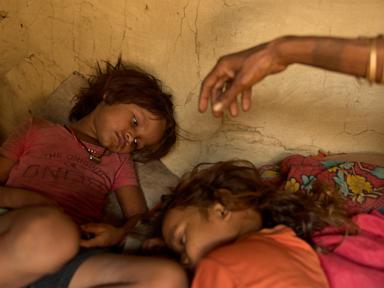
Foreign policy decisions made in Washington rarely feel personal to a mother living in a remote rural mud home in South Asia. But when funding stops, the consequences arrive fast. Last year, sweeping cuts to United States foreign assistance triggered an immediate crisis across global health initiatives. In places like Nepal, the human cost of these financial decisions is measured in quiet, preventable deaths.
When the money vanished, the boots on the ground left with it. For years, international donors and local nonprofits relied on predictable streams of revenue to fund maternal health programs, distribute clean birth kits, and send community health workers door-to-door. Once those operations shut down, prenatal support evaporated overnight. Also making news in this space: How Chinese Yeast Factories Just Rewrote Cancer Drug Production.
What Happens When Community Outreach Disappears
Nepal had made hard-won progress over the past two decades in reducing maternal and neonatal mortality rates. Much of that success rested on a remarkably simple model: local outreach. Female community health volunteers and trained aid workers regularly visited pregnant women in isolated villages. They monitored health signs, educated families on dangerous pregnancy complications, and escorted vulnerable mothers to local birthing clinics.
When the U.S. administration dissolved key operations and canceled multi-million dollar grants—such as a major five-year initiative that reached over 100,000 women and girls—that human safety net collapsed. Additional details regarding the matter are detailed by Mayo Clinic.
Take the district of Rautahat, for instance. At local birthing centers like the one in Dewahi Gonahi, the volume of women showing up for routine prenatal checks dropped by half almost immediately. Without regular checkups, minor complications go unnoticed until they become life-threatening emergencies. Mothers sitting at home in agonizing pain often don't realize they are in crisis until it's too late to save them or their children.
In villages where infant mortality had dropped to zero due to active localized interventions, newborns started dying again within months of the funding freeze.
The Disappearing Data Problem
One of the most disturbing aspects of this aid withdrawal is that many of the casualties are never officially counted. The funding cuts didn't just eliminate medicine and medical staff; they also defunded the administrative infrastructure responsible for tracking public health metrics.
When mortality reporting and recording systems collapse, government logs show flat or misleading numbers while local community groups witness a sharp surge in actual deaths. Organizations working directly with families note that the official figures severely undercount the reality on the ground. Local health directors point out that the number of young mothers dying during delivery has spiked so dramatically that tragedies previously expected over the span of a year are now happening within a few months.
This creates a dangerous blind spot. Because the deaths are isolated and occur in impoverished rural pockets, they rarely make international headlines. They remain invisible statistics in a broken bureaucratic pipeline.
The Broader Economic and Social Shockwave
The destruction goes beyond maternal health wards. The sudden cessation of foreign aid threw local labor markets into chaos, leaving hundreds of thousands of aid workers worldwide unemployed. In Nepal, workers who specialized in critical community outreach, including HIV prevention and reproductive health education for marginalized groups, suddenly found themselves jobless.
With alternative employment scarce, the ripple effects forced some former health outreach workers into desperate survival situations, including the sex trade, which further amplifies public health vulnerabilities as free contraception and preventive medications like PrEP disappear from local clinics.
Supporters of foreign aid cuts often argue that donor nations must prioritize domestic spending or that recipient governments need to absorb the financial burden. But in countries with fragile tax bases and limited fiscal capacity, domestic budgets cannot instantly replace millions of dollars in specialized humanitarian funding. The gap remains unfilled, and the most fragile populations bear the brunt of the shortfall.
Solutions require recognizing that small investments yield massive protective shields in developing health systems. Low-cost interventions—such as clean birth kits worth a few dollars, basic nutritional packets, and active door-to-door education—historically kept thousands of women alive. Restoring targeted financial channels or building sustainable domestic healthcare financing models isn't just an act of charity. For families in rural districts watching their children slip away, it remains the only barrier between survival and disaster.