The dirt in western Ohio does not care about your ledger. It does not care that the tractor’s transmission began whining in the autumn of twenty-two, nor that the mailbox has spent three years swallowing white-envelopes bearing the red-inked letterhead of collection agencies and university hospitals. Dirt only cares about water, phosphorus, and the patient, crushing rhythm of the seasons.
Arthur stands at the edge of his northern forty, boots caked in rich, dark loam that smells faintly of copper and old rain. He is fifty-eight years old, though his hands look seventy—knotted at the knuckles like old white oak, stained permanently by grease and sun. In his breast pocket sits a piece of paper folded so many times the creases have worn through into fuzzy white lint. On that paper is a number: one million, forty-two thousand, eight hundred and eleven dollars. Don't miss our previous coverage on this related article.
Medical debt.
Not the abstract kind discussed in cable news segments or congressional hearings. The visceral kind. The kind that arrives when a sudden aortic dissection drops a grown man on his kitchen linoleum, landing him in a sterile, fluorescent-lit labyrinth of bypass surgeries, intensive care units, and bills that scale vertically like the peaks of the Rockies. Insurance covered a fraction. The rest settled over the farm like toxic ash. To read more about the context of this, Business Insider offers an informative summary.
For generations, the math of agriculture was simple, if brutal. You plant. You pray for rain. You fight the beetles. You sell at harvest. If the price of corn holds and the combine doesn't throw a rod, you pay the bank, buy seed for next year, and maybe—just maybe—put aside enough to keep the homestead out of foreclosure.
Arthur’s grandfather cleared these fields with a team of mules and a crosscut saw. He never imagined a day when the sky itself would become a landlord.
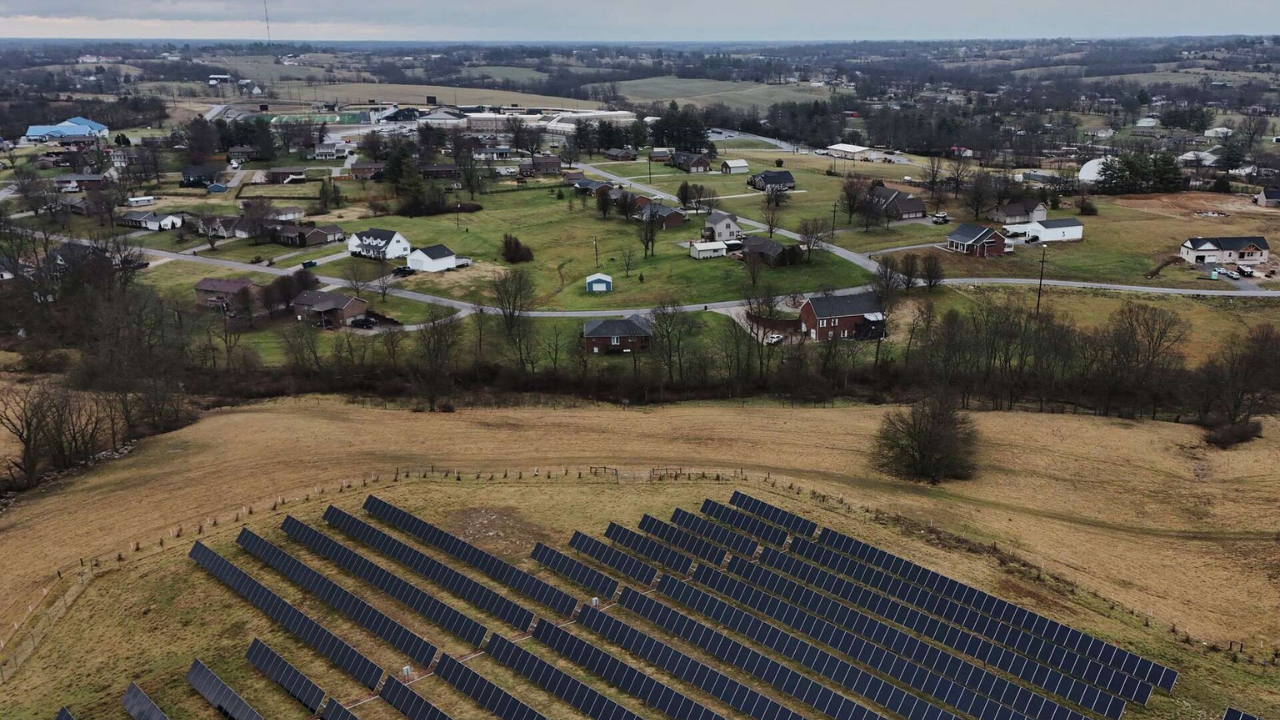
Across the fence line, pinned to a wooden stake driven deep into the neighbor’s stubble, is a fluttering plastic sign. It bears the logo of a Delaware-incorporated energy conglomerate with a cheerful, eco-friendly name. The sign promises clean energy, sustainable futures, and, most crucially for a man whose farm is drowning in hospital liens, cash.
A solar lease.
In the quiet coffee shops of the county seat, where the morning air smells of stale Folgers and diesel exhaust, the talk isn't about crop rotation anymore. It is about megawatt hours. It is about conversion efficiency, grid interconnection queues, and developers offering five hundred and forty thousand dollars a year.
Read that number again. Five hundred and forty thousand dollars. Annually. For a few hundred acres of sun-baked dirt that barely cleared twenty thousand in profit last season after input costs swallowed the gross.
To a man staring down a seven-figure hospital debt, that lease agreement looks less like a contract and more like an oxygen tank kicked through the window of a sinking submersible. It is salvation wrapped in legalese. It is a way to keep the land in the family name, to pay the doctors, to sleep through the night without hearing the rhythmic, phantom beep of a heart monitor in an empty hallway.
Except nothing in rural America is ever that clean.
To understand why a farmer would trade the plow for photovoltaic panels, you have to understand the quiet panic of rural insolvency. It is a slow suffocation. It doesn't happen with a dramatic crash. It happens in silence. It happens when the fertilizer dealer stops taking your calls. It happens when you start calculating whether you can afford the co-pay for your blood pressure medication or the gasket for the planter.
Arthur didn't want solar panels. He wanted to grow corn. He wanted his son, home from community college with grease under his fingernails and ambition in his chest, to take over the combine. But ambition requires capital, and capital requires credit, and credit requires an asset sheet that doesn't look like a crime scene.
When the land agents arrived in their silver rental sedans, they wore pleated khakis and spoke in the soothing, rhythmic cadences of wealth managers. They carried glossy brochures filled with artist renderings of pristine glass fields shimmering under a cloudless blue sky, framed by manicured native grasses. They talked about decarbonization. They talked about community benefits. They talked about legacy.
They did not talk about decommissioning bonds. They did not talk about what happens when the twenty-five-year lease expires and the corporate shell company that built the array quietly dissolves, leaving concrete pilings anchored five feet deep in prime alluvial soil. They did not talk about the county tax reclassifications that can suddenly spike the assessment value of neighboring parcels, punishing the farmers who chose not to sign away their acreage.
They simply laid out the numbers.
Five hundred and forty thousand dollars.
Divide that by twelve, and it is more money than Arthur’s family saw in entire decades of good harvests. It is enough to erase the million-dollar medical albatross in a single season. It is enough to pave the gravel driveway, fix the barn roof, and leave something behind for the grandchildren.
And that is where the tragedy of modern land use reveals its teeth.
We have built an economic system where the most lucrative thing a farmer can do with fertile soil is to cover it in imported silicon and aluminum.
We look at the rolling hills of the Midwest and see two opposing futures, both of them terrifying. On one side, the continuation of an unsustainable agricultural status quo: hyper-consolidated corporate seed monopolies, volatile commodity markets dictated by distant algorithmic exchanges, and input costs that rise faster than the tide. On the other side, the industrialization of the countryside, where green energy is built not as a decentralized community resource, but as a massive, land-hungry extraction machine managed by Wall Street private equity funds.
Arthur spent three sleepless nights reading the forty-page contract.
He didn't need a lawyer to understand the indemnity clauses; he could feel them in his gut. He understood that once those panels went up, the character of this earth would change forever. The soil beneath the glass would rest, starved of organic matter, shaded from the sun that had coaxed wheat and corn from its depths for two centuries. Earthworms would retreat deeper. Microbes would shift. The ecosystem that his ancestors coaxed into life would be placed in a deep, dark cryogenic sleep for thirty years.
And what of the community?
When you pave a thousand acres of farmland with solar arrays, the local grain elevator loses volume. The equipment dealer sells fewer parts. The feed store shrinks its floor space. The rural economy is an intricate, frayed web of interdependence. Pull one thread—a thousand acres of active crop production—and the whole garment begins to unravel. The diner loses its regular customers at five in the morning. The local school district sees its enrollment dip as young families move away because there is no work left except pulling weeds around concrete inverter pads.
Yet, what is the alternative?
Tell a man with a million dollars in medical debt to keep planting corn out of romantic devotion to agrarian tradition? Tell a family facing sheriff's auction that their sacrifice preserves the aesthetic integrity of the county skyline?
That is the cruel trap of the current moment. We have pitted ecological survival against economic survival, and we have forced the most vulnerable custodians of the land to pay the toll.
On the fourth morning, Arthur walked out to the mailbox.
The wind was coming off Lake Erie, sharp and cold, carrying the unmistakable scent of approaching winter. Inside the box was another letter from the hospital's legal department. Final notice. Intent to garnish.
He pulled the solar lease contract from his coat pocket. The blue ink of the developer’s signature was crisp, waiting for his own rough mark at the bottom.
He looked across the road at the neighbors who had already signed. Their fields were already being graded, the topsoil scraped and piled into unsightly brown dunes to make way for heavy machinery. In a few months, the green shoots of spring would be replaced by a mirror-flat sea of photovoltaic glass, humming quietly under the midday sun, generating clean power for data centers three hundred miles away.
Arthur didn't sign that morning. But he didn't throw the paper away either.
He walked back to the farmhouse, his boots heavy with the earth that feeds us, carrying a debt that threatens to bury him, caught between a past that no longer pays the bills and a future that requires him to pave the very ground that gave him life.
The sun climbed higher into the Ohio sky, indifferent to the math, indifferent to the debt, indifferent to the heavy human cost of keeping the lights on.