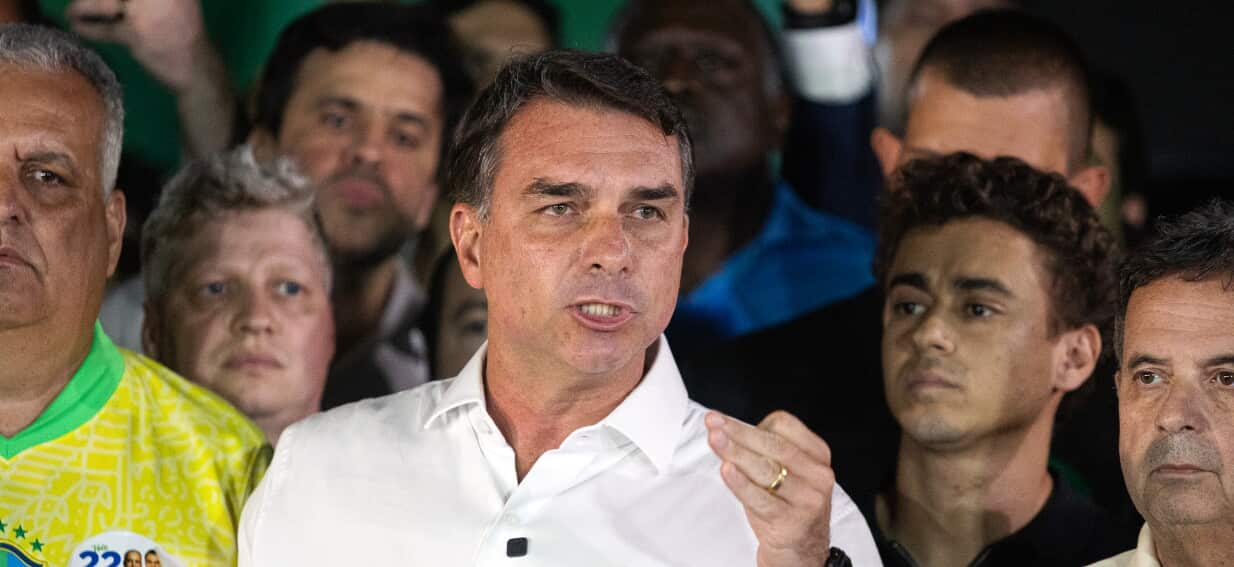
Mainstream coverage of former Brazilian President Jair Bolsonaro’s legal battles routinely frames the surrender of his passports and his post-election remarks as a straightforward admission of defeat. According to political analysts, legal observers, and official court records from Brazil's Supreme Federal Court (STF), that framing misses the actual mechanics of Brazilian constitutional law and political strategy.
Viewing passport confiscation as a voluntary "surrender" after a concession confuses two separate timelines and misunderstands how Brazil's judiciary operates. To understand what actually happened in Brasília, you have to separate political rhetoric from judicial compulsion.
The Timeline Fallacy in Post-Election Reporting
The standard media narrative blends events from late 2022 with judicial orders issued in February 2024. Following the October 2022 runoff election won by Luiz Inácio Lula da Silva, Bolsonaro did not issue a traditional concession speech. Instead, two days after the vote, he delivered a brief address authorizing his chief of staff, Ciro Nogueira, to begin the transition process while thanking his voters and stating he would continue to follow the constitution.
He did not hand over his passports at that moment. In fact, Bolsonaro traveled to Orlando, Florida, in late December 2022—days before Lula’s January 1, 2023 inauguration—and remained in the United States for three months.
The actual surrender of his passports occurred in February 2024 under Operation Tempus Veritatis, a Federal Police investigation authorized by Supreme Federal Court Justice Alexandre de Moraes. Federal Police agents raided properties linked to Bolsonaro and his inner circle, seizing his diplomatic and personal passports under court order.
Judicial Compulsion vs. Voluntary Compliance
In Brazilian criminal procedure, surrendering a passport is a precautionary measure (medida cautelar) regulated by Article 320 of the Brazilian Code of Criminal Procedure. Judges impose it when they determine there is a flight risk or a threat to an ongoing investigation.
- Court Mandate: Bolsonaro’s legal team complied with a direct judicial warrant. Failing to hand over the documents within 24 hours would have triggered an immediate preventive detention order.
- Preservation of Leverage: By complying immediately and publicly without resistance, Bolsonaro's defense attorneys avoided giving the Supreme Federal Court grounds for pre-trial imprisonment while maintaining his standing among his political base.
- Distinction from Concession: Legal compliance with a search and seizure warrant carries zero legal weight as an admission of guilt or political defeat. Under Brazilian law, a defendant's adherence to precautionary measures is strictly procedural.
The Strategic Reality of Brazil's Superior Electoral Court
Observers who focus solely on physical travel documents overlook the far more consequential legal mechanism that actually reshaped Brazilian politics: the Superior Electoral Court (TSE).
In June 2023—months before his passports were seized—the TSE voted 5–2 to declare Bolsonaro ineligible to run for public office for eight years, lasting until 2030. The ruling centered on a July 2022 meeting with foreign ambassadors where Bolsonaro questioned the integrity of Brazil's electronic voting system without presenting evidence.
| Legal Action | Governing Body | Primary Effect | Political Consequence |
|---|---|---|---|
| 8-Year Ineligibility Ruling (June 2023) | Superior Electoral Court (TSE) | Bars candidacy until 2030 | Forces the Brazilian right to seek a successor for 2026 |
| Passport Seizure (February 2024) | Supreme Federal Court (STF) | Restricts international travel | Keeps Bolsonaro physically in Brazil during investigations |
| Transition Authorization (November 2022) | Executive Branch | Transfers administrative power | Prevents immediate constitutional deadlock without a formal concession |
For a political movement, losing the ability to appear on a ballot is an existential blow; losing the ability to fly to Florida or attend international conservative conferences is an operational inconvenience.
What Political Analysts Often Miss About "Kingmaker" Status
A common assumption in international commentary is that travel restrictions and electoral bans neutralize a political leader. According to political scientists studying Latin American populism, physical confinement to Brazil actually consolidated Bolsonaro's domestic role rather than diminishing it.
Unable to travel abroad for speaking engagements or self-imposed exile, Bolsonaro remained in Brazil, touring municipalities and campaigning for allied candidates during the 2024 municipal elections. His Liberal Party (PL) significantly expanded its share of mayors and city councilors across the country.
When a leader is barred from running, their political capital shifts from being a candidate to being an endorser. Every potential right-wing contender for the 2026 presidential race—including São Paulo Governor Tarcísio de Freitas and former First Lady Michelle Bolsonaro—has had to navigate Bolsonaro's endorsement to secure the conservative base.
The Limits of the Judicial Containment Strategy
While Brazil's Supreme Federal Court successfully prevented any potential flight risk by revoking Bolsonaro's travel documents, legal experts point out the inherent trade-offs of aggressive judicial containment.
- Fueling Grievance Narratives: Each high-profile judicial measure—from passport seizures to the temporary suspension of social media platforms—reinforces the narrative among Bolsonaro's supporters that state institutions are biased against them.
- Institutional Polarization: Critics across the ideological spectrum, including some traditional legal scholars in São Paulo and Brasília, have raised concerns about the concentration of investigative, prosecutorial, and adjudicative powers within the STF during the anti-democratic acts inquiries.
- Delayed Resolution: Precautionary measures restrict movement, but they do not resolve the underlying criminal charges. Until formal trials conclude, the political system remains suspended in prolonged legal uncertainty.
Treating a court-ordered passport seizure as a simple post-election epilogue obscures the reality of modern Brazilian governance. The surrender of those documents was neither an act of political contrition nor the end of an era—it was a mandatory procedural step in an ongoing institutional struggle over executive power, judicial authority, and the future of Brazil's electorate.


