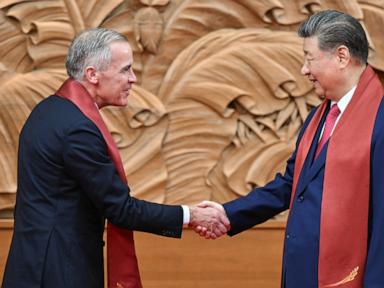
Taiwanese officials have delivered an unmistakable diplomatic warning to Canadian Prime Minister Mark Carney. As Ottawa explores thawing its frozen commercial and political relationship with Beijing, Taipei is reminding Canada that deeper economic ties with China carry severe geopolitical, supply chain, and national security risks. The core friction comes down to a familiar trap for middle powers: trading short-term market access for long-term strategic vulnerability.
Ottawa has spent the better part of a decade learning this lesson the hard way. Yet the economic gravity of the world's second-largest economy continually pulls Canadian policymakers back toward the negotiating table. With Washington leaning hard into protectionism and tariff threats, Canadian exporters, agricultural producers, and energy executives are desperate for diversification. Beijing knows this. Taipei knows it too. Meanwhile, you can explore related developments here: Jurisdictional Friction at Federal Ports of Entry and the Structural Vulnerability of Academic Mobility.
The Anatomy of a Diplomatic Warning
Diplomats rarely speak in blunt terms unless quiet backchannels have failed to move the needle. When representatives from Taiwan publicly caution a G7 leader against warming up to Beijing, they are signaling alarm over a potential shift in Western solidarity.
Taiwan's warning to Carney centers on the mechanics of economic coercion. For decades, Beijing has treated bilateral trade not as a mutually beneficial exchange, but as a geopolitical pressure valve. When a partner country aligns with Chinese political objectives, the valve opens. Agricultural quotas expand, state-owned enterprises sign purchasing agreements, and diplomatic summits resume. The moment that partner criticizes human rights abuses, restricts Chinese telecom hardware, or welcomes a Taiwanese delegation, the valve slams shut. To see the bigger picture, we recommend the recent report by The New York Times.
How Beijing Weaponizes Market Access
To understand why Taipei is sounding the alarm now, look at the playbook Beijing uses against mid-sized democracies. It follows a predictable sequence. First, Chinese state buyers target concentrated, politically sensitive sectors in the partner country. In Canada, that means prairie canola, maritime seafood, and pork. By absorbing a massive share of exports from specific electoral districts, Beijing builds an internal lobbying bloc inside the target nation.
Second, once dependency is established, diplomatic demands follow. These demands rarely start with dramatic concessions. Instead, they focus on subtle shifts in language, quiet downgrades of unofficial ties with Taipei, or delays in defensive naval transits through the Taiwan Strait.
Consider a hypothetical example of how this plays out in boardrooms and cabinet meetings. Imagine a provincial trade minister watching pork exports surge by forty percent over eighteen months following a bilateral trade mission. When the federal government later considers tightening foreign investment rules on critical minerals, that provincial leader faces intense pressure from local producers to push back against Ottawa. The foreign power never needs to issue an explicit threat. Domestic economic self-interest does the heavy lifting.
Mark Carney and the Pragmatist Dilemma
Mark Carney did not enter Canadian politics as an ideological hawk. His background at the Bank of Canada, the Bank of England, and inside global institutional finance shapes how he views statecraft. He looks at capital flows, supply chain resilience, and macroeconomic stability.
For a prime minister focused on growth and productivity, ignoring a market of 1.4 billion consumers feels like malpractice. Canada's economic engine has sputtered under weak business investment, housing affordability crises, and heavy reliance on the United States. When American trade policy turns volatile, the instinct in Ottawa is to hedge. Re-engaging Beijing appears, on paper, like a rational hedge.
The Illusion of Compartmentalization
The flaw in this approach lies in the assumption that trade can be separated from security. Western leaders spent the early 2000s believing that commercial engagement would moderate Beijing's behavior and keep politics out of business. That era is dead.
Under Xi Jinping, the Chinese Communist Party has systematically erased the boundary between private enterprise and state security. National security laws compel Chinese companies and citizens to assist state intelligence agencies when asked. Subsidies flood strategic manufacturing sectors—from electric vehicles to solar panels and legacy semiconductors—with the explicit goal of dominating global market share and hollowing out foreign competitors.
Carney understands systemic financial risk better than almost any sitting head of government. That is precisely why Taiwan's warning carries weight. In finance, correlation goes to one during a crisis. All the diversified assets you thought protected your portfolio suddenly crash together. Geopolitics works the exact same way. Commercial agreements signed during calm periods evaporate the second a crisis erupts in the Indo-Pacific.
Canada's Bruising History With Beijing
Ottawa does not need to look across the Pacific for proof of what happens when bilateral relations sour. The scars are still fresh at home.
Following the 2018 arrest of Huawei executive Meng Wanzhou in Vancouver on a U.S. extradition warrant, Beijing detained Canadian citizens Michael Kovrig and Michael Spavor for over a thousand days. Simultaneously, Chinese customs officials abruptly discovered supposed pests in Canadian canola shipments, blocking billions of dollars in agricultural exports. Meat shipments faced similar sudden regulatory hurdles.
That episode exposed the asymmetry of the relationship. Canada followed the rule of law and absorbed massive economic and human costs. Beijing used arbitrary detention and bogus phytosanitary inspections as statecraft.
The Indo-Pacific Strategy Collision
In late 2022, Canada finally codified these lessons in its Indo-Pacific Strategy. That document explicitly labeled China an increasingly disruptive global power. It committed Ottawa to challenging Beijing when necessary, cooperating only where unavoidable, and deepening ties with regional democracies—specifically naming Taiwan as a vital partner in trade, technology, and supply chain resilience.
Any move by Carney's government to significantly warm relations with Beijing risks gutting that strategy from the inside. If Ottawa signals that economic pressure can force a retreat from its stated security posture, other middle powers in the region take note. Australia, which endured years of punitive Chinese tariffs on barley, wine, and coal without capitulating, watches closely to see whether G7 partners hold the line or blink.
Why Taiwan Matters More to Canada Than Most Realize
When Canadian politicians talk about Asian trade, the conversation reflexively defaults to Beijing. That fixation obscures the quiet reality of Taiwan's indispensable role in the global economy and Canada's own industrial base.
Taiwan is not merely a geopolitical flashpoint; it is the beating heart of global hardware manufacturing. The island produces over sixty percent of the world's semiconductors and roughly ninety percent of the most advanced chips. Every modern automobile assembled in Ontario, every telecommunications tower erected across the prairies, and every artificial intelligence data center planned in Quebec depends on silicon fabricated in Hsinchu and Tainan.
The Asymmetric Value of Partnership
Compare the structure of Canada's trade with China versus its trade with Taiwan:
- Trade with China is heavily skewed toward raw commodities, agricultural products, and low-margin resource exports, while Canada imports vast quantities of finished consumer goods and industrial components. It runs a massive, structural trade deficit.
- Trade with Taiwan is built on high-technology integration, complementary supply chains, and democratic rule of law. Taiwanese firms invest in North American manufacturing ecosystems without carrying the baggage of state-directed espionage or forced technology transfers.
In 2023, Ottawa and Taipei signed a landmark Foreign Investment Promotion and Protection Arrangement. That agreement was designed to give Taiwanese tech firms the legal certainty needed to invest in Canada's critical minerals, clean energy, and semiconductor packaging sectors. If Carney tilts back toward Beijing to appease agricultural exporters, he risks chilling the exact high-value technological partnerships Canada needs to modernize its economy.
The Silent Pressure on the Taiwan Strait
Taiwan's warning is also rooted in immediate military and diplomatic realities. Beijing has steadily escalated gray-zone warfare around the island. Daily incursions by People's Liberation Army aircraft across the median line of the Taiwan Strait have become routine. Coast guard vessels harass Taiwanese ships around outlying islands like Kinmen. Cyberattacks target Taiwanese infrastructure millions of times a day.
Beijing's objective is normalization. By constantly pressing against boundaries, China wants the international community to grow fatigued and accept a new status quo where Taiwan is isolated and indefensible.
Why Diplomatic Signals Matter
When a G7 nation softens its rhetoric or rushes to rebuild high-level economic ties with Beijing, Chinese state media broadcasts those images domestically and internationally. The message is simple: the West is divided, Washington's allies are peeling off, and Beijing holds the economic cards.
Canadian naval frigates periodically transit the Taiwan Strait alongside allied vessels to uphold freedom of navigation in international waters. Those transits infuriate Beijing. A government that becomes newly dependent on Chinese trade concessions inevitably faces internal pressure to quietly cancel or delay those naval operations to avoid offending its largest trading partner. Taipei knows that economic dependency quickly morphs into strategic paralysis.
The Myth of the Safe Middle Ground
Defenders of re-engagement argue that Canada can walk and chew gum at the same time. They point to European leaders—from Berlin to Paris—who regularly travel to Beijing with planeloads of corporate executives while maintaining nominal support for democratic norms. Why shouldn't Canada get its share of the market if the Germans and French are doing it?
This argument ignores two critical facts. First, Europe's reliance on China is currently backfiring. German automakers and chemical giants are losing market share inside China to heavily subsidized domestic rivals while watching cheap Chinese electric vehicles flood European ports. Berlin is desperately trying to de-risk its economy, not deepen its exposure. Copying Europe's mistakes five years too late is poor strategy.
Second, Canada lacks the market scale of the European Union. Brussels commands a single market of 450 million wealthy consumers, giving it genuine regulatory leverage when Beijing plays dirty. Canada has forty million people. In a one-on-one economic boxing match with Beijing, Ottawa gets pinned against the ropes every single time.
What Real Diversification Actually Looks Like
True economic resilience requires reducing single-point-of-failure risks, not swapping dependency on the United States for dependency on China.
If Carney wants to shield Canadian exporters from American tariffs without walking into Beijing's trap, the avenues are already open:
- Deepening CPTPP Integration: The Comprehensive and Progressive Agreement for Trans-Pacific Partnership already links Canada to Japan, Vietnam, Malaysia, Singapore, Australia, and New Zealand. Expanding agricultural and energy exports into Southeast Asia builds sustainable demand without political blackmail.
- Accelerating Bilateral Deals in the Indo-Pacific: Finalizing trade agreements with Indonesia and expanding commercial ties with South Korea and India offers massive demographic growth without the systemic security threats posed by Chinese state-owned enterprises.
- Leveraging Critical Minerals With Trusted Allies: Europe, Japan, and South Korea are desperate for processed lithium, nickel, cobalt, and rare earths outside Chinese control. Canada possesses the raw resources; partnering with Taiwanese, Japanese, and Korean firms to refine them domestically creates high-paying jobs and locks in long-term allied buyers.
The Cost of Short-Term Memory
Foreign policy rarely fails because leaders lack intelligence briefings. It fails because political timelines are measured in election cycles, while authoritarian regimes plan in decades.
A trade delegation to Beijing produces immediate headlines. Photographs of handshakes and announcements of lifted agricultural bans look like tangible wins for a prime minister managing domestic economic anxiety. The bill for those concessions arrives years later, usually in the form of compromised infrastructure, silenced critics, or sudden export embargoes when Ottawa refuses to bow to a political demand.
Taiwan is speaking from existential experience. Living ninety miles off the coast of an authoritarian superpower strips away all illusions about how Beijing uses commerce as a weapon. Taipei understands that once you invite the dragon into your supply chains to solve a temporary financial headache, you never get to dictate the terms when it decides to breathe fire.
Mark Carney built his reputation on seeing systemic risks before the market priced them in. Ignoring Taiwan's warning now would mean betting Canada's sovereignty on the hope that Beijing has fundamentally changed its nature, a wager that history has already settled.



