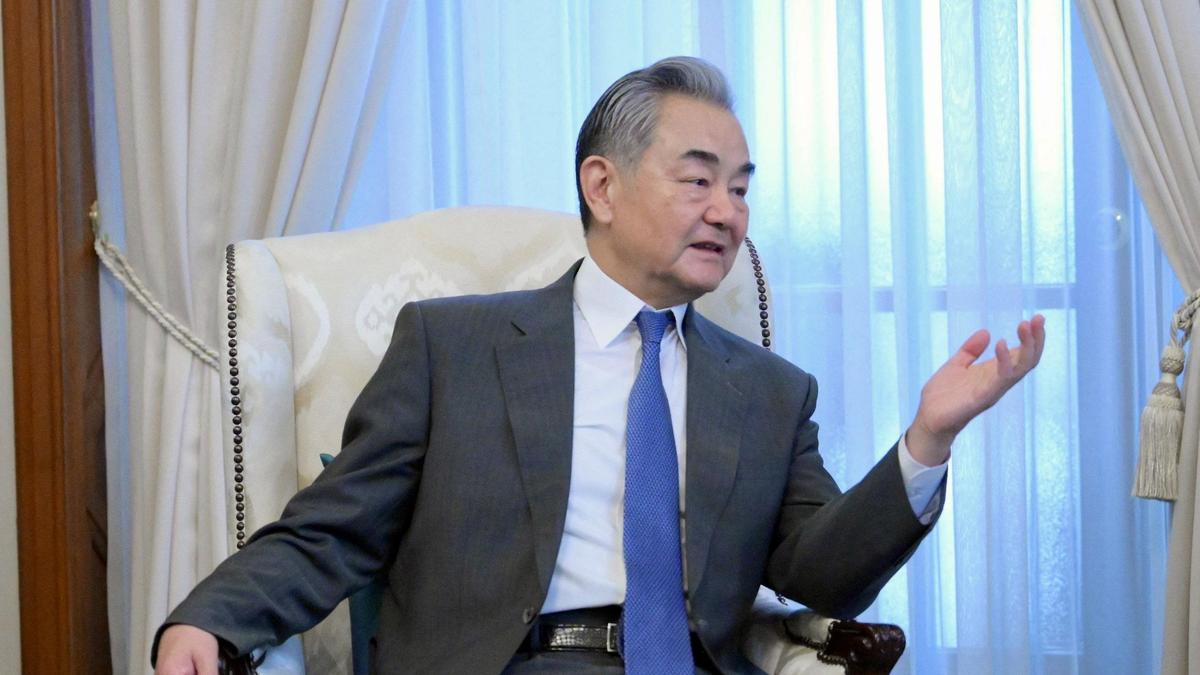
The diplomatic wires between Washington and Beijing just hummed with a tension that suggests the current "stable" period in U.S.-China relations is thinner than the paper on which treaties are printed. On Thursday, Chinese Foreign Minister Wang Yi held a direct call with U.S. Secretary of State Marco Rubio, delivering a blunt assessment: Taiwan remains the "biggest point of risk" in the bilateral relationship. This wasn’t a casual exchange of pleasantries. It was a calculated laying of groundwork ahead of a mid-May summit between President Donald Trump and Chinese leader Xi Jinping.
Beijing is making it clear that while they are willing to engage in high-level diplomacy, the price of admission is a hands-off approach to the self-governing island. Wang Yi’s rhetoric—framing Taiwan as a "core interest" that demands the U.S. "make the right choice"—indicates that China sees the current geopolitical moment as a window to force a definitive American pivot. For Rubio, a long-time China hawk now managing the state department, the call serves as a test of whether his past hardline stances can survive the pragmatic requirements of a Trump-led executive branch that balances tariff wars with high-stakes deal-making.
The Strategy of Direct Warning
Wang Yi is a master of using "stabilization" as both a carrot and a stick. During the call, he credited the "strategic guidance" of the two presidents for preventing a total collapse of relations. This is diplomatic shorthand for telling the State Department that any deviation from Beijing's red lines on Taiwan will be seen as a direct betrayal of the understanding reached between the two heads of state.
By labeling Taiwan as the primary risk, Beijing is attempting to isolate the issue from other friction points like trade and the ongoing conflict in the Middle East. They want Washington to believe that if the Taiwan "question" is handled according to Beijing’s terms, other areas of cooperation will naturally open up. It is a classic move designed to make the U.S. feel like the aggressor for simply maintaining the status quo of support for Taipei.
The timing here is everything. With the U.S. and Israel engaged in a volatile conflict with Iran since late February, Washington is arguably overextended. Beijing senses this. They know that a second front—even a diplomatic or economic one in the Pacific—is the last thing the State Department wants while trying to manage a shooting war in the Middle East. Wang’s call was as much about assessing American bandwidth as it was about Taiwan itself.
Rubio in the Crosshairs
Marco Rubio’s transition from a senator who was once banned from entering China to the Secretary of State handling these calls is one of the more striking shifts in recent political history. For years, Rubio was the loudest voice in the room demanding a complete decoupling and an uncompromising defense of Taiwan. Now, he has to balance that personal record with the Trump administration’s broader strategy of "hard-won stability."
Beijing is essentially calling Rubio’s bluff. By speaking directly to him and using the language of "commitments," they are reminding the Secretary that he is no longer an independent legislator free to fire off rhetoric from the Senate floor. He is now the face of an administration that, while aggressive on trade, has shown a recurring desire to strike "grand bargains" with authoritarian leaders.
The challenge for Rubio is to maintain the credible threat of American intervention in the Taiwan Strait without blowing up the upcoming Beijing summit. If he leans too hard into his previous hawk persona, the May meeting could be canceled or sabotaged. If he appears too conciliatory, he risks alienating the Republican base and emboldening the People's Liberation Army, which has been steadily increasing its naval presence around the island.
The Opposition Factor and Internal Pressure
While the diplomats talk, the ground in Taiwan is shifting in ways that complicate the Washington-Beijing narrative. Just weeks ago, Cheng Li-wun, chairwoman of the opposition Kuomintang (KMT), met with Xi Jinping in Beijing. This meeting highlighted a growing internal divide within Taiwan. The KMT is pushing for a smaller defense budget and more engagement with the mainland, a direct challenge to President William Lai’s more assertive stance.
This internal friction gives Beijing a narrative tool. They can argue to Rubio that "true" regional stability comes from the KMT's approach of dialogue and the "1992 Consensus," rather than the U.S. arming Taipei to the teeth.
- The Special Defense Budget: Taiwan's legislature has seen delays in passing a 1.25 trillion New Taiwan Dollar defense proposal.
- Political Espionage: Recent indictments of former aides to high-ranking Taiwanese officials suggest a deepening of Chinese intelligence operations within Taipei’s own government.
- Infrastructure Threats: U.S. legislators are already moving to address the vulnerability of Taiwan’s undersea internet cables, which are seen as prime targets for "short-of-war" coercion.
These aren't just technical details. They are the leverage points Wang Yi uses when he tells Rubio that the U.S. needs to "honor its commitments." To Beijing, "honoring commitments" means stopping the flow of high-end weaponry and letting these internal Taiwanese divisions play out in China's favor.
Beyond the May Summit
The upcoming summit on May 14 and 15 is being billed as the "anchor" of the relationship. But an anchor only works if the chain is strong. Right now, the chain is composed of a fragile tariff truce struck in South Korea last October and a mutual desire to avoid a direct military confrontation while both nations have their hands full elsewhere.
The U.S. is currently monitoring Chinese material support to Iran, which has been limited but persistent. This creates a secondary layer of tension. Rubio has to decide if he will trade a softer line on Taiwan for a Chinese promise to stop aiding Tehran. It’s a dangerous game. Historically, Beijing has been more than happy to trade "promises" for concrete shifts in American Pacific policy, only to backtrack on the promises once the strategic gain is secured.
The "new space for cooperation" that Wang Yi mentioned is a vague prize. It likely refers to eased trade restrictions or cooperation on climate and fentanyl—the usual low-hanging fruit of diplomacy. But for a Secretary of State like Rubio, who has built his career on the idea that China is an existential threat, these offerings must look like a poor trade for the sovereignty of a democratic partner.
The reality of the Rubio-Wang call is that both sides are stalling. Beijing is waiting to see how the war in the Middle East drains American resources and resolve. Washington is waiting to see if they can get through the May summit without a major crisis that sends the stock markets into a tailspin.
The "biggest risk" isn't just a point of discussion; it is a live wire that could snap at any moment, regardless of how many "high-level exchanges" are planned. If the U.S. continues to struggle with its commitments in the Middle East, Beijing’s definition of "the right choice" for Taiwan will only become more demanding.