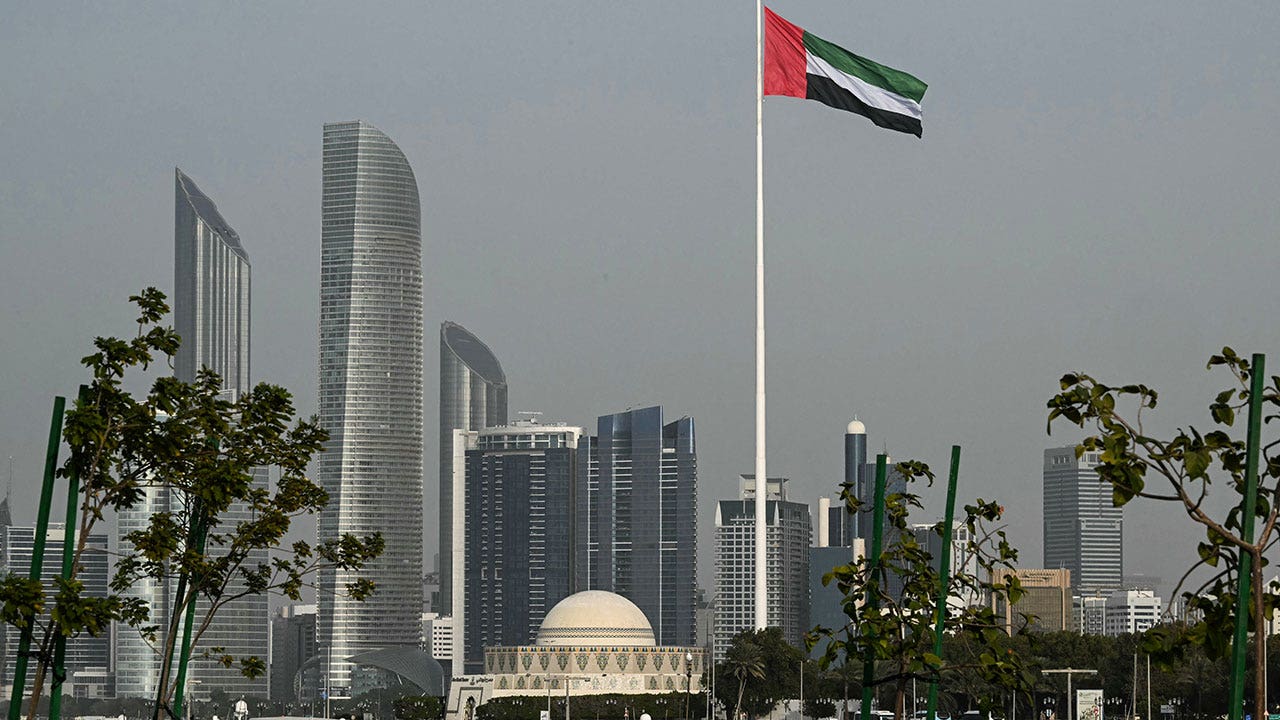
Diplomacy rarely happens under the blinding lights of global summits. More often, it occurs in quiet antechambers where decades of regional friction are quietly set aside for the sake of economic survival. When the Iranian presidency and the Abu Dhabi leadership recently signaled a willingness to move past old grievances, international observers scrambled to decode the messaging. They missed the forest for the trees. This detente is not merely a diplomatic photo opportunity. It is a calculated realignment driven by shifting economic imperatives and a pragmatic acknowledgment that perpetual hostility is a luxury neither side can afford.
For years, the Persian Gulf operated on a rigid binary. Riyadh and Abu Dhabi walked in lockstep with Washington, maintaining a unified cordon sanitaire around Tehran. Sanctions were enforced, rhetorical salvos were exchanged, and proxy conflicts flared from Yemen to the Strait of Hormuz. But statecraft is ultimately dictated by balance sheets rather than ideological purity. As the global economy pivots toward multi-polarity, Gulf capitals have realized that playing the role of frontline states in an endless confrontation carries an unacceptably high price tag.
The Economic Catalyst Behind the Pivot
Capital hates instability. The United Arab Emirates built its modern economic miracle on the bedrock of security, openness, and trade. When maritime security in the Gulf deteriorated or regional tensions threatened critical infrastructure, foreign direct investment flickered. Abu Dhabi watched as neighboring competitors began wooing global capital with aggressive modernization programs. Remaining tethered to a permanent state of high tension with Iran meant boxing in the Emirates' own commercial ambitions.
Trade data tells the real story. Even during periods of severe diplomatic frost, commercial ties between Iranian merchants and Emirati ports persisted through informal channels, re-exports, and maritime corridors. By bringing these transactions into the light and normalizing diplomatic engagement, Abu Dhabi is formalizing a reality that bureaucrats in Washington and European capitals preferred to ignore. Rebuilding economic bridges with Iran offers the UAE access to a massive consumer market and positions Emirati financial hubs as indispensable intermediaries for regional commerce.
On the other side of the Gulf, Tehran faces an equally pressing set of constraints. Years of punishing economic isolation, compounded by structural mismanagement and domestic pressures, have left Iranian state planners desperate for foreign currency and investment. Abu Dhabi represents a vital financial lung. It is a place where Iranian capital can circulate, where regional trade can bypass cumbersome secondary sanctions, and where diplomatic isolation can be systematically chipped away.
Navigating the Geopolitical Minefield
Of course, rapprochement is fraught with friction. Old suspicions do not vanish overnight simply because two delegations shake hands in front of state media. The United States remains deeply suspicious of any diplomatic thaw that relieves pressure on Tehran without addressing broader regional security concerns, including nuclear ambitions and proxy network funding. Western capitals view these diplomatic openings with quiet alarm, fearing that economic engagement will dilute the efficacy of maximum pressure campaigns.
Yet, Gulf monarchies are increasingly charting an independent foreign policy course. Middle powers across the globe are learning to hedge their bets. They no longer rely exclusively on traditional security umbrellas, choosing instead to diversify their diplomatic portfolios. For the UAE, talking to Tehran does not mean abandoning Washington; it means establishing strategic autonomy. It is an insurance policy against future regional shocks.
The mechanics of this detente require immense discretion. Intelligence agencies and foreign ministries must manage domestic hardliners who view any compromise as capitulation. In Iran, factions tied to security apparatuses retain deep ideological opposition to regional compromise, viewing the West and its regional partners with inherent distrust. In the Emirates, maintaining alignment with broader Gulf consensus while pursuing national economic interests demands a delicate diplomatic dance. Every statement is weighed for domestic consumption. Every concession is measured against potential blowback from Western allies.
What Comes Next for the Gulf Architecture
Security architectures in the Middle East are rarely built on permanent alliances. They are constructed on temporary convergences of interest. The current thaw between Tehran and Abu Dhabi exemplifies this fluid reality. If trade corridors remain open and maritime security holds, other regional players will be forced to recalibrate their own calculus.
The traditional narrative of an unbridgeable sectarian and geopolitical divide across the Gulf is fraying. While deep-seated strategic competition remains the baseline, the willingness to compartmentalize differences marks a distinct evolution in regional statecraft. Leaders in both capitals have recognized that the cost of inaction is stagnation. By choosing pragmatic engagement over perpetual confrontation, they are redrawing the diplomatic map of the Middle East, proving once again that in the corridors of power, interests invariably outlive enmities